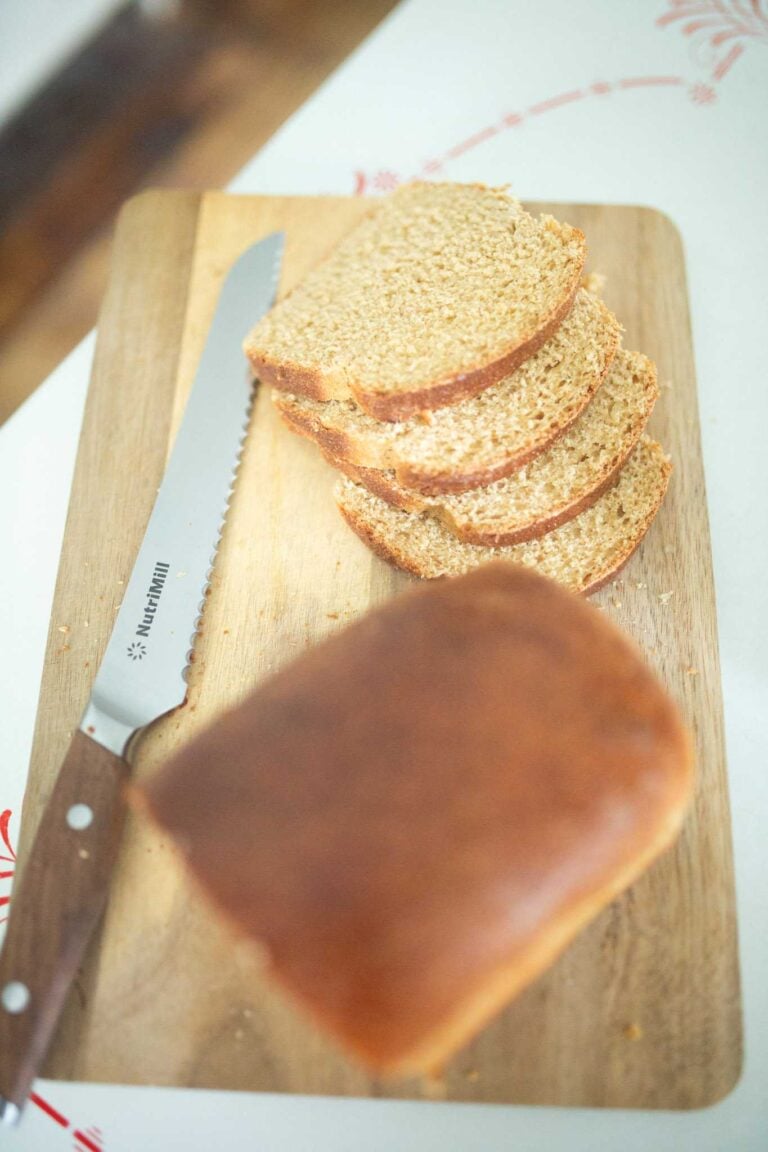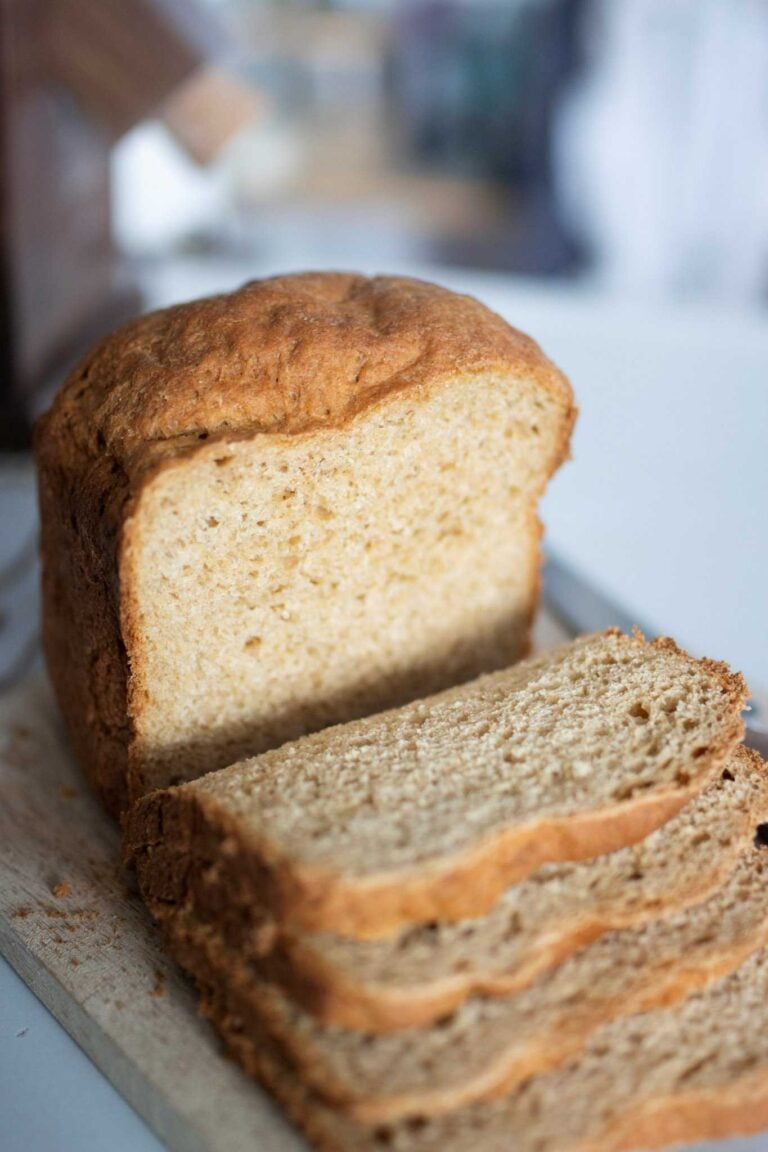
Sponge Method for Fresh Milled Flour Bread: Does It Really Help?
Fresh milled flour behaves differently from store-bought flour, and one of the most common recommendations for working with it is to let the flour soak before continuing with the dough.
This post contains affiliate links. I make a small commission on sales at no extra cost to you. As an Amazon Associate, I make commissions on qualifying purchases
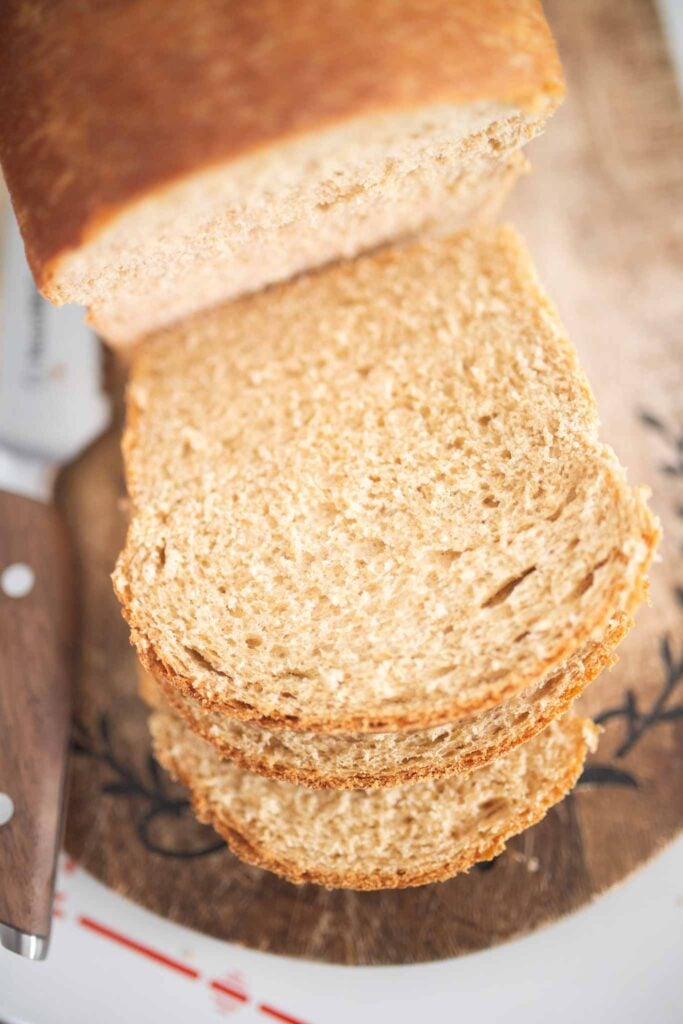
There are 2 approaches for soaking fresh milled flour doughs:
- Sponge method — part of the flour + liquid + yeast/starter are mixed and allowed to ferment before the rest of the flour and salt and kneading.
- Simple soaking/autolyse-style method — flour and liquid are mixed and allowed to rest before continuing with kneading the dough.
Does making a sponge actually make fresh milled bread better, or can you get similar benefits simply by soaking the flour?
That’s what we are going to cover in this post to help you decide which method works best for you!
What is the “Sponge Method”?
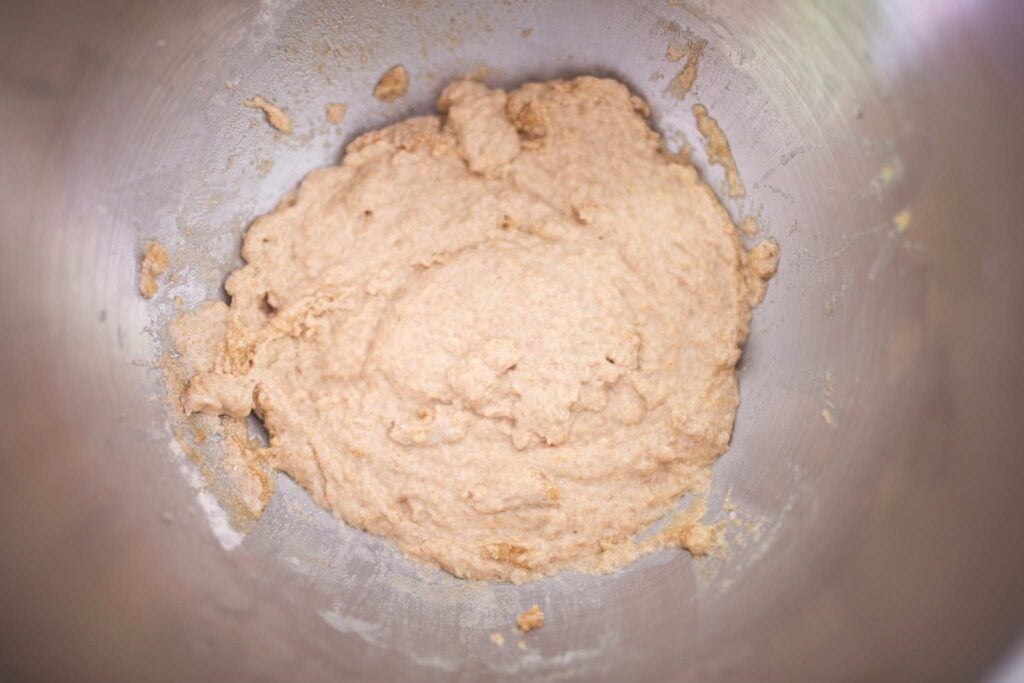
How a sponge works
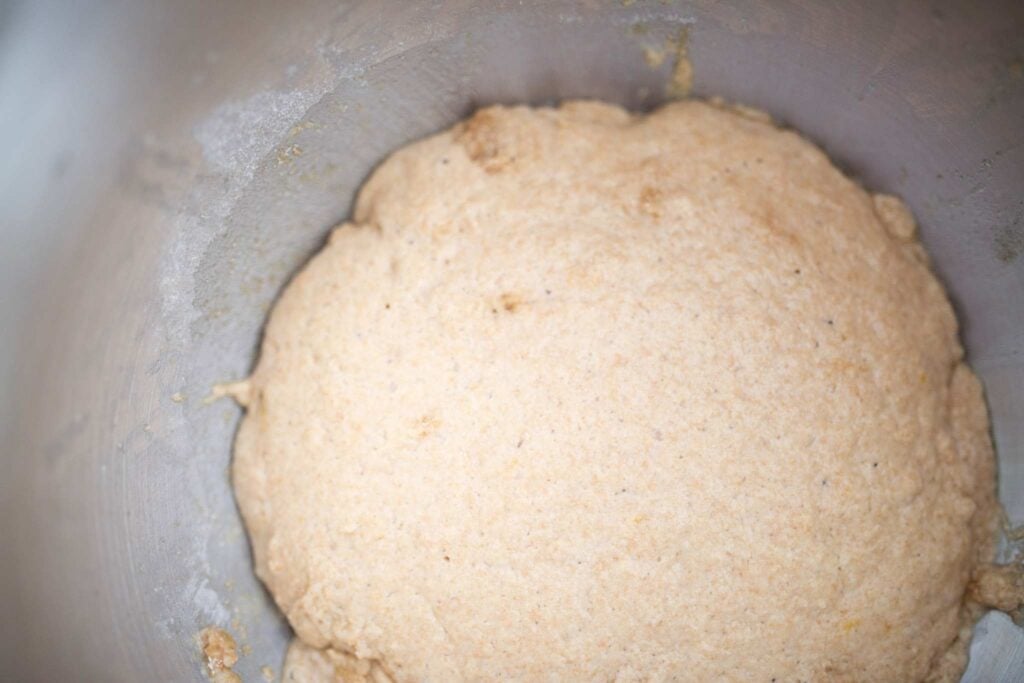
In the sponge method, the liquid ingredients, yeast, and half of the flour are mixed, covered, and allowed to ferment for 20 minutes before adding the rest of the flour and salt and proceeding to knead the dough.
Why use a sponge with fresh milled flour?
Benefits may include:
- Begins fermentation earlier
- Gives flour time to hydrate
- May enhance flavor
- May improve dough extensibility
- Can change the dough texture
What is the “Soaking Method”?
The soaking method combines all the ingredients except for the salt and yeast before soaking for 30 minutes. This soaking time allows all of the flour to hydrate and allows the bran and germ to soften in preparation for kneading.
After 30 minutes, you add the salt and yeast and proceed to knead the dough.
Is Soaking the Same as Making a Sponge?
Not necessarily. Although both methods give fresh milled flour additional time to hydrate, a sponge involves fermentation when a leavening agent is included, while a simple soak primarily gives the flour time to absorb the liquid before the dough is developed.
Sponge Method vs. Soaking: What’s the Difference?
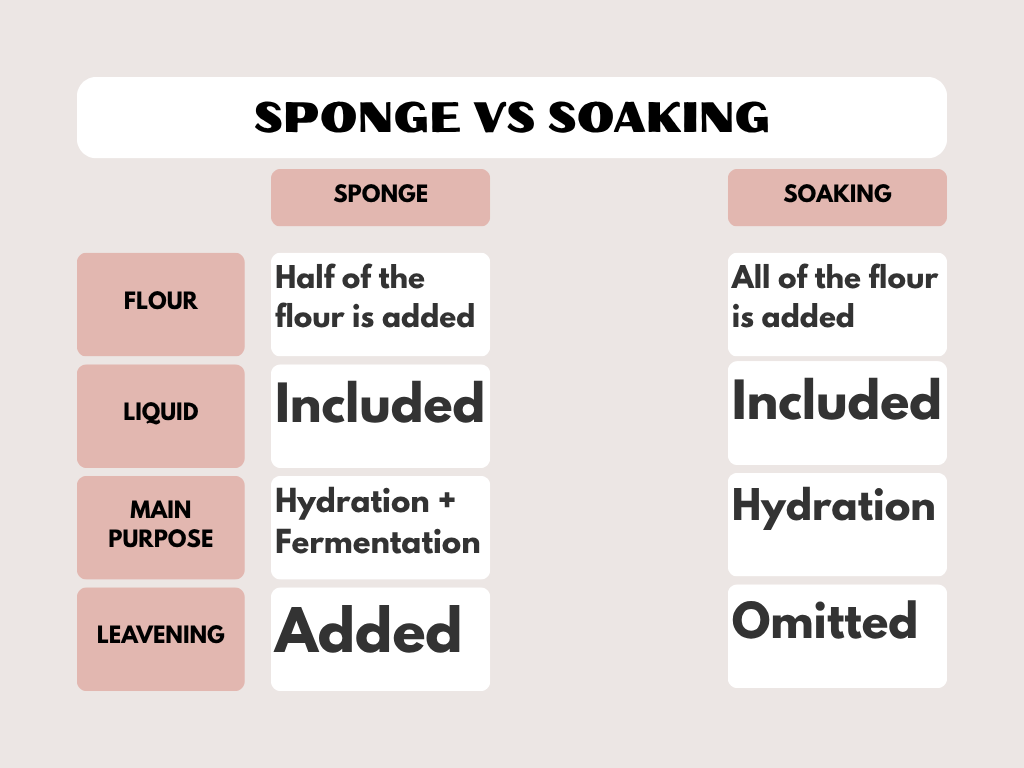
The above chart is a brief overview. Each specific recipe will have slightly different results. Keep in mind the main purpose of each of the methods when deciding which one works best for your particular recipe.
Fresh Milled Flour Sponge Method Step-by-Step
Step 1. Mill the wheat berries.
Step 2. Add all liquids into the mixing bowl or the bowl of a stand mixer.
Step 3. Add the yeast.
Step 4. Pour in 1/2 of the flour.
Step 5. Mix until combined and no dry bits of flour remain.
Step 6. Ferment – Cover the bowl and let the mixture ferment for 20 minutes.
Step 7. Add the remaining flour and salt.
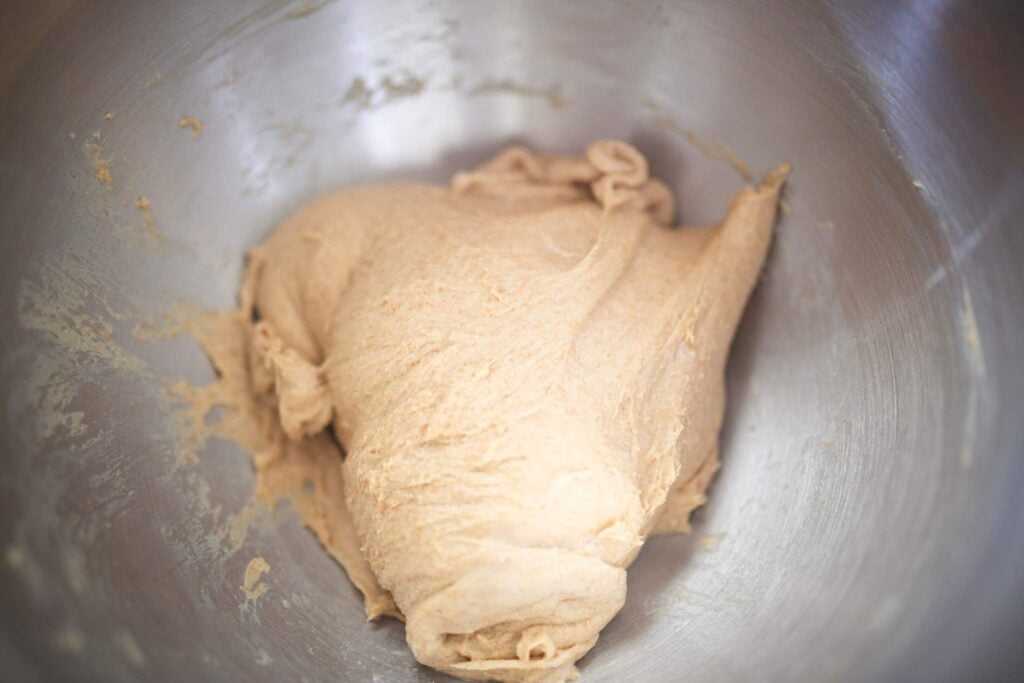
Step 8. Knead the dough until glossy and stretchy.
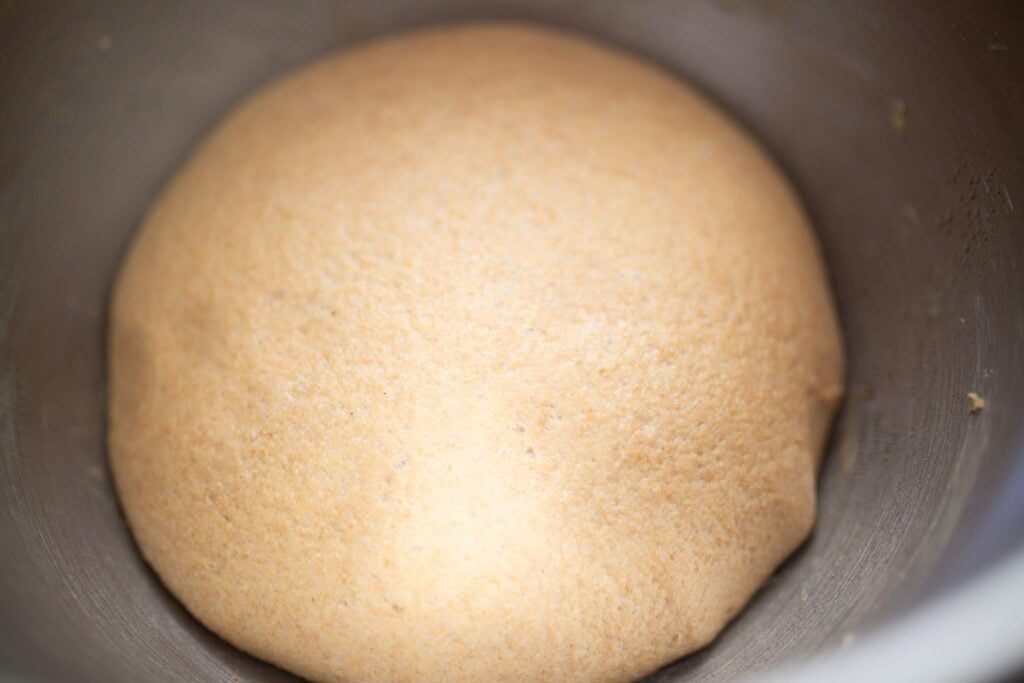
Step 9. Proof the dough in the bowl until doubled.
Step 10. Shape and proof for the second rise.
Step 11. Bake.
Soaking Method for Fresh Milled Flour Step-by-Step
Step 1. Mill your wheat berries.
Step 2. Add all liquids to the mixing bowl or the bowl of a stand mixer.
Step 3. Add all of the milled flour and mix until all the ingredients are combined. Omit the salt and yeast.
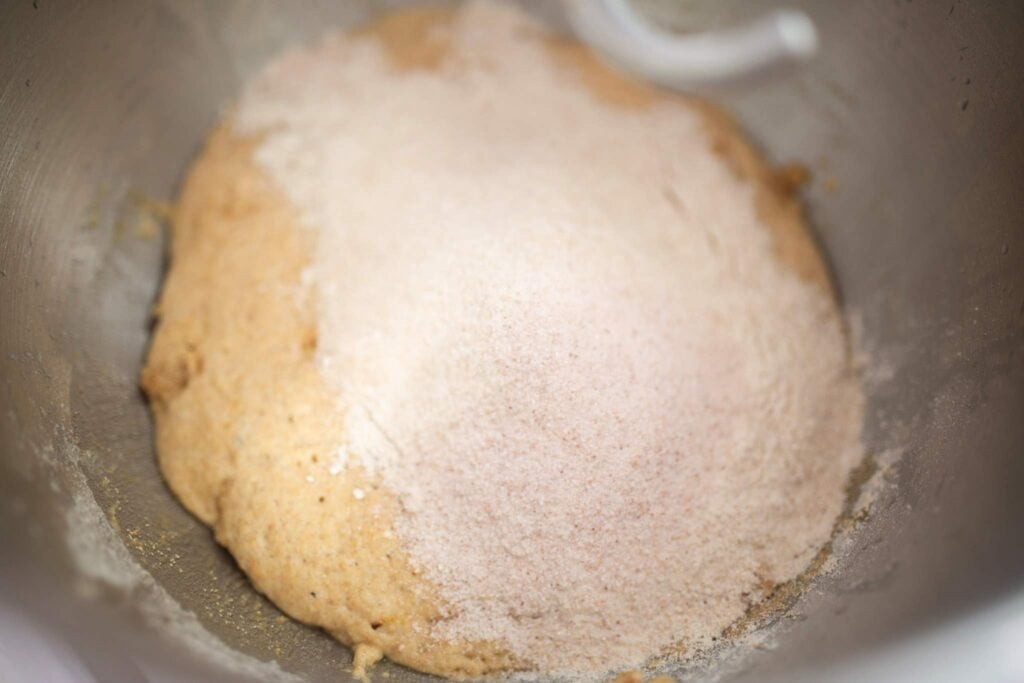
Step 4. Soak – Cover the bowl and let the dough soak for 30 minutes.
Step 5. Add salt and yeast and knead the dough until glossy and stretchy.
Step 6. Proof the dough for the first rise until doubled.
Step 7. Shape and proof for second rise.
Step 8. Bake.
My findings with the Sponge Method
Before I give you my opinion on the outcome, here is what I kept the same and what I changed for the sponge method:
What I kept the same
- same wheat
- same amount of flour
- same hydration
- same mixing equipment
- same bulk fermentation conditions
- same shaping
- same baking temperature
- same baking time
What I changed
- I only added half of the flour and left out the salt. All other ingredients were added for this method.
How do the doughs compare?
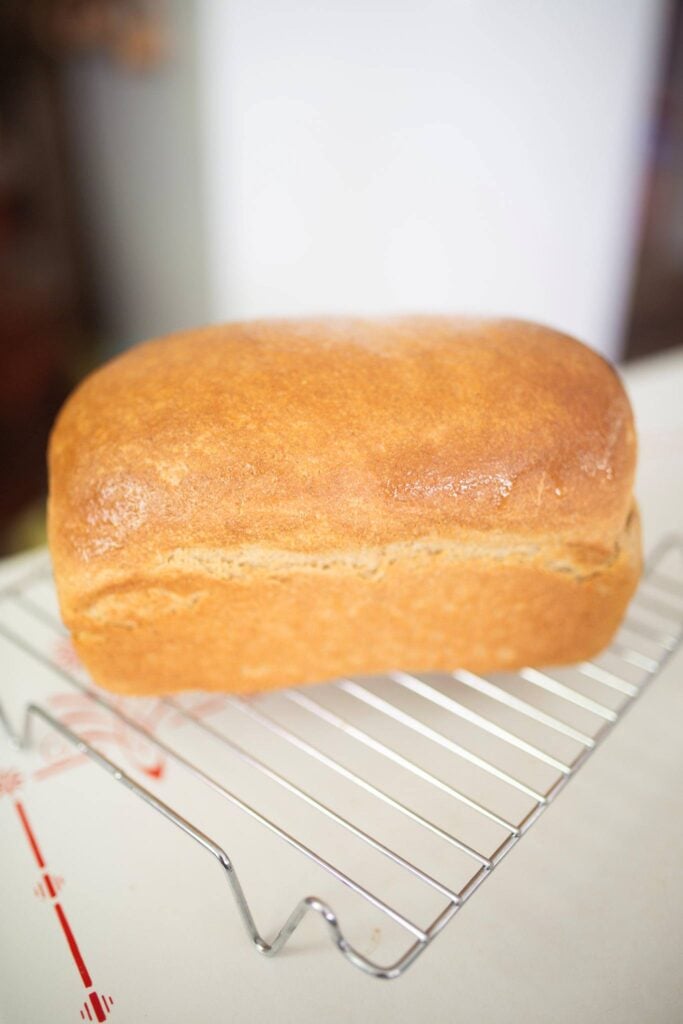
I found that the sponge method dough seemed to do its first and second rise a bit more quickly than a soaking method does.
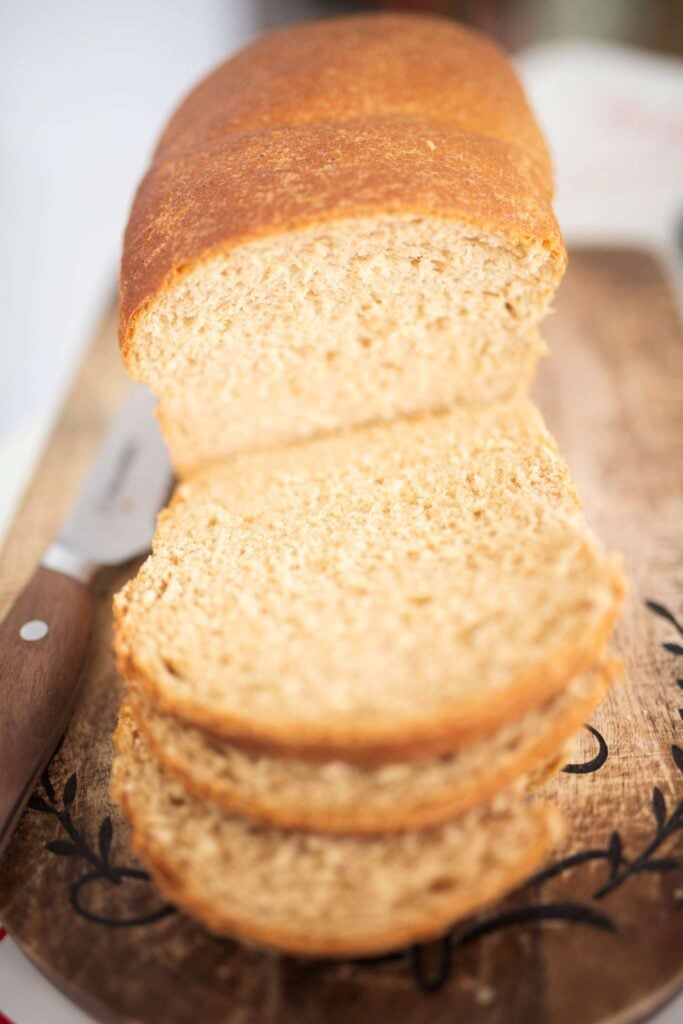
Also, I found the bread to be softer and have a lighter overall texture.
The loaf made with the sponge method also had a bit more flavor. I’m not saying it was an astronomical difference, but the flavor was a bit more yeasty.
On the other hand, I found with the soaking method, my dough developed gluten more quickly.
Which method made better fresh milled bread?
Although this is subjective, I will say that for flavor the SPONGE METHOD reigns supreme! The yeasty flavor was so delicious and flavorful. The bread was also lighter, softer, and a bit more lofty.
I would say for gluten development and structure, the SOAKING METHOD wins out.
Is a sponge method necessary for good fresh milled bread?
No! But I will say that one of these 2 methods are mandatory when baking fresh milled flour bread products for best results.
Each of these methods are great tools for helping you with your fresh milled flour bread products.
When I Would Use a Sponge for Fresh Milled Bread
Use a sponge when:
- You’re looking for more flavor in your bread
- You want to jump start fermentation
- The flour you are using would benefit from the hydration/fermentation method
Use a soak when:
- You are short on time
- You are more concerned with gluten development
- You prefer simpler processes
Final Verdict
For dough handling: Soaking works a bit better.
For flavor: Sponge works best.
Better gluten development: Soaking works best.
For my everyday fresh milled bread: Sponge method wins.
For simplicity: Soaking wins.
Frequently Asked Questions
They are similar, however in the sponge method only half the flour is used while during autolyse you add all of the flour.
Yes, you can, however it will take much longer to knead and develop gluten.
Yes, soaking the dough with either method gives the bread a softer, less crumbly texture.
You can, however, an autolyse works just as well and is a simpler process.
More Fresh Milled Resources
Why Is Einkorn Flour Hard to Work With? (+ Fixes)
Why Your Dough Tears Instead of Stretching (+ Fixes!)
Easy Master Dough Recipe Using Fresh Milled Flour
New to Fresh Milled Flour? Avoid These 5 Beginner Mistakes
Shop this post
Grain Mill – NUTRIMILL GRAIN MILL
Stand Mixer – ZACME STAND MIXER