
New to Fresh Milled Flour? Avoid These 5 Beginner Mistakes
If you are brand new to baking with fresh-milled flour or milling your own flour, there are some mistakes that can lead to dense, crumbly bread. From not soaking the loaf to overbaking, I will cover 5 fresh milled flour mistakes for beginners that you can fix right away with a few simple adjustments! The results will speak for themselves!
This post contains affiliate links. I may make a small commission on sales at no extra cost to you. As an Amazon Associate, I make commissions on qualifying purchases
Looking for the right grain mill? CLICK HERE! I cover the key differences between a stone mill and an impact mill so you can have the knowledge to choose the right flour mill for milling your own grains.
What are the most common Fresh Milled Flour mistakes?
The 5 most common mistakes beginners make with fresh flour are not soaking the dough, adding too much flour, using the wrong wheat berry for the application, under-kneading the dough, and over baking.
Let’s break these down one by one.
Mistake #1: Not soaking the dough
Why it matters:
When you mill whole grains, the bran and germ are in the flour. These are like little shards in the dough that can inhibit the gluten development.
How to fix it:
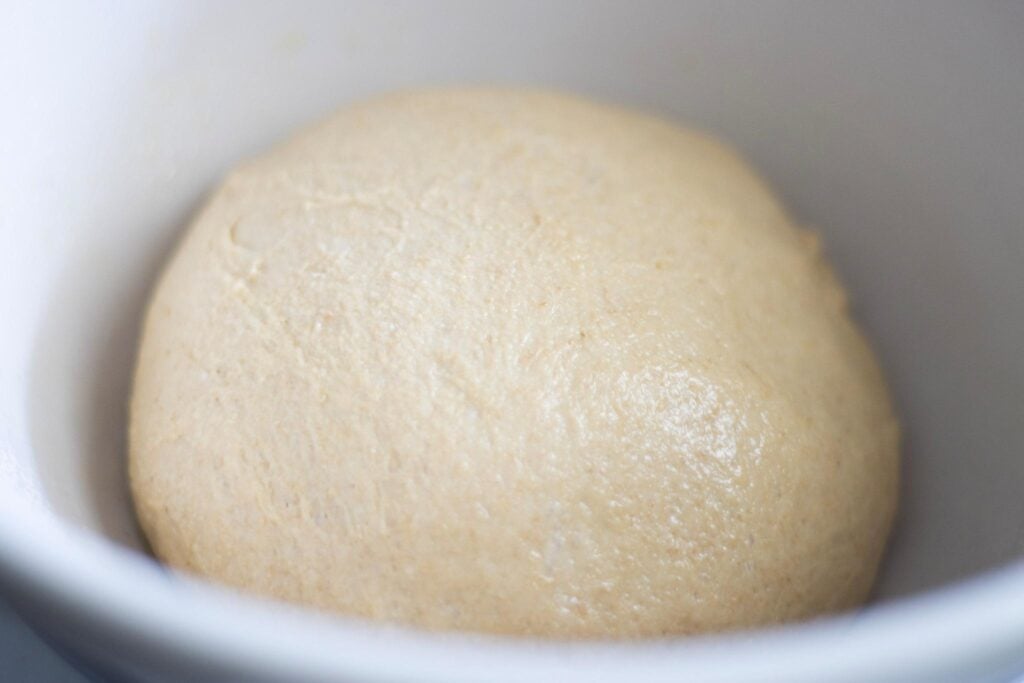
After your initial mix of the dough (usually minus the salt and yeast), let the dough soak or autolyse for at least 30 minutes to soften the bran and germ readying the dough for proper kneading.
My SOFT BEGINNER FRESH MILLED FLOUR SANDWICH BREAD employs this technique and yields a soft, tender loaf every time!
Mistake #2: Adding too much flour
Signs you’re adding too much flour
If your bread always turns out dense and crumbly, chances are you are adding too much flour to the recipe.
Easy fix
As mentioned in mistake #1, fresh milled flour absorbs water more slowly than store-bought flour. For this reason, the dough when it is first mixed will seem to wet. The temptation is to add more flour.
Unfortunately, this will only make the dough dense and heavy.
Instead, go against the temptation and allow the dough to soak first and then judge if you need a tablespoon or 2 more flour.
For milling my wheat berries, I use the NUTRIMILL GRAIN MILL
Mistake #3: Using the wrong wheat berry for your recipe
Why it matters
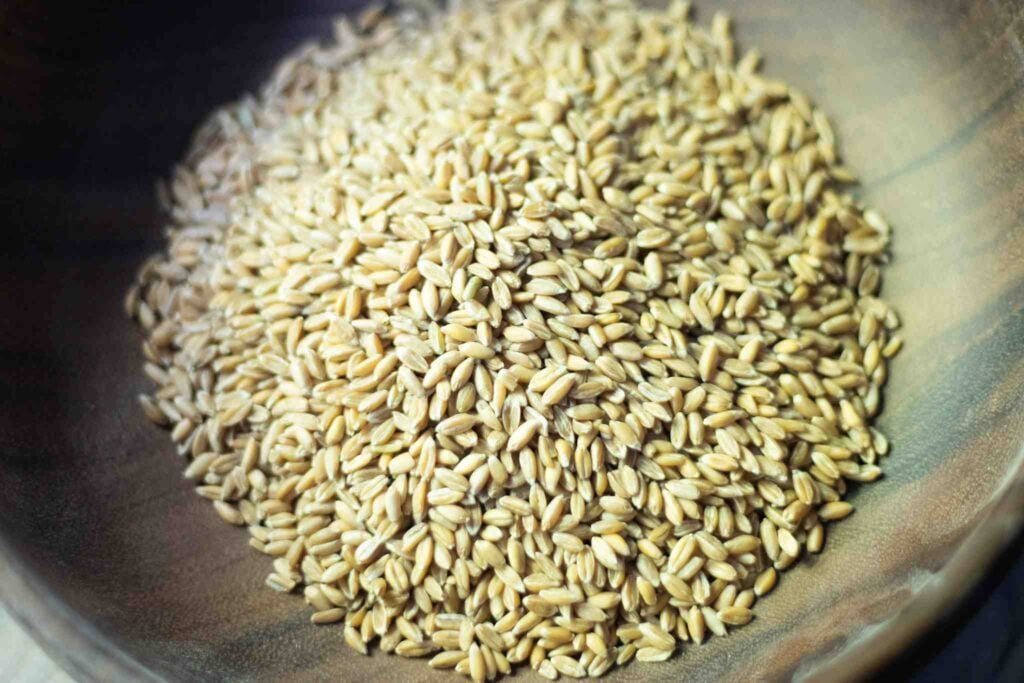
Generally, using hard white wheat or hard red wheat is a good idea for most recipes. However, if you are wanting to get into ancient grains or prefer a softer wheat for quick breads, biscuits, etc., you will want to consider the pros and cons of each wheat berry and what they work best for.
I recommend you refer to THIS POST for a more in depth look at different types of wheat berries and what they work best for.
Simple answer
Use hard wheat for any bread products that use yeast or sourdough and require gluten development and a rise.
Use soft wheat or Einkorn for quick bread recipes that use baking soda or baking powder (or both) and don’t require gluten development.
Mistake #4: Under-kneading
This is one of the most common mistakes when baking with fresh milled flour.
Why it happens
Under-kneading happens because it takes longer to properly knead fresh milled flour bread dough and when kneading the usual time for an all purpose bread dough, the dough will not be kneaded enough and result in a crumbly bread that doesn’t rise as well.
For kneading my fresh milled flour doughs, I use the NUTRIMILL STAND MIXER
How to fix it
The fix is easy! Knead longer.
Let me break that down just a bit more – When combined with soaking, a properly kneaded dough is much easier to achieve.
Once the dough has soaked for 30 minutes, you will notice that the dough will knead more quickly and come together more quickly, as well.
Using your eye for this will become your best friend.
NOTE ON KNEADING: Wheat berries can act differently from source to source depending on the crop, protein level, and gluten amount. If you find that your dough just won’t knead properly even after an extended knead, consider adding VITAL WHEAT GLUTEN as long as you use that batch of wheat berries for best results
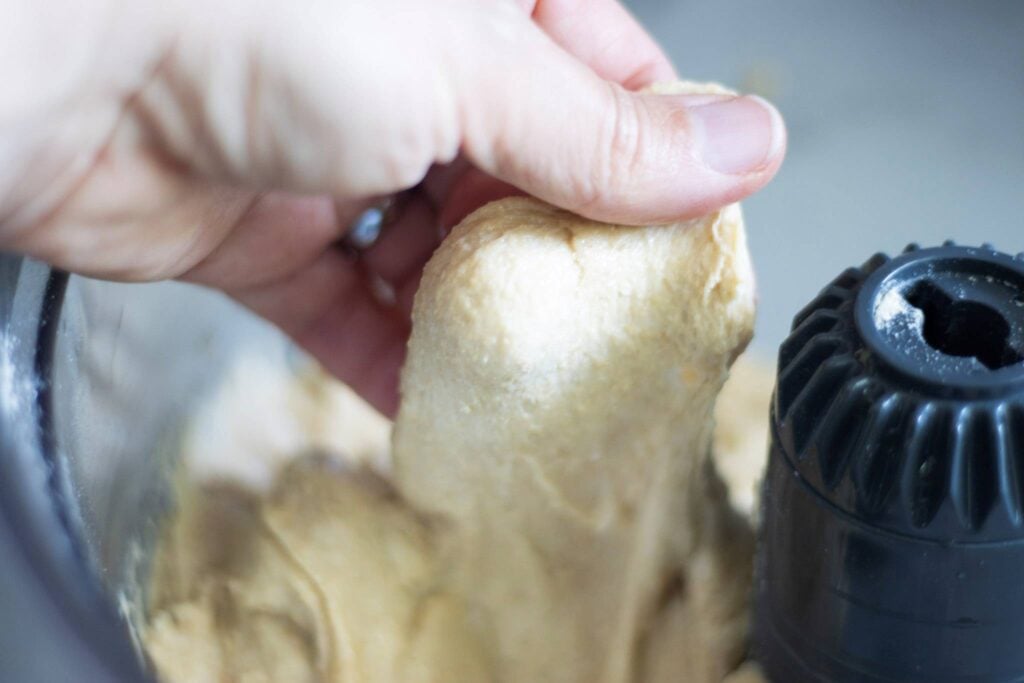
What to look for when kneading fresh milled flour dough
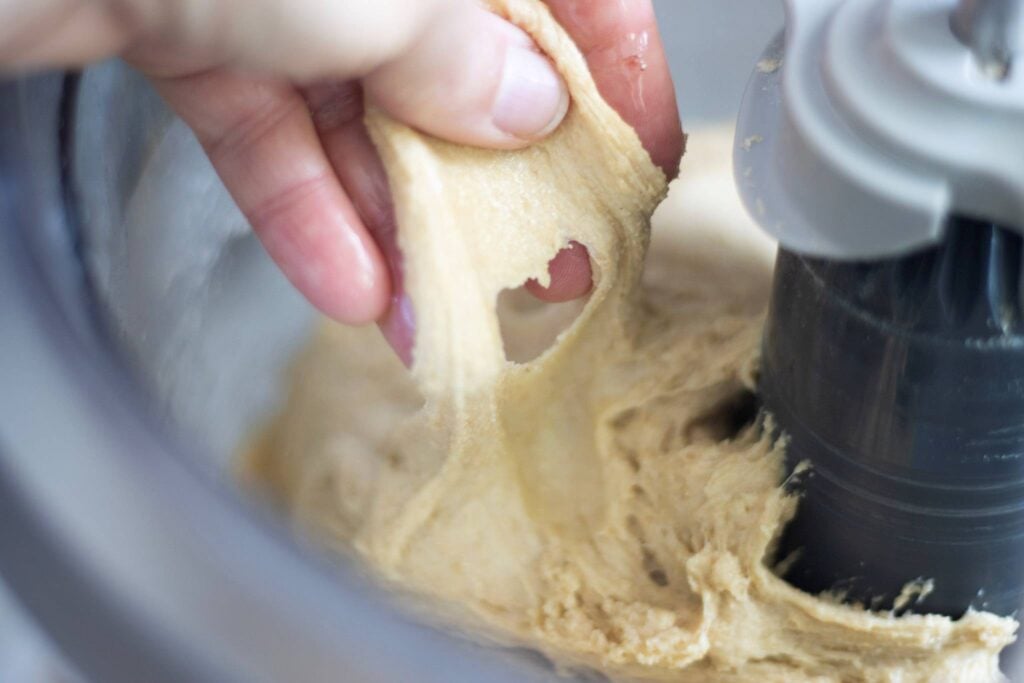
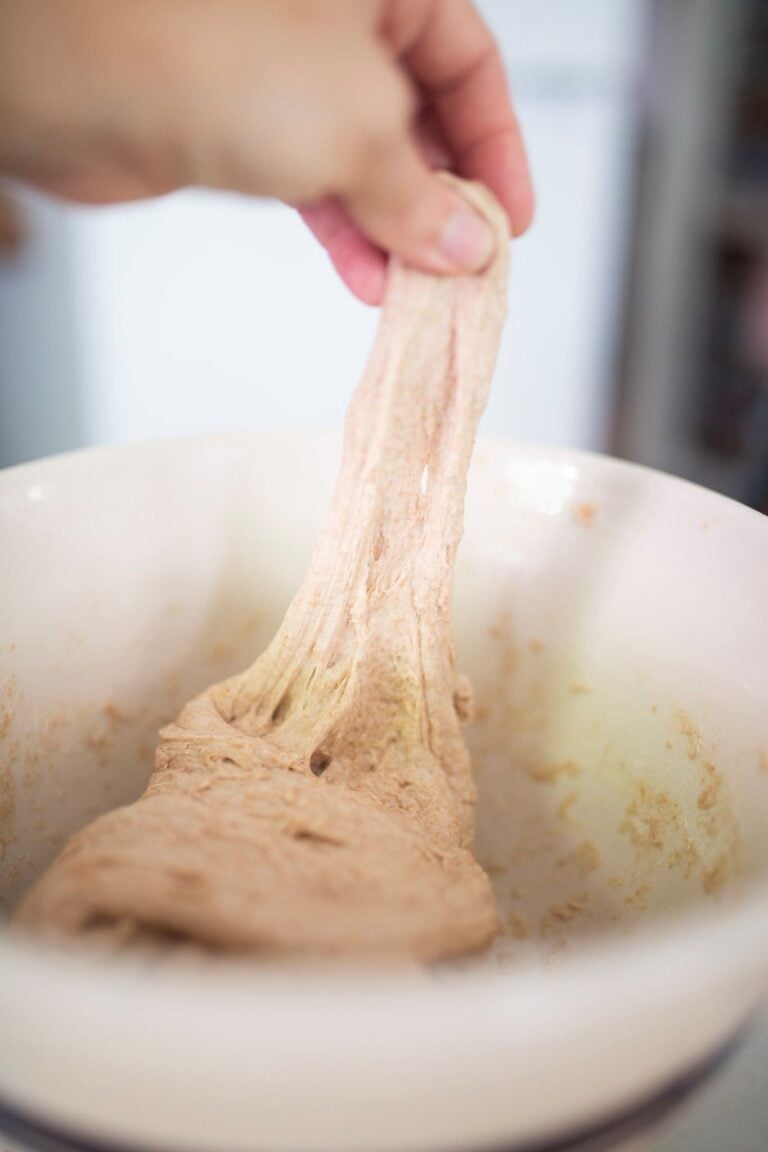
The dough comes together in a cohesive ball and is glossy looking. When a piece of dough is pinched off and stretched out, it doesn’t break easily.
Instead, it will have stretchy strands holding the dough together.
Mistake #5: Overbaking
Signs you’re baking too long
- Dry Crumb
- Thick Crust
How to remedy it
- Check internal temperature instead of relying on time. For instance, if a recipe calls for you to bake a loaf for 35 minutes, check the internal temperature with an instant read thermometer after 30 minutes. You want the internal temperature to be 200-210 degrees F.
- Consider taking the bread out sooner than you think. If you normally take the loaf of bread out at, say 35 minutes and it is always dry and crumbly, take the bread out at 30 minutes and let cool before slicing.
How to get a softer bread when using fresh milled flour
- Add fat – Adding olive oil or butter to your bread recipes will yield a much softer loaf.
- Avoid adding too much flour – Be sure to not add too much flour as this will always make for a denser loaf.
- Use a combination of wheat berries – I like using a combination of hard wheat and a portion of Kamut for the lightest loaf. For more information on mixing wheat berries, CLICK HERE!
- Be sure to soak! – I can’t overstate how important it is to autolyse your fresh milled flour bread dough! This step really makes all the difference when it comes to texture and rise!
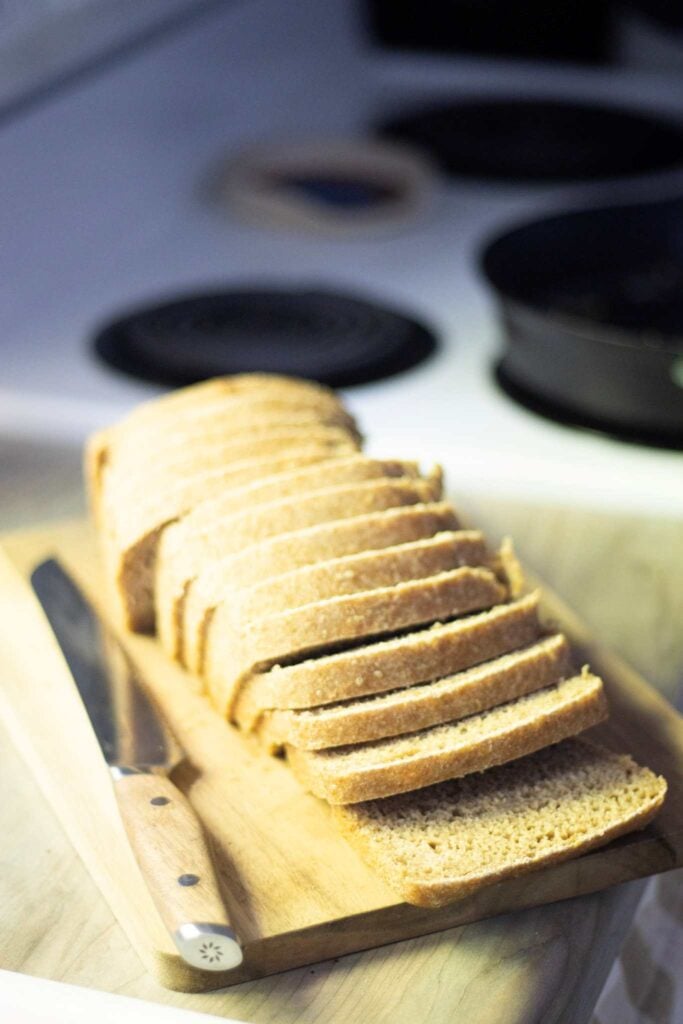
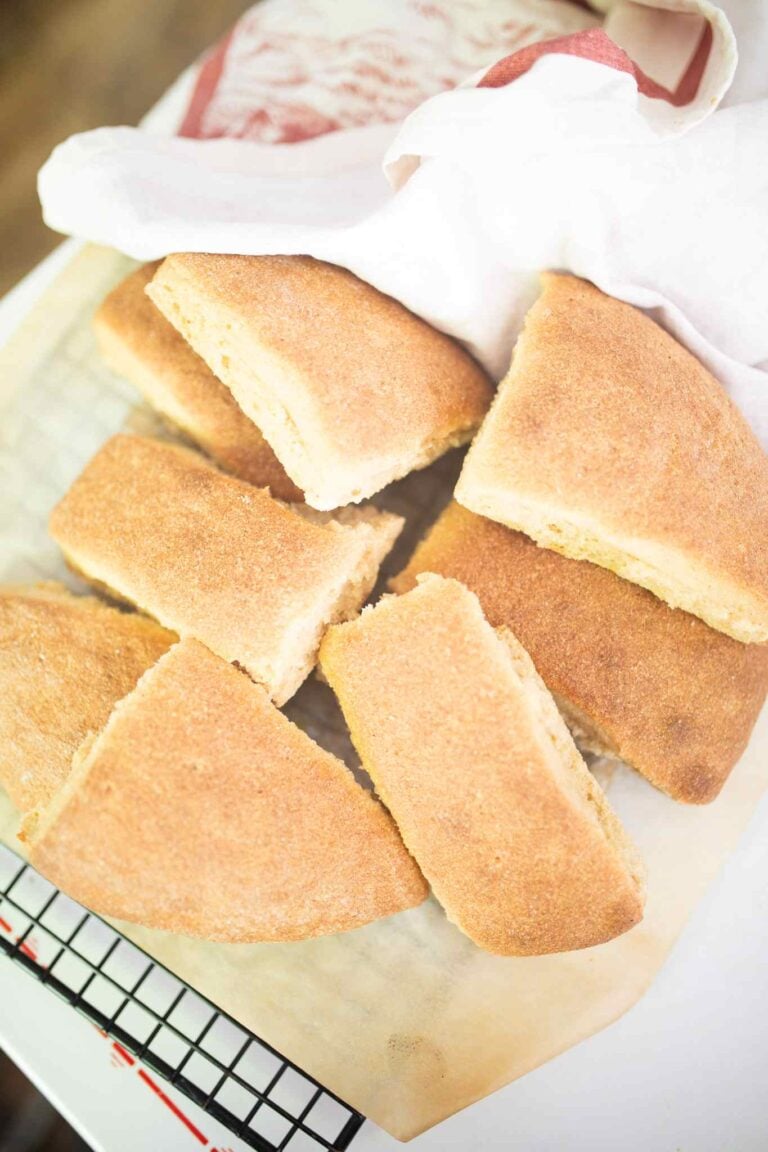
Consider trying these beginner friendly fresh milled flour recipes
One of my favorite beginner recipes for using fresh milled flour is for FRESH MILLED HOAGIE ROLLS
Looking for a beginner Fresh Milled English Muffin Recipe? CLICK HERE!
Brand new to Fresh Milled Flour? START HERE!
Looking for more whole grain baking tips? CLICK HERE!
Frequently Asked Questions about Fresh Milled Flour Mistakes for Beginners
In my experience, this is almost always due to adding more flour to the recipe because the initial dough seems to wet. After allowing the dough to soak, you will notice that the flour just takes longer to absorb the liquids and doesn’t require any more flour. More flour will mean denser bread every time. If you will autolyse the dough for at least 30 minutes (minus the salt and yeast), you will see a huge difference in the outcome!
All day every day, I will recommend the beginner buy a bucket of HARD WHITE WHEAT (25 pounds of wheat berries) and bake everything with it. By the time you are through that bucket, you will have a general knowledge of how fresh milled flour behaves and can dip your toes into using different grains. Consider adding soft white wheat berries next to use in combination with your hard wheat berries and so on.
No, you want all the goodness of the bran and germ in your whole grain flour! If you soak the dough as mentioned above, you will achieve soft, light, and fluffy bread without sifting all the nutrition out! The health benefits of fresh whole wheat flour are in the bran and germ making them incredibly important.




You had mentioned about soaking the dough?
Do I need to take the dough after I have formed it in a ball and set it in a bowl of water? How long, how much water, covered? Would you explain more about this as I don’t understand that process.
Thank you for the help and the information!
Elaine Collins
Actually, the soaking process is just soaking the dough. So, you mix the flour and water along with any other wet ingredients and let that dough sit for at least 30 minutes before adding the yeast and salt. If making Sourdough, you can go ahead and add all the ingredients before this “resting, soaking” period. Hope that helps!