
Easy Master Dough Recipe Using Fresh Milled Flour
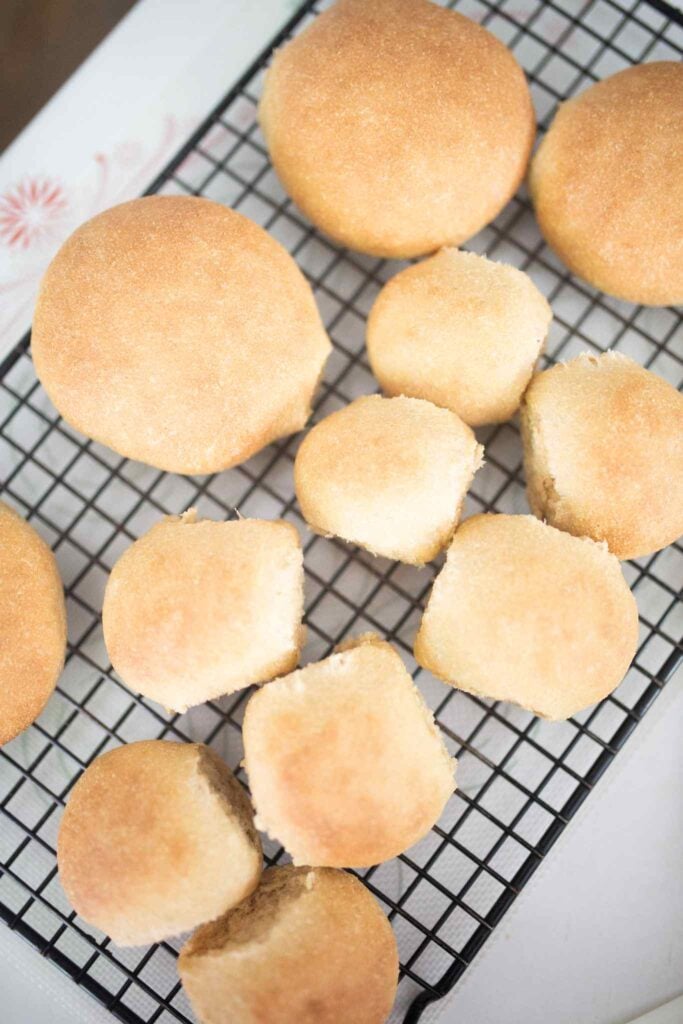
If you’ve been looking for one reliable fresh milled flour dough recipe that can do it all, this is it. This master fresh milled flour dough recipe is soft, versatile, easy to work with, and perfect for homemade bread, pizza crust, dinner rolls, cinnamon rolls, burger buns, and more!
This post contains affiliate links. I may make a small commission on sales at no extra cost to you. As an Amazon Associate, I make commissions on qualifying sales
Whether you’re brand new to milling flour at home or you’ve been baking with whole grains for years, this multipurpose dough recipe will quickly become a staple in your kitchen.
Why you’ll love this recipe
- One Dough for Everything – You can use this easy dough recipe to make bread, rolls, pizza, burger buns, and more!
- 100% Fresh Milled Flour – This recipe is all whole grain for deep flavor and optimum nutrition.
- Soft and Fluffy – The dough is soft and easy to work with lending to a fluffy, airy bread product.
- Perfect for Beginners – Tried and true, this beginner-friendly recipe is perfect for beginners who want a master dough that is easy to memorize and use for all of their baking needs.
- Customizable to Suit Your Taste – Use different wheat berries for different flavors for this master dough recipe.
If you are brand new to milling your own flour, START HERE!
Why Fresh Milled Flour is Different
Fresh flour retains the bran and germ which means the flour absorbs water differently.
Because of that, it is important to soak or rest the fresh-milled flour dough prior to kneading for best results.
Whole grain flour also retains all the nutrients and oils for incredible flavor and a soft, fluffy texture.
Store-bought flour is sifted of all of these nutrients and health benefits.
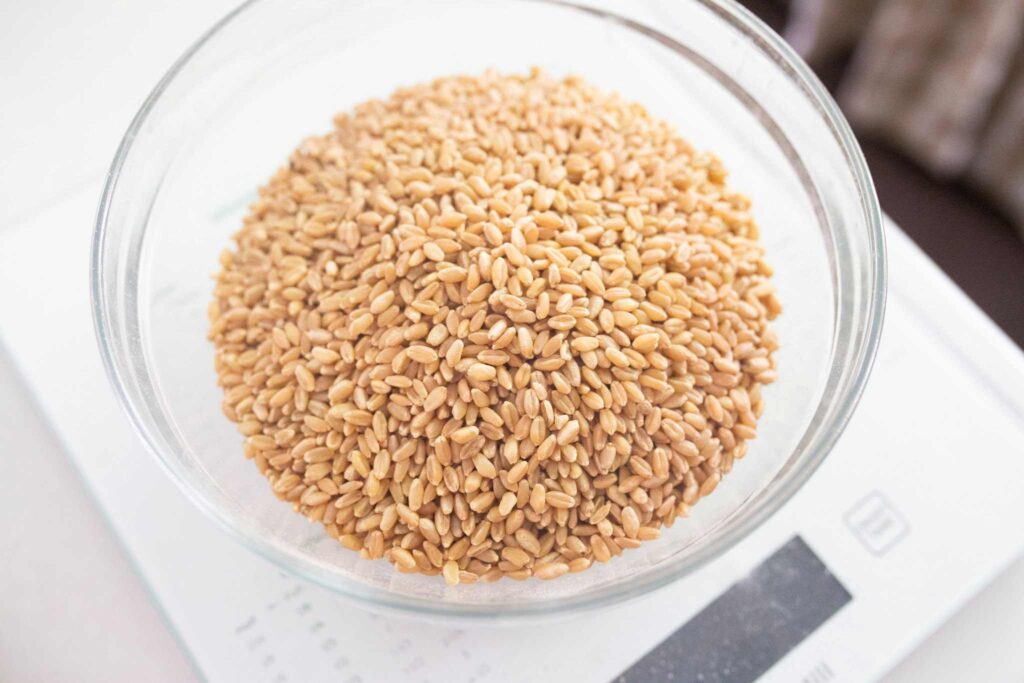
Best Wheat Berry for this Master Dough Recipe
Hard White Wheat Berries
Hard white wheat flour is mild in flavor and gives bread a light and airy texture. Because of this, hard white wheat is one of the best wheat berries to use for a master dough.
This flour builds gluten and structure easily with kneading for a great rise and fluffy crumb. Hard wheat is also higher in protein aiding in better gluten development.
Perfect for bread, cinnamon rolls, dinner rolls, and more, hard white wheat is a go-to in my kitchen for an all-around flour choice.
Hard Red Wheat
Hard red wheat flour has a nutty flavor and more hearty texture. Use hard red wheat if you are looking for a more flavorful and heartier bread product.
Like hard white wheat, hard red wheat builds gluten quite easily for a great rise and texture.
Perfect for bread, dinner rolls, pizza, and more.
NOTE: You can use any combination of these wheat berries as well to make a customizable flavor and texture profile
Spelt or Kamut
Both of these are great ancient grain alternatives for this dough.
Spelt has a hearty texture and deep nutty flavor whereas Kamut has a buttery texture and milder flavor.
Keep in mind, ancient grains do not develop gluten quite like modern wheat so take this into consideration when using 100% of either of these.
You will want to knead for less time to develop the gluten because of the risk of over-kneading these types of dough made with ancient wheat.
Einkorn
Einkorn flour is much lower in gluten and higher in moisture making it a bit more difficult to build gluten.
Consider combining Einkorn flour with modern Hard Wheat Berries for best results, especially if you are a beginner to Einkorn Baking.
Tools you may need for this recipe
Grain Mill – I use the NUTRIMILL CLASSIC GRAIN MILL
Stand Mixer – I prefer using the NUTRIMILL ARTISTE MIXER. It performs flawlessly with whole wheat flour doughs.
Kitchen Scale – For beginners, I highly recommend investing in a KITCHEN SCALE as it ensures perfect results every single time.
Mixing Bowl – A big MIXING BOWL is great for mixing dough and as a vessel for the dough to rise in.
Bench Scraper – Sometimes overlooked, the humble BENCH SCRAPER is indispensable in your baking toolbox!
Baking Sheet/Loaf Pan – A BAKING SHEET and a LOAF PAN will be needed for most recipes you will make from this dough.
Ingredients needed for this Master Fresh Milled Flour Dough Recipe
- Fresh Ground Flour – You can choose hard white wheat, hard red wheat, Spelt, Kamut, a portion of Einkorn or any combination of these. I would not recommend using 100% Einkorn. I would use a combination of Einkorn with a hard wheat for best results.
- Water – Use filtered water if possible for best results.
- Oil – I use olive oil. You can substitute with avocado oil, melted coconut oil, or melted butter.
- Honey – Honey is optional, but this small amount really makes the flavor amazing!
- Egg – An egg is used for texture and to prevent crumbly bread.
- Salt – I use fine sea salt.
- Instant Yeast – If you only have active dry yeast, you will need to proof the yeast before using. To do this, hold back 1/4 cup of the water for the recipe. Heat to 100-105 degrees F and sprinkle the yeast over the water. Stir until combined, cover, and let sit for 5-10 minutes or until the mixture appears foamy. Do this during the last 10 minutes of the soaking time for th dough.
Full ingredient amounts can be found in the printable recipe card below
How to make a Master Fresh Milled Flour Dough Recipe
Step 1: Mill the Flour
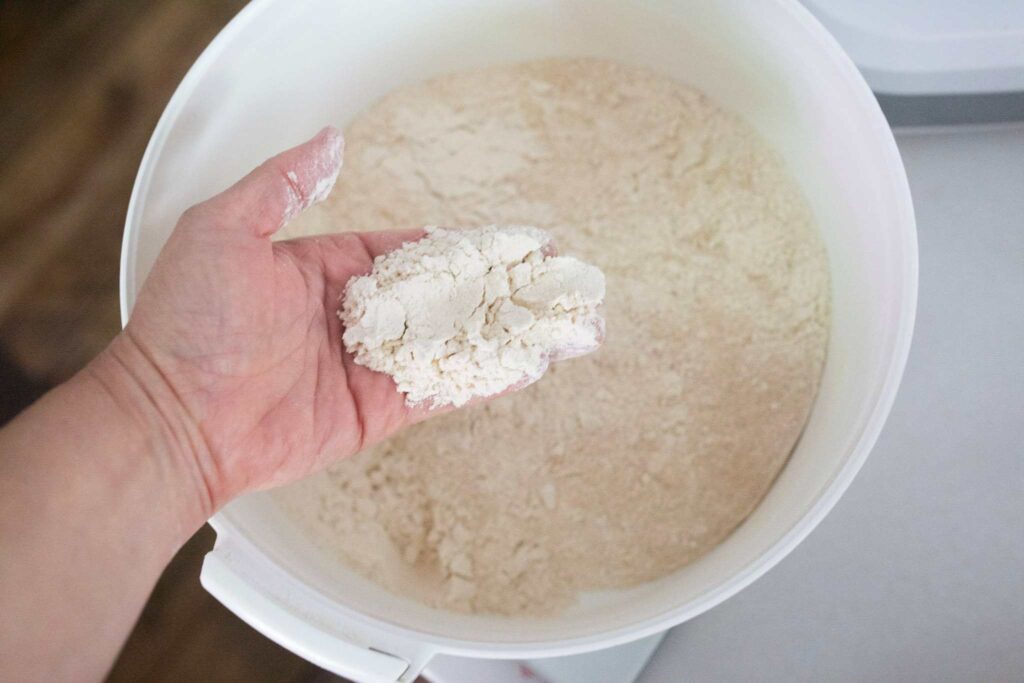
Mill wheat berries on the fine setting of your grain mill.
Step 2: Mix the Dough (minus salt and yeast)
Heat the water to 100-105 degrees F.
In the bowl of a stand mixer with a dough hook attachment, add the water, oil, honey, egg, and flour.
Mix on speed 1 until just combined and no dry bits of flour remain.
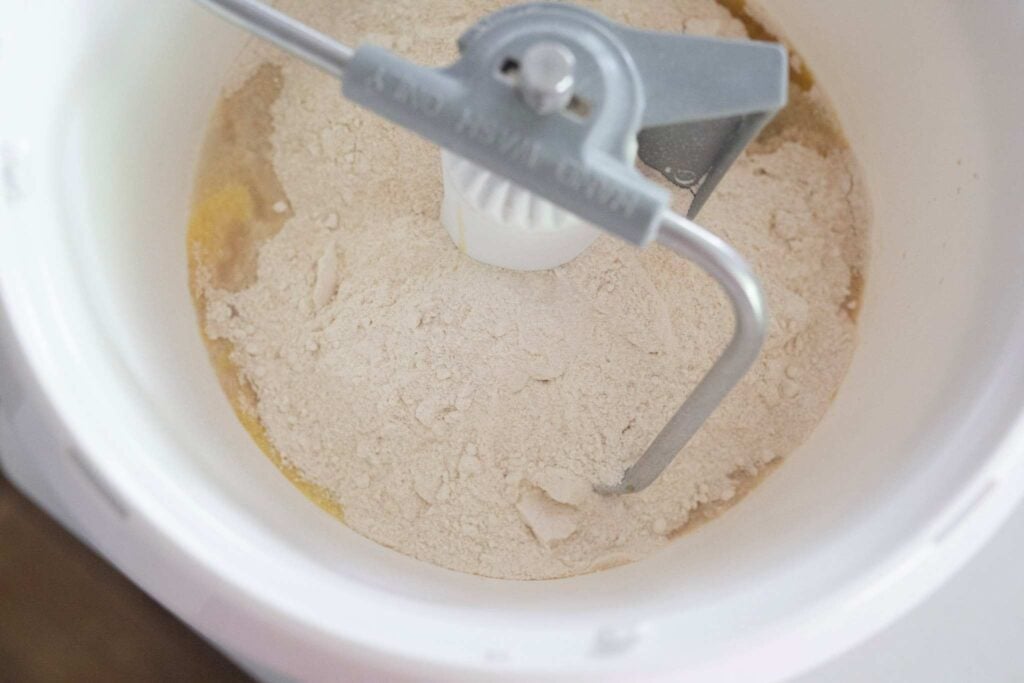
Step 3: Soak the Dough
Cover and let this dough soak or rest for 30 minutes.
Step 4: Add Yeast, Water, and Knead the Dough
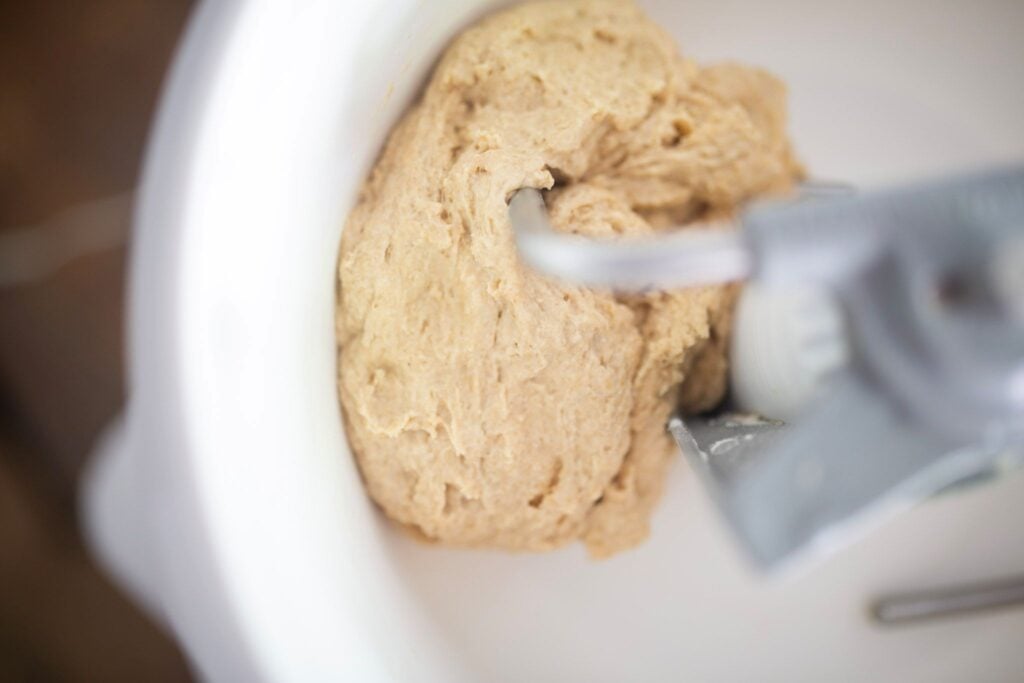
Sprinkle the salt and yeast over the dough and knead on speed 2 for 6-8 minutes or until the dough is stretchy and glossy.
Pinch off a piece of the dough and stretch it out between your fingers. If the dough can be stretched thin enough to see through it without breaking, the dough is kneaded properly and ready to rise.
If it breaks easily, continue kneading for 2 minutes at a time and check the dough again.
This is the “windowpane test“.
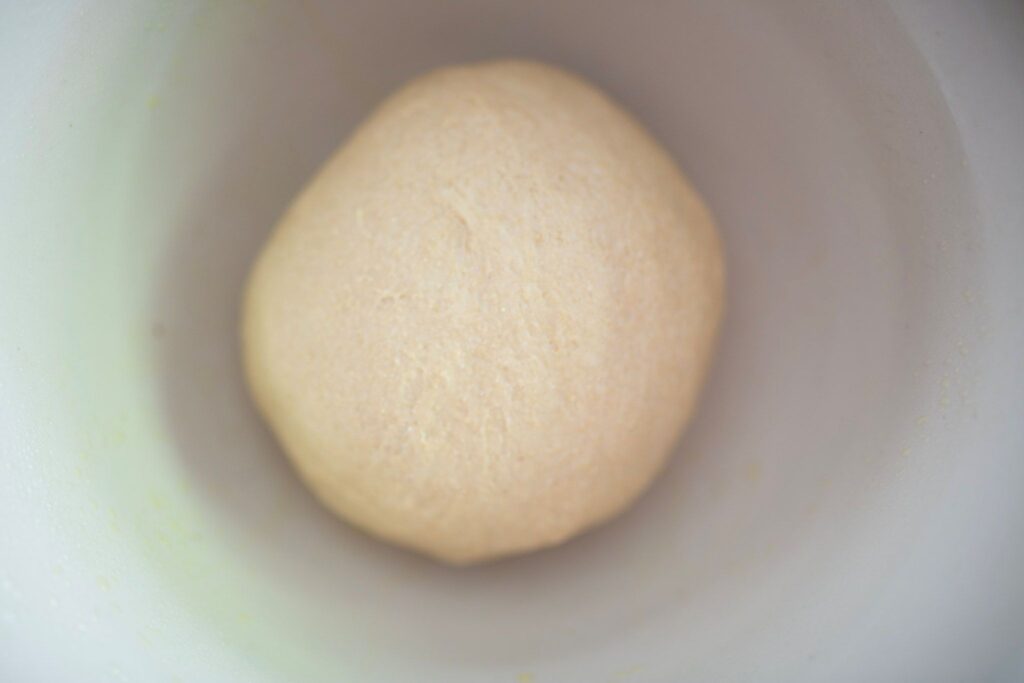
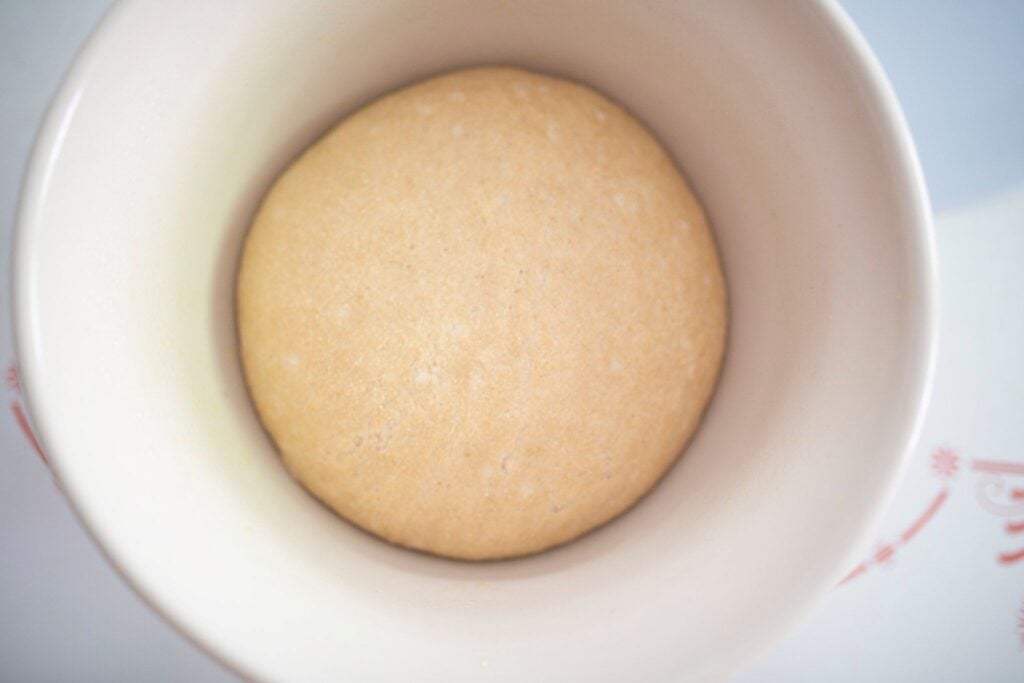
Step 5: First Rise (Bulk Fermentation)
Transfer the dough to a lightly greased large mixing bowl.
Cover and let rise for 1 to 1 1/2 hours at room temperature or until doubled in size.
Step 6: Shape the Dough and Bake (Several Options)
At this point, you can decide to make a sandwich loaf, a pizza crust, a batch of dinner rolls, cinnamon rolls, hamburger or hotdog buns, or hoagie rolls.
Depending on the recipe you choose, punch down the dough and shape your dough accordingly.
For a sandwich loaf, pat out the dough to press out the bubbles and roll back into a loaf shape. Place in a prepared loaf pan and let rise for 30 minutes to an hour or until the dough tops over the rim of the pan.
Bake at 350 degrees F for 35 minutes. Cool the loaf of bread completely before slicing.
For dinner rolls, divide the dough into 12 equal pieces and roll into balls. Place on prepared baking sheet and cover with a towel. Let rise 30 minutes to an hour.
Bake at 400 degrees F for 15 minutes.
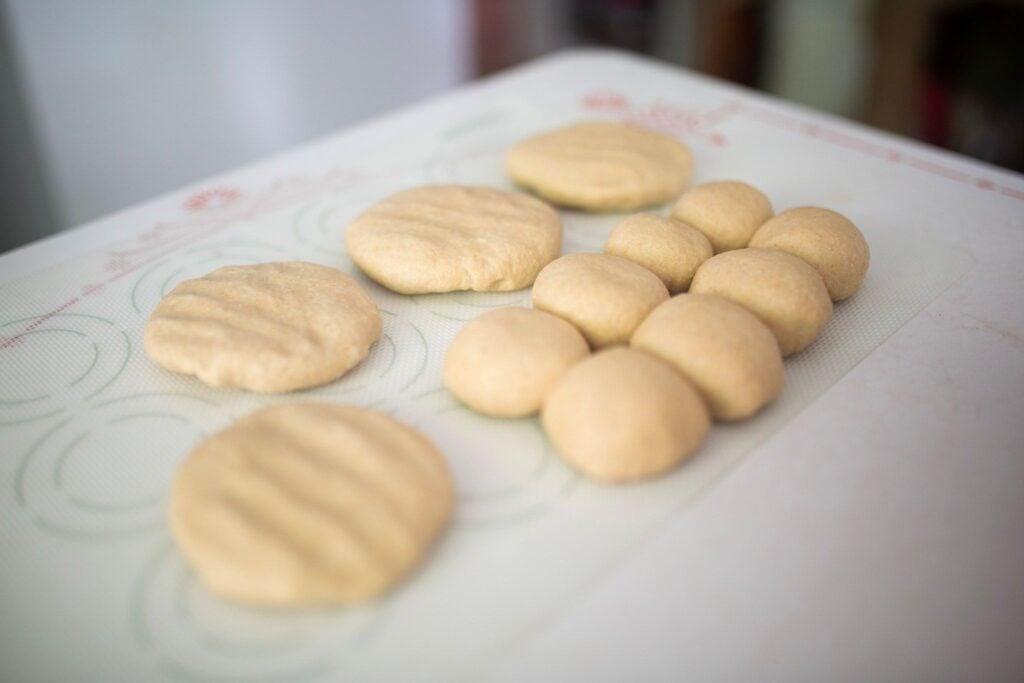
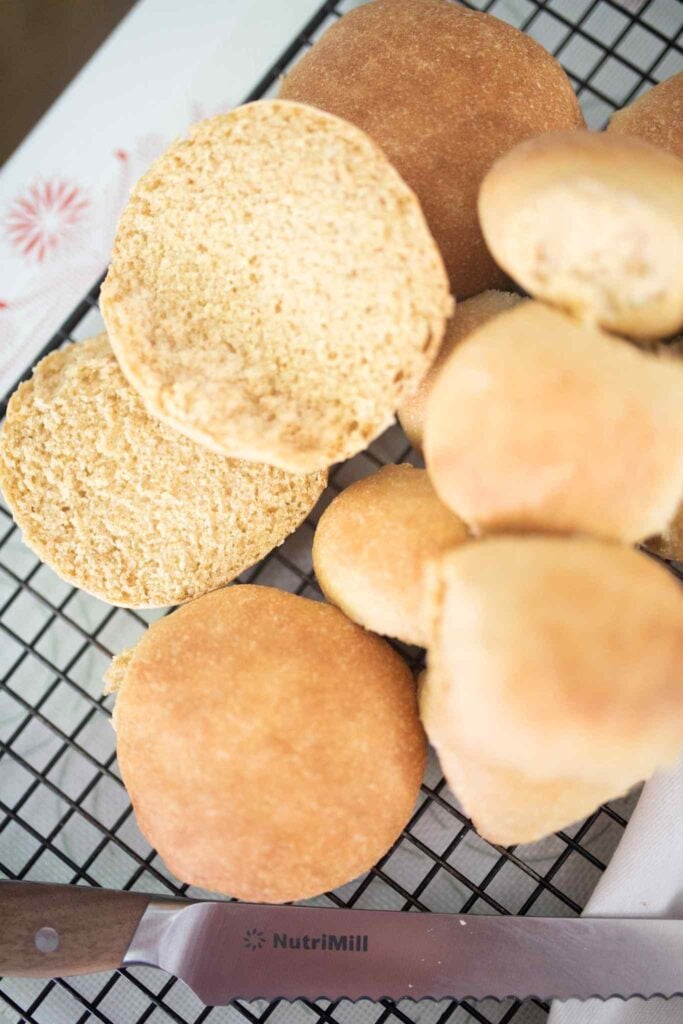
If you choose to make hamburger or hotdog buns, divide into 8 equal pieces and shape either into a round (hamburger) or oblong (hotdog) shape and place on a baking sheet to rise for 30 minutes to an hour covered.
Bake at 400 degrees F for 18 minutes.
You can use this dough for a pizza crust as well. Simply pat the dough into your pizza pan, top with your favorite toppings and bake at 450 degrees F for 20-25 minutes.
Another option is to make cinnamon rolls. Roll the dough out into a rectangle and top with cinnamon and sugar mixed with softened butter. Roll the dough back up into a log and cut into 12 equal pieces.
Place in a prepared baking pan or cast iron skillet and let rise an additional 30 minutes to an hour.
Bake at 400 degrees F for 18 minutes.
Other Variations for this Dough
Focaccia
Prepare a 12 inch cast iron skillet by adding a tablespoon of oil and covering the pan.
Turn the dough into the prepared pan.
Drizzle the top with a tablespoon of olive oil and press your fingertips into the dough to dimple it out into the pan.
Once the dough is evenly distributed on the pan, cover with plastic wrap or a clean towel.
Let rise an additional 30 minutes. Preheat the oven to 400 degrees F.
Bake in preheated oven for 20-25 minutes until lightly golden brown.
Breadsticks
Divide the bread dough into 12 equal pieces. I find this to be easiest with a bench scraper.
Roll out each piece of dough into a rectangle that is 6 inches long using a rolling pin.
It doesn’t have to be perfect. You are looking for an even rectangular shape that is thin enough to roll up from the long end.
Roll the dough tightly and pinch the seem closed.
Place on a parchment paper lined baking sheet. Cover with plastic wrap or damp tea towel and allow to rise for 30 minutes to 1 1/2 hours in a warm place.
Preheat oven to 400 degrees F.
Bake bread sticks in preheated oven for 18-20 minutes or until lightly golden brown.
Pretzels
Divide the dough into 12 equal pieces.
Take each piece and roll it out into a log shape that is approximately 16 inches long. (Don’t over think it, just make a fairly long rope)
Take the log and pull each end up into a “U” shape.
Take each end and twist into each other. Twist again and press the ends of the dough into the bottom of the pretzel.
Place the shaped pretzels on a parchment-lined baking sheet.
Cover and let rise for 30 minutes to 1 1/2 hours.
Preheat the oven to 425 degrees F.
Bring 8 cups of water to a boil in a large pot. Add the baking soda.
Gently lower the pretzels into the baking soda bath with a slotted spoon.
Let boil for 30 seconds to a minute. Turn the pretzels once while boiling.
Only boil 2-3 at a time to not over crowd the pot.
Place the boiled pretzels back on the baking sheet.
Brush with an egg wash and sprinkle with salt.
Bake in preheated oven for 15-18 minutes until golden brown.
Troubleshooting Fresh Milled Flour Doughs
Why is my dough sticky?
Fresh milled flour dough tends to be a bit stickier than doughs made with all purpose flour. The reason is that the higher hydration lends itself to a softer, less crumbly texture. Try to avoid adding a lot of flour when working with the dough for the best results.
Why didn’t my dough rise?
The most probable cause would be inactive yeast. If your dough fails to rise, consider replacing your yeast.
Another problem could be the water was too hot or too cold. Ensure the water is heated to 100-105 degrees F.
Why is the bread dense?
Usually this would happen if you added more flour than called for and the dough became denser.
Another cause could be not allowing the dough to rise until doubled in size or baking for too long.
How can I tell if the dough is properly kneaded?
After kneading for 6-8 minutes, tear a small piece of the dough off and stretch it between your fingers.
If it can be stretched until you can see light through it without breaking, it is kneaded properly.
If not, keep kneading for 2 minutes at a time and repeat the test until the “windowpane” is achieved.
The dough will be glossy and stretchy.
Tips for success
- Use a kitchen scale – This is especially true for beginners. Using a scale ensures consistent results every time.
- Use Hard White Wheat or Hard Red Wheat – Either of these is a top choice because of their ability to build gluten and structure easily.
- Avoid adding more flour – By nature, fresh milled flour doughs will be stickier. Avoid adding more flour as this will make a dense dough which will lead to dense bread.
- Don’t skip the resting/soaking period – It is important to soak the dough for the best kneading results. When a dough is kneaded well, it will rise well.
Frequently Asked Questions
Consider making my MASTER SOURDOUGH DOUGH for a master sourdough recipe for all of your baking needs.
Absolutely! I would highly recommend printing this recipe and pinning to your fridge for regular use!
Yes! Freeze the dough after the first rise. Punch down the dough and store in a lightly greased freezer safe bag for up to 3 months. Remove and let thaw before proceeding with shaping and baking.
Looking for more Fresh Milled Flour Recipe?
Try this 100% Fresh Milled CIABATTA ROLL RECIPE. Crunchy on the outside, chewy on the inside, these rolls make the perfect sandwich vessels!
If you are a beginner to fresh milled flour, check out my TOP 5 MISTAKES WITH FRESH MILLED FLOUR and how to fix them!
Learn how to make FRESH MILLED FLATBREAD for a beginner friendly, soft bread that is perfect for wraps or dipping!
Have a bread machine? Try my FRESH MILLED SANDWICH BREAD IN A BREAD MACHINE!
Having one dependable master dough recipe simplifies homemade bread baking and makes baking with fresh milled flour so much easier. Once you learn how this dough should feel and behave, you can turn it into dozens of your favorite recipes your whole family will love.
If you try this recipe, let me know in the comments what you made with it!
Easy Master Dough Recipe Using Fresh Milled Flour

Equipment
- Baking Sheet or Loaf Pan
Ingredients
- 1 1/4 cup Warm Water 265 grams
- 2 tbsp Olive Oil 25 grams
- 1 tbsp Honey 10 grams
- 1 Egg
- 3 1/2 cups Fresh Milled Flour 450 grams
- 1 tsp Salt 5 grams
- 1/2 tbsp Instant Yeast 5 grams
Instructions
Mill Wheat Berries
- Mill wheat berries on the fine setting of your grain mill.
Mix Dough
- Heat the water to 100-105 degrees F.
- In the bowl of a stand mixer with a dough hook attachment, add the water, oil, honey, egg, and flour.
- Mix on speed 1 until just combined and no dry bits of flour remain.
Soak Dough
- Cover and let this dough soak or rest for 30 minutes.
Add Yeast, Water, and Knead Dough
- Sprinkle the salt and yeast over the dough and knead on speed 2 for 6-8 minutes or until the dough is stretchy and glossy.
- Pinch off a piece of the dough and stretch it out between your fingers. If the dough can be stretched thin enough to see through it without breaking, the dough is kneaded properly and ready to rise.
- If it breaks easily, continue kneading for 2 minutes at a time and check the dough again.
- This is the “windowpane test”.
First Rise
- Transfer the dough to a lightly greased large mixing bowl.
- Cover and let rise for 1 to 1 1/2 hours at room temperature or until doubled in size.
Shape Dough and Bake (With Several Options)
- At this point, you can decide to make a sandwich loaf, a pizza crust, a batch of dinner rolls, cinnamon rolls, hamburger or hotdog buns, or hoagie rolls.
- Depending on the recipe you choose, punch down the dough and shape your dough accordingly.
- For a sandwich loaf, pat out the dough to press out the bubbles and roll back into a loaf shape. Place in a prepared loaf pan and let rise for 30 minutes to an hour or until the dough tops over the rim of the pan.
- Bake at 350 degrees F for 35 minutes. Cool the loaf of bread completely before slicing.
- For dinner rolls, divide the dough into 12 equal pieces and roll into balls. Place on prepared baking sheet and cover with a towel. Let rise 30 minutes to an hour.
- Bake at 400 degrees F for 15 minutes.
- If you choose to make hamburger or hotdog buns, divide into 8 equal pieces and shape either into a round (hamburger) or oblong (hotdog) shape and place on a baking sheet to rise for 30 minutes to an hour covered.
- Bake at 400 degrees F for 18 minutes.
- You can use this dough for a pizza crust as well. Simply pat the dough into your pizza pan, top with your favorite toppings and bake at 450 degrees F for 20-25 minutes.
- Another option is to make cinnamon rolls. Roll the dough out into a rectangle and top with cinnamon and sugar mixed with softened butter. Roll the dough back up into a log and cut into 12 equal pieces.
- Place in a prepared baking pan or cast iron skillet and let rise an additional 30 minutes to an hour.
- Bake at 400 degrees F for 18 minutes.




Hi! How much sourdough starter would I use to replace the yeast.
Half a cup of starter will replace a packet of yeast or 2 1/4 tsp of yeast.
Thank you!
super easy recipe and instructions! thank you!
Im literally standing by my KA mixer with this in now. I kneaded for several minutes, then tried for window pane. Its still pretty sticky and broke right away. I’ve seen posts about mixers like yours being quicker than a KA. Any idea on how long to knead this with a KA?
thanks!
I had someone tell me that there’s kneaded for almost 20 minutes in the Kitchen Aid. I would suggest just letting the dough knead until it gets stretchy.
Thanks!! Yeah, I ended up kneading about 18 minutes. I also added about 2 additional tablespoons of water after a while and it seemed like it wanted to window pane, but it was too dry. I made 4 big burger buns and 6 rolls. Burgers for dinner tomorrow night. The rolls are gone 🙂
Mary,
Can you tell me what size loaf pan and how many this recipe will fit in:
1.0 Lb (8 x 4.5 x 2.7)
1.25 Lb (9 x 5 x 2.7)
1.5 Lb (10 x 5 x 3)
You can make a 1 pound loaf and another batch of something else, or you can make a 1.5 pound loaf with the entire recipe.
What kind of wheat berries do you reccomend ??looks like an amazing go to recipe! I’m just starting out and haven’t had much success on getting my fresh milled goodies to rise and they’re pretty dense yet so I’m excited to try this thanks in advance for answering my question🤍
For beginners, I 100% recommend hard white wheat for this recipe. It’s mild, builds gluten very well, and is much easier to work with.
Mary Rose, thank you for your website! Have you ever worked with fruit yeast water? I am trying to find a recipe for bread made from both fresh milled flour AND fruit yeast water. Thank you!
I never have but am certainly intrigued! I have to look into this and quick!
Mary, thank you so much for this reliable freshly milled flour recipe. It turns out great every time for soft sandwich bread, and hamburger buns.