
Where to Buy Wheat Berries for Fresh Milled Flour
If you’re just getting started with fresh milled flour, one of the first questions you’ll probably have is: Where to buy wheat berries for my fresh milled flour?
There are several places you can purchase wheat berries, from local sources to online grain suppliers. In this post, I’ll share where I personally source my wheat berries, what I look for when choosing a supplier, and a few things I wish I had known when I first started milling my own flour.
This post may contain affiliate links. I may make a small commission on sales at no extra cost to you. As an Amazon Associate, I make commissions on qualifying purchases
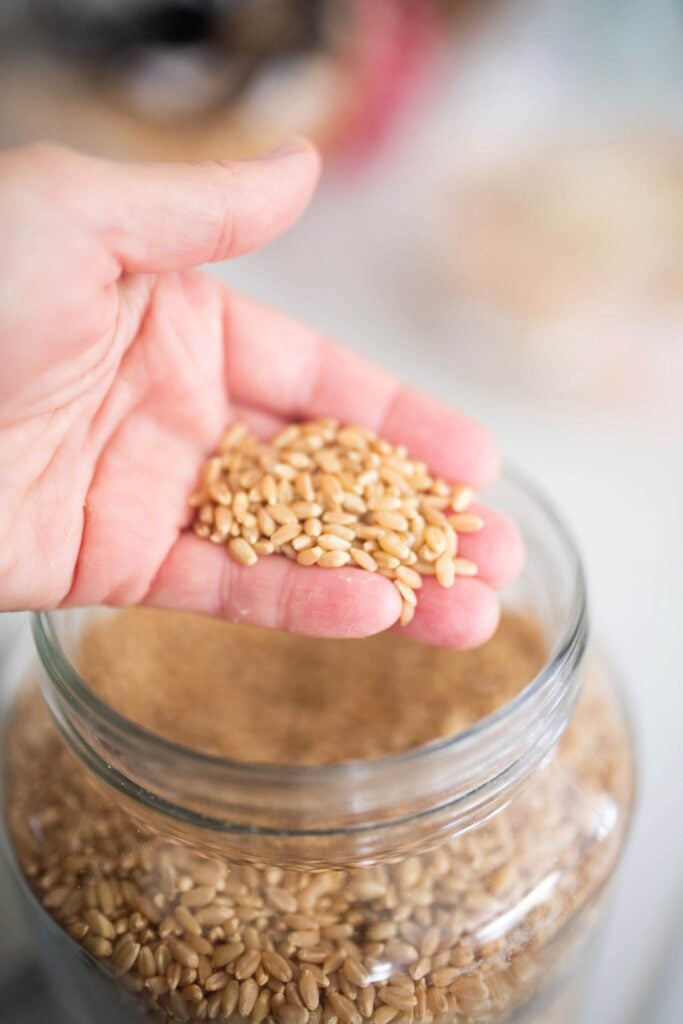
What are Wheat Berries?
Wheat berries are the whole, unprocessed kernels of whole grain wheat. There are 3 parts to a wheat kernel:
- Germ – Contains vitamins, protein, and healthy fats.
- Bran – Contains fiber and antioxidants.
- Endosperm – Contains mostly starch and bit of protein.
If you’re brand new to fresh milled flour, be sure to check out my post: Milling Fresh Flour: The Ultimate Beginners Guide
Where I buy my Wheat Berries
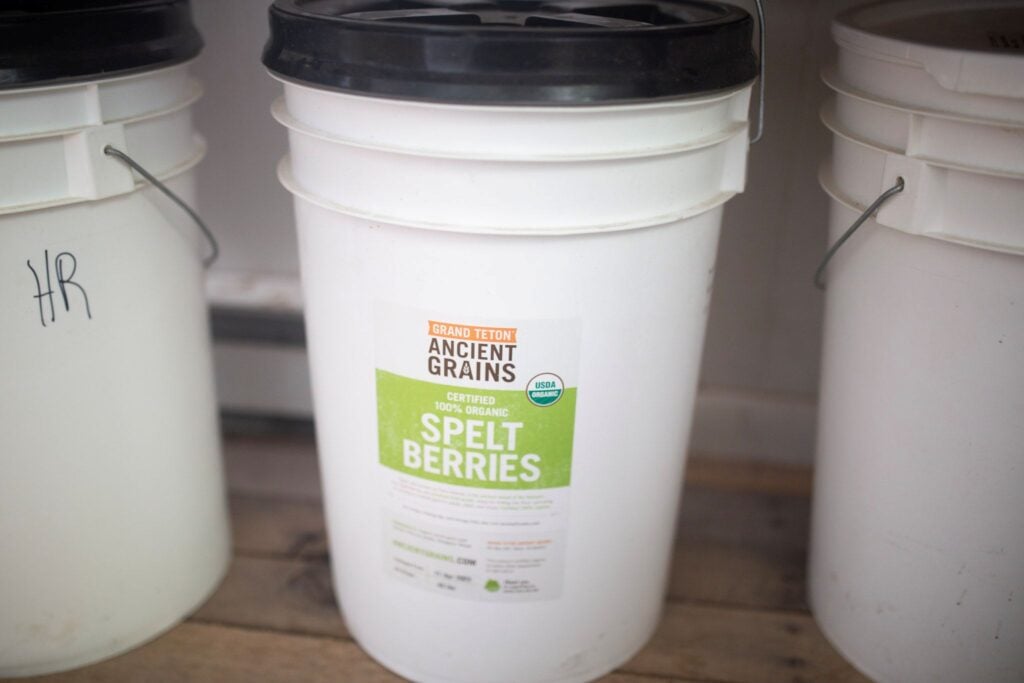
Source #1: Ancient Grains (Grand Teton)
I have been purchasing from ANCIENT GRAINS for years! I particularly love their:
- Hard White Wheat/Hard Red Wheat
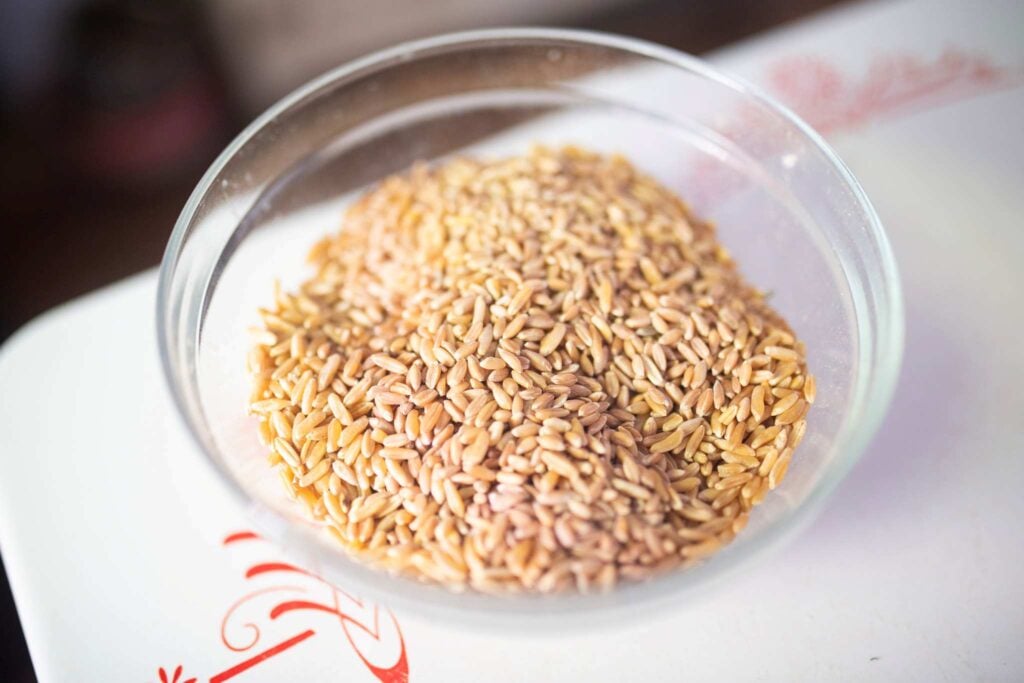
- Einkorn
- Spelt
The grain is always superbly clean and fresh tasting. They also offer Soft White Wheat, Emmer, Khorasan, Millet, Quinoa, and Durum Wheat.
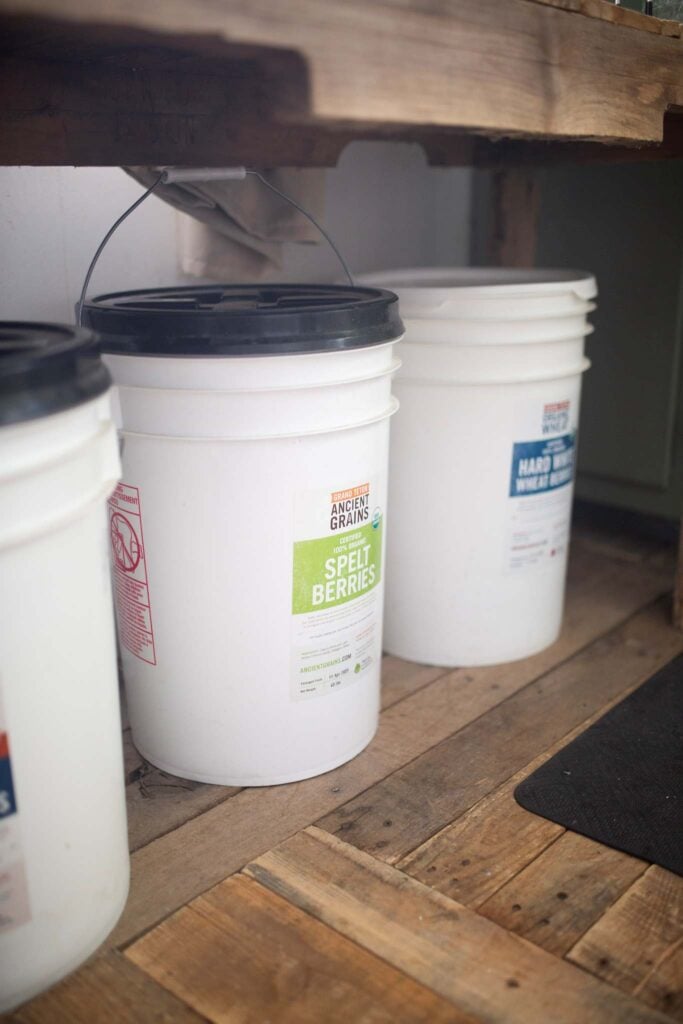
They have 2.5 lbs-48 lbs options. The 6 gallon bucket option is 43 lbs. All are ORGANIC and REGENERATIVELY FARMED.
Shipping is fast and free if you order 48 pounds or more.
Source #2: Pleasant Hill Grains (Bulk Buying)
For years, I ordered all of my wheat from PLEASANT HILL GRAINS. They offer bulk amounts of many different grains including:
- Ancient Grains
- Hard Wheat
- Soft Wheat
- Oat Groats
- Quinoa
- Popcorn
- Rice
- Flax
- Chia
- Beans
And more! They offer organic and non-organic options.
Keep in mind, they offer SUPERPAILS which are 43 pounds of grain.
Shipping is free on orders over $75.
Source #3: Amazon
There are several very good options available on Amazon. I will list the brands I have personal experience with:
- For Soft White Wheat, I love the FINDLAYS brand. They are organic and come in a 10 pound paper bag. These berries are very clean and have a wonderful flavor!
- Another great option for several grain types in smaller amounts is BE STILL FARMS. They offer many different whole grains from wheat to buckwheat to amaranth! They come in 4.8 pound bags and are always clean and high quality.
- For Einkorn berries, the JOVIAL BRAND is very high quality. They also offer pasta, all purpose flour, and whole wheat flour.
Of course, ordering from Amazon can be very convenient for a lot of people. Most of the options are shipped for free and arrive quickly. Both of these options are ORGANIC as well.
Source #4: Palouse Brand
While PALOUSE BRAND GRAINS are not certified organic, they are CERTIFIED GLYPHOSATE FREE.
This means they are certified (tested) as being FREE FROM GLYPHOSATE. This doesn’t mean there are no other chemicals used on the grains.
You can get 10% off entire order with a minimum purchase of $75 (Limited to one use per customer) with my coupon code: ROSEHOMESTEAD.
This brand offers several different types of grains from wheat to beans and are always clean and of high quality.
Honorable Mentions
These are brands I have ordered from and found them to be high quality, but either they don’t offer the size I wish to purchase or I haven’t used all of the grains yet.
One brand I have been using recently and find to be of great quality is HOMESTEAD GRISTMILL. They are organic and perfectly clean. I have used them and find they build gluten superbly and have a wonderful flavor! You can order 35 lb buckets and a very reasonable cost, as well!
Now, for Kamut or Khorasan, I always used to order from THE FOOD NANNY. I even had a subscription to the 25 pound bags of grain. However, they no longer offer these large bags and I have since started ordering my Khorasan from Ancient Grains instead.
The grains were always impeccably clean and high quality.
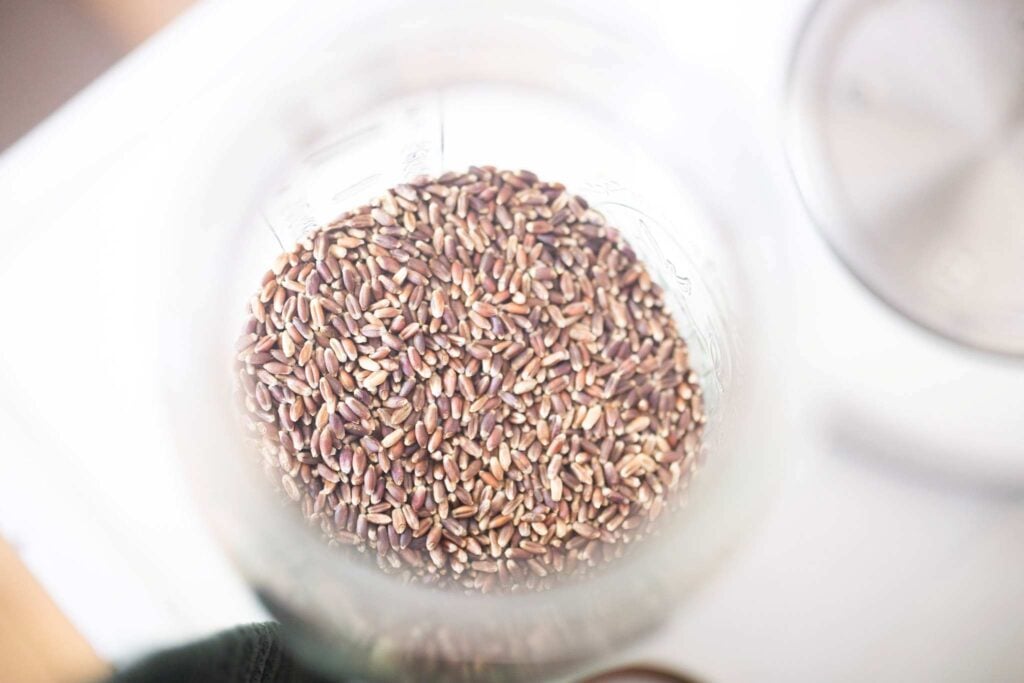
I recently started using Heartwell Purple wheat (which I LOVE) and I ordered it from 4 GENERATIONS ORGANIC FARMS.
Their grains were perfectly clean, however I have only ordered from them one time so I can’t say how they will be long term.
What to Look for When Buying Wheat Berries
Choose based on how they will be used:
- Hard White Wheat and Hard Red Wheat – These are used for bread products that require gluten development. High in protein, they build structure very well and are easy to work with. For more information on what wheat berry you should use for specific recipes, READ THIS ARTICLE.
- Ancient Grains – Ancient grains are highly popular for their flavor and because they are not hybridized. However, they can be a bit more difficult to work with. Use recipes specifically for them and you will have much better results. For an in depth look at ancient grains for beginners, CLICK HERE!
- Soft White Wheat – Soft wheat works wonderfully for quick breads, cakes, muffins, or any recipe that doesn’t require gluten development.
Here is a brief overview of the most popular wheat varieties:
| Wheat Berry | General Characteristics | Common Uses |
|---|---|---|
| Hard White | Mild, slightly sweet | Sandwich bread, rolls, everyday bread |
| Hard Red | More robust wheat flavor | Artisan bread, hearty loaves |
| Soft White | Lower protein | Biscuits, pastries, cakes |
| Khorasan | Rich, buttery flavor | Bread, rolls, baking |
| Einkorn | Distinctive flavor | Bread and specialty baking |
Do I need to buy ORGANIC?
Keep in mind that organic and glyphosate-free are not necessarily the same certification/claim.
- Certified Organic – When products are certified to be organic, this means the product has been grown, raised, or processed following standards that promote ecological balance, conserve biodiversity, and cycle resources responsibly. In the United States, the USDA National Organic Program (NOP) regulates these standards, prohibiting synthetic fertilizers, most pesticides, sewage sludge, irradiation, and genetically modified organisms (GMOs) in organic production and handling. (Source: USDA Certified Organic: Understanding the Basics | Agricultural Marketing Service)
- Certified Glyphosate Free – A product labeled as Certified Glyphosate Free has undergone rigorous third-party testing to confirm that it contains no detectable glyphosate residues, typically below 0.01 parts per million (ppm), which is stricter than most government maximum residue limits in the EU and Japan. (Source: Glyphosate Residue Free | The Detox Project)
I personally prioritize ORGANIC GRAINS. If you have any questions about a certain companies’ practices, send them a message or give them a call. Most will be more than happy to answer any questions you may have.
Should You Buy Wheat Berries in Bulk?
Buying in bulk
Pros:
- Usually cost less per pound
- Convenient for heavy millers
- Less ordering
Cons:
- Requires proper storage
- Takes up a lot of space
- May be overwhelming for a beginner
I personally buy all of my grains in bulk, however if you feel overwhelmed by larger amounts, consider ordering smaller amounts.
If you are interested in how to properly store wheat berries (long and short term), READ THIS.
How I store my Wheat Berries
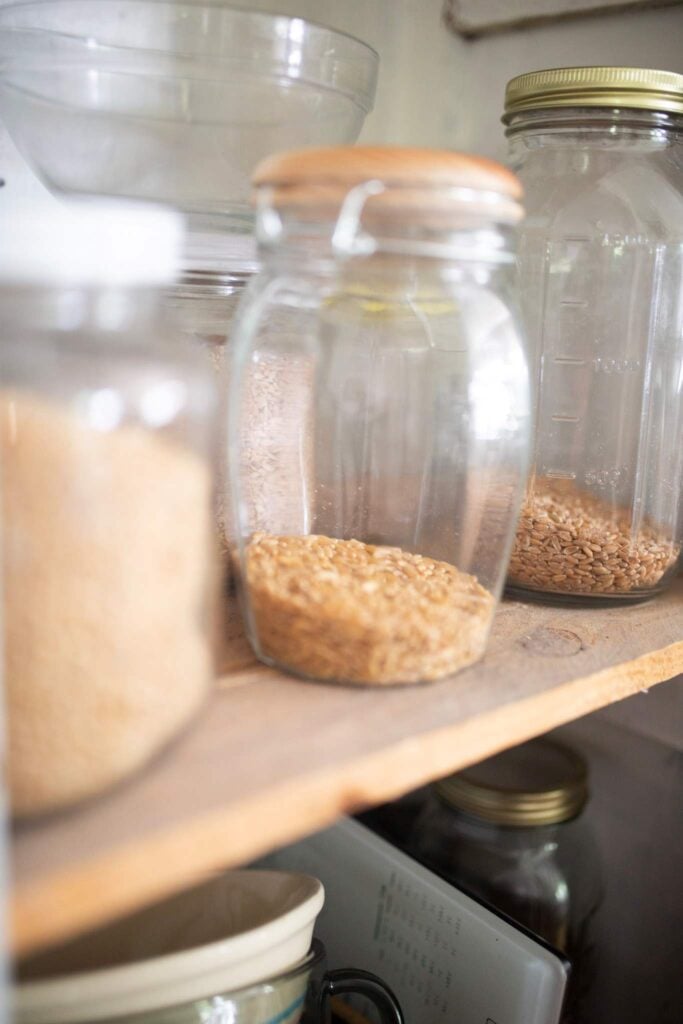
I store all of my grain in 5- or 6-gallon buckets (LIKE THESE) with airtight lids in a cool, dry, and dark place.
The main priority is to protect the grain from moisture, light, and pests.
Stored this way, your grains can last for a few years! I like to take smaller amounts out and store them in half gallon mason jars on the counter for convenience.
How Much Wheat Should You Buy?
If you’re brand new to fresh milling, you don’t need to buy 50 pounds of every variety you’ve ever heard of!
I suggest starting with 10-25 pounds of a Hard Wheat (White or Red) and 5-10 pounds of Soft White Wheat.
These are manageable to store and will give you enough to bake with for quite a while.
You can also gauge how much you will go through in a given amount of time and adjust your ordering in the future.
My Favorite Wheat Berries for Beginners
For Everyday Bread
Hard White Wheat or Hard Red Wheat (for a heartier flavor).
For Quick Breads (Muffins, Cakes, Biscuits)
Soft White Wheat
For trying Ancient Grains
Spelt or Khorasan (these 2 are easier to work with as a beginner).
For working with Einkorn flour, consider STARTING HERE.
For working with Spelt, START HERE.
Where Can You Buy Wheat Berries Locally?
If you are lucky enough to have local sources for grains, I would highly suggest buying from them.
Places that may have grains for purchase include:
- Local Mills
- Farm Stores
- Local Farms
- Co-ops
- Bulk Food Stores
Call ahead and see what grains your local sources carry. I suggest buying a small amount at first to see if the quality meets your standards.
Quick word on gear
There are so many grain mill varieties out there! I personally use NUTRIMILL GRAIN MILLS and love them! They offer both impact style and stone mills.
Frequently Asked Questions
Properly stored, wheat berries will last for many years! Keep in mind, once milled the flour will spoil more quickly so I suggest only milling what you need when you need it.
The main difference is the practices by which the grains are grown. Certified organic grains will be free from pesticides and herbicides. You can find certified glyphosate free grains as well. It is a personal choice. As far as quality, you will likely not be able to tell a huge difference.
They perform very similarly, however hard red wheat is much more flavor forward and hearty. Hard white is milder in flavor.
Yes! If you mill 390 grams of wheat berries, you will get 390 grams of fresh milled flour.
Final Thoughts
When I first started milling my own flour, figuring out where to buy wheat berries felt like another piece of the learning curve. Thankfully, there are more options available than you might think.
My advice is to start with a few varieties rather than buying every grain you can find. Once you learn how each wheat berry behaves in your recipes, you can branch out and experiment with different grains and blends.
Buy in smaller amounts at first and work your way up as you go to avoid overwhelm.
Comment down below what your favorite wheat berry is!


I have bought two buckets of the Heartwell Purple Wheat from 4 Generations Organic Farms. Both buckets have been VERY clean wheat. I would highly recommend them to anyone.
Thank you! So far, I am impressed!