Fresh Milled Ancient Grains Beginner Starter Guide
After using fresh milled flour for quite some time in my kitchen, I made the progression into Ancient Grains. The reason was 2 fold: 1. Fresh Milled Ancient Grains are much easier on digestion, 2. Ancient grains have superior nutrition.
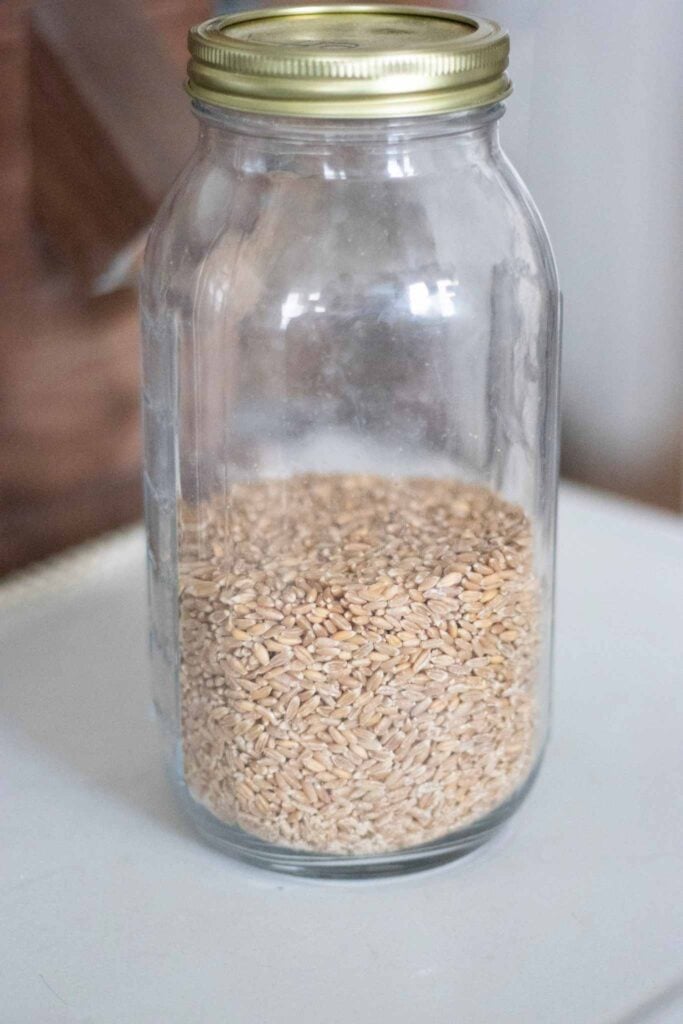
In this beginner’s guide, I will guide you through slowly adding these amazing grains into your baking routine and share several recipe links that use them.
Although there is a learning curve, it is not quite as difficult as you may think to start baking with ancient wheat!
This post contains affiliate links. I may make a small commission on sales at no extra cost to you. As an Amazon Associate, I make commissions on qualifying purchases
What are Ancient Grains?
Ancient grains are grains that have not been touched for 1000s of years! They are NOT hybridized which means they have not been crossed with other wheat varieties throughout their history.
In contrast, modern wheat varieties have been hybridized to make them easier to grow, more disease resistant, and have a greater yield.
Because ancient grains are not hybridized, they behave quite differently in baking. They generally have a weaker gluten structure making gluten development a bit trickier.
For example, Einkorn and Emmer will only get stickier with kneading, whereas Spelt and Kamut (Khorasan) are a bit easier to work with in this regard.
If you are brand new to milling your own flour, START HERE!
Why bake with Ancient Grains?
- Superior Nutrition – Ancient grains have greater nutritional value than modern wheat because they are pure strains and their nutrient values have remained intact and unchanged throughout time.
- Flavor – I find ancient grains to be much more flavorful than modern wheat. Nutty and buttery, they impart an amazing amount of flavor to your baked goods.
- Easier to Digest – Because of their weaker gluten structure, ancient grains are easier on digestion making them the best choice for those who have bloating and digestive issues after eating modern wheat.
PLEASE KEEP IN MIND, THEY STILL HAVE GLUTEN AND SHOULD NOT BE CONSUMED BY THOSE WHO HAVE BEEN DIAGNOSED WTIH CELIAC DISEASE UNLESS UNDER THE CARE OF THEIR PHYSICIAN!
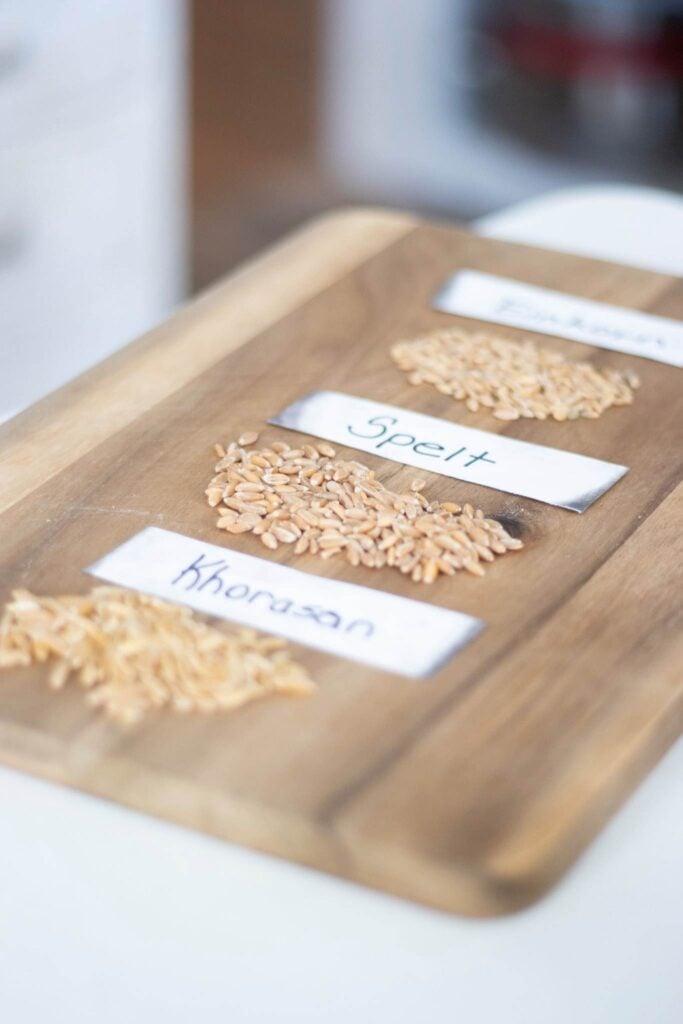
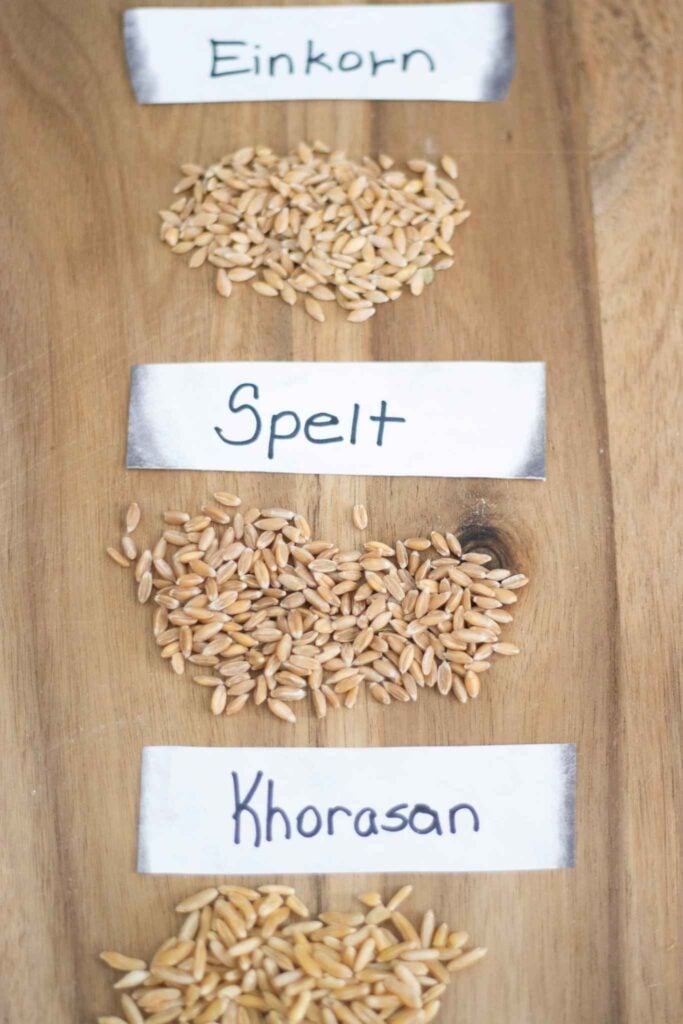
Best Ancient Grains to use for Beginners
Ancient grains offer health benefits and increased flavor over modern wheat that make them favorable in home baking!
Spelt
- The easiest ancient grain for beginners as it behaves most like hard wheat than any of the other ancient grains.
- The perfect substitute for Hard White Wheat or Hard Red Wheat as it develops gluten quite similarly to these hard wheat varieties.
- Incredible flavor with its nutty, earthy taste it adds to your baked goods.
- Makes an incredible sandwich loaf, LINKED HERE!
Kamut/Khorasan
- Much like Spelt, Kamut can be easier to begin with in your ancient grain baking journey. It develops gluten quite well and can be kneaded without becoming to sticky to work with.
- Kamut has a buttery flavor and color. It is one of the lightest ancient grains to work with and makes a wonderful sandwich loaf, LINKED HERE!
Einkorn
- Einkorn has the most pronounced flavor of all three of these grains. Very nutty and hearty, baked goods made with Einkorn are quite filling!
- I have found Einkorn flour to be the best alternative to soft white wheat flour in my baking due to its weak gluten structure, higher moisture content, and lower protein content.
- This lower gluten level makes Einkorn quite different to work with (much like soft wheat). You need to gently develop gluten. The typical kneading for 8-10 minutes actually hinders the dough from building structure. A softer stretch and fold technique helps develop gluten much better.
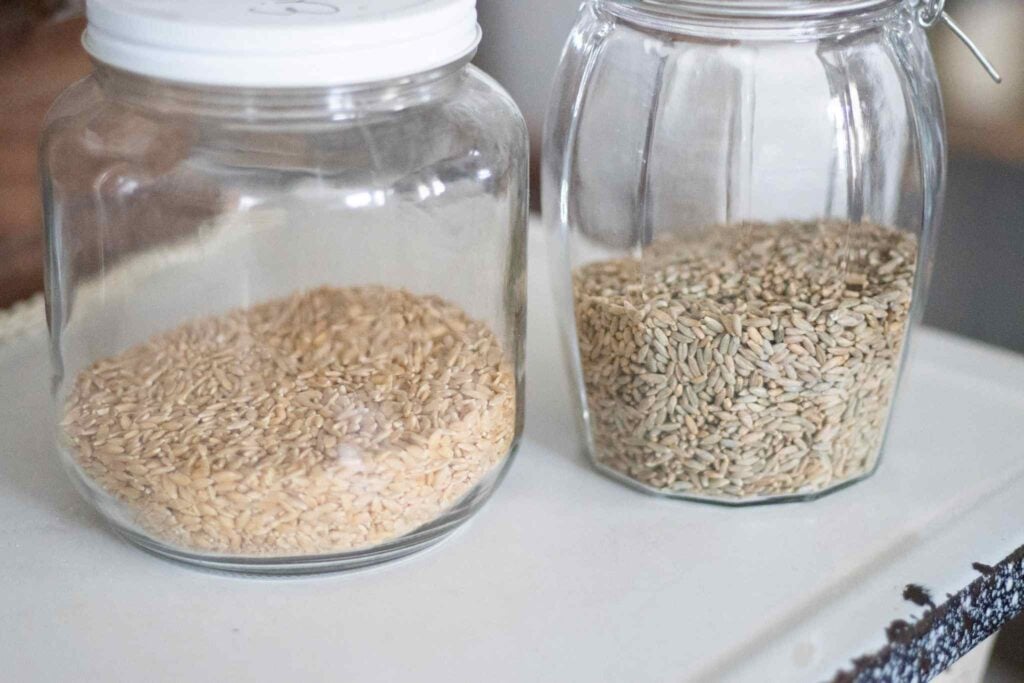
Shop this Post
Grain Mill – I use the NUTRIMILL GRAIN MILL for fresh milling my grains. Of course, any electric mill works great!
Fun fact! My first mill was a hand crank mill! It worked great and I still use it from time to time, it is LINKED HERE! Believe or not, manual mills are making a come back!
Stand Mixer – For kneading my dough, I use the BOSCH MIXER. I use the low setting for ancient grain doughs. Use code: rose20 for $20 off!
Grains – I purchase my ancient wheat berries from ANCIENT GRAINS. They are the cleanest, freshest grains I have found. They have bulk grains in 6 gallon buckets for long term storage as well as smaller quantities available. Grand Teton Ancient Grains is by far my go-to for all my ancient grains!
Tips for baking with Ancient Grains successfully
- Start with a portion of ancient wheat added to your modern wheat recipes – When you first start using ancient grains, it’s important to start slowly! This slower process will familiarize you with the changes in texture and gluten development.
- Start with lower hydration doughs – I have found it to be much easier to transition to fresh milled ancient grains when starting with low hydration doughs. This gives you a dough that is much easier to work with and learn on. Slowly increase the hydration of the dough for a lighter, fluffier end product.
- Adjust fermentation times – In my experience, fresh milled ancient wheat ferments a bit more quickly than dough made with modern wheat. My advice is to keep a closer eye on the dough for signs of fermentation.
- Expect a different experience with your dough – This is especially true with Einkorn. Your dough will be stickier and slower to build structure. However, it is worth it to stick with it and master working with ancient grains.
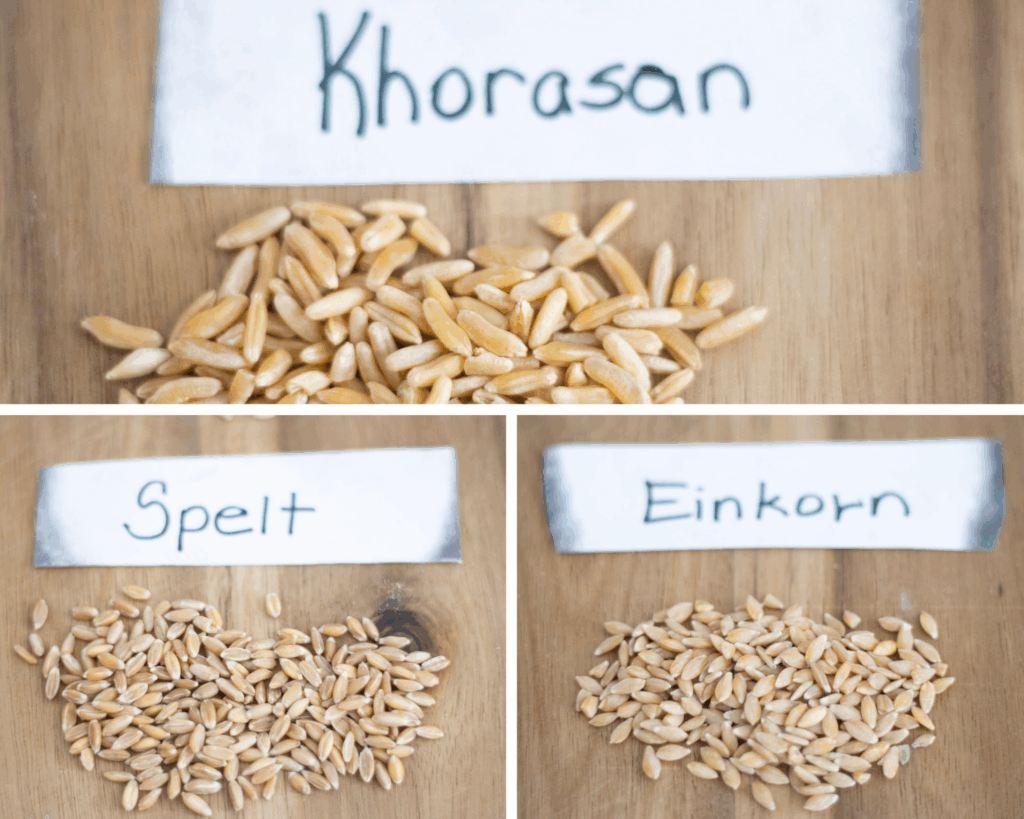
Fresh Milled vs All Purpose Ancient Grains
Much like modern wheat all purpose flour and fresh flour, the store-bought flour is sifted of most of its essential nutrients. This is so important to keep in mind when choosing between pre-packaged ancient wheat flour and the whole grains. If you don’t mill your own grains, the all purpose variety is still easier to digest than modern wheat flour.
- Nutrients – As mentioned above, the all purpose version of ancient wheat has been mechanically sifted which removes most of the flours nutrients and fiber. Fresh milled flour retains all of the nutrition and is packed with fiber!
- Flavor – The fresh milled wheat version of ancient grains has superior flavor to its white flour variety. There really is no comparison. Commercial flour is basically void of flavor while whole wheat flour is bursting with it!
- Dough Texture – Since doughs made with ancient wheat tend to be stickier, it can be challenging to get the hang of working with them. My top tip is to keep a spray bottle of water nearby and spray your hands and work surface lightly to help alleviate the stickiness without adding extra flour.
Common mistakes to avoid when baking with fresh milled Ancient Grains
- Using ancient wheat exactly the same as modern wheat – Keep in mind that fresh milled grains, especially ancient varieties behave differently than modern wheat and adjusting your expectations in the beginning can make for a more successful journey!
- Over Kneading – This is common with ancient wheat. Unfortunately, kneading longer doesn’t mean better gluten development for these ancient varieties. You can knead Spelt and Kamut just until the dough is smooth. I highly recommend doing stretch and folds with Einkorn to slowly develop the gluten. This is especially noticed in fresh-milled flour.
- Expecting tall, fluffy loaves – When working with fresh milled flour in general, you will notice the loaves aren’t quite as high and lofty. With ancient wheat, this is more pronounced, especially at first. With time and practice, you can achieve very nice loaves with fresh milled ancient wheat!
- Using too little liquid – It is tempting to use less water to make the dough less sticky, however this can lead to dense, crumbly loaves. I suggest dampening your hands and work surface with water to work with the dough without adding more flour for a lighter, airier loaf.
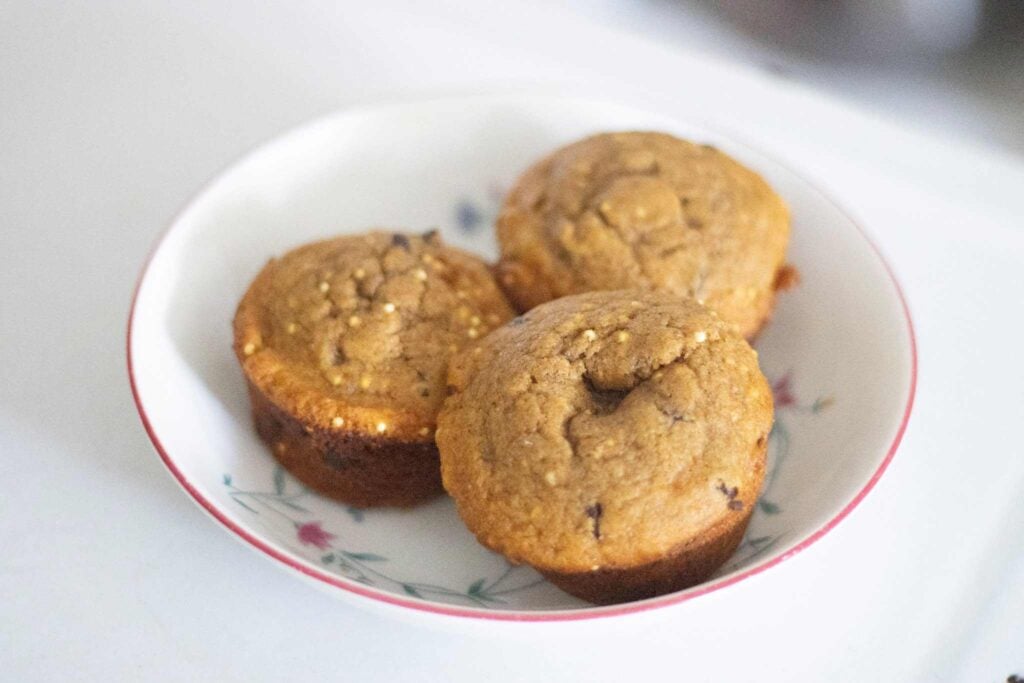
Getting started with Fresh Milled Ancient Grains
- Choose one grain to get started with – It can be overwhelming to try several different wheat varieties at a time. I highly suggest choosing one, like Spelt, that is a little easier to work with and then once you master that grain, move on to another.
- Try using only one specific recipe at first – Picking one recipe to master will be much more doable than trying several different ones. I suggest making a simple sandwich bread with yeast for a first recipe. This will ensure you can make adjustments and keep your focus on just mastering that particular recipe.
- Keep a journal – This may seem silly, but keeping notes when changing over to ancient wheat can make a huge difference in your success! I kept pages and pages when I first changed over. After every recipe, make notes on adjustments made and those you will make on the next try. This will help you make sure that when you get it “just right” you will have the perfect written recipe!
- Adjust your liquids slowly – As mentioned above, doughs made with fresh milled ancient wheat are generally stickier. My advice is to lower the hydration and build it over time to get the perfect dough.
- Keep baking! – No matter what your results at first, it is imperative that you just keep going! I promise that with some experience under your belt, you will find that baking with ancient grains can be one of the most fulfilling parts of your baking journey!
Frequently Asked Questions
Yes! I use them in my sourdough all the time! I also feed my sourdough starter with ancient wheat flour, as well. They lend so much more flavor to your sourdough creations. For some of my ancient grain sourdough recipes (along with modern wheat), CLICK HERE! You can also search for specific grains in the search box!
No! Ancient grains still contain gluten, albeit at a lesser degree than modern wheat. They can be quite helpful for those with gluten intolerances (NOT GLUTEN ALLERGIES!) and are many times a great choice for those with digestive issues.
No, ancient grains tend to soak liquids at a different rate than modern wheat. Because of this, it’s important to gradually add flour to the recipe until a soft dough ball forms when trying to substitute ancient wheat flour for modern wheat flour in a recipe. Of course, the easiest transition is to use recipes specific for the grain you are using.
Helpful Links
Recipes: SPELT RECIPES, EINKORN RECIPES, KAMUT RECIPES.
Please leave a comment about your journey into ancient grains! Happy Milling!