
How to Substitute Sourdough for Yeast in Any Recipe
Have you ever wondered how to take a yeast recipe and make it sourdough? Let me show you a simple method to substitute sourdough for yeast in any recipe!
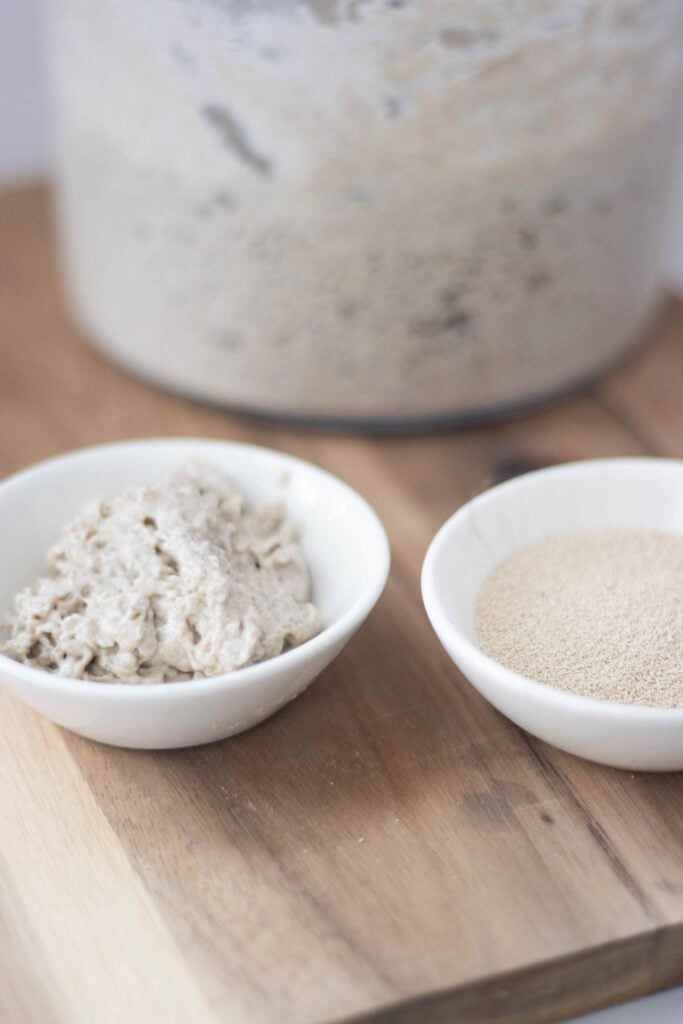
This post will include conversion ratios, differences in rise times, and adjustments for using fresh milled flour as well.
This post contains affiliate links. I may make a small commission on sales at no extra cost to you. As an Amazon Associate, I make commissions on qualifying purchases
Switching out sourdough starter in place of yeast gives your bread products more flavor, better digestibility, and great flexibility over the baking schedule.
Want to make your own sourdough starter? START HERE
Can you substitute sourdough starter for commercial yeast?
The short answer is, YES! The long answer is it takes a bit of tweaking to transform your yeast recipes to sourdough.
- Commercial Yeast – Gives a quicker, more predictable rise to baked goods.
- Sourdough Starter – Slower rise as lactic acid bacteria and wild yeast feed on flour.
The biggest adjustments are in hydration and rise times.
Sourdough starter is water and flour, therefore there will need to adjustments to the flour and water in the recipe.
Also, using sourdough to rise your bread dough will take a lot longer than using conventional yeast.
Looking for sourdough bread recipes? CLICK HERE!

Sourdough Starter v. Commercial Yeast
The main difference between the sourdough starter and yeast is time. Sourdough takes a lot longer to proof which builds flavor and makes the bread easier on digestion. They are both a leavening agent, but perform quite differently.
Sourdough Starter
- Tangy and unique flavor
- Long fermentation time
- Easier digestibility
- More flexible
Commercial Yeast or Instant Yeast
- Sweeter, yeasty flavor
- Quick rise
- Less flexible
- Does not offer digestibility improvements
Want to learn how to control the sourness of your sourdough bread? CLICK HERE!
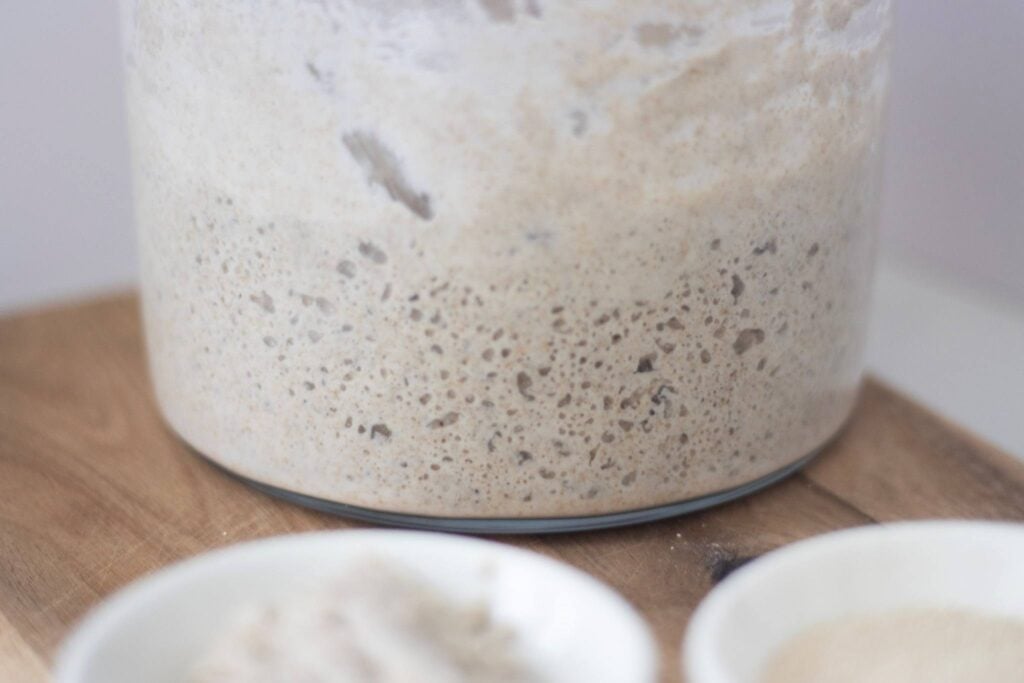
Sourdough to Yeast Conversions
Note: This is a general rule of thumb for converting yeast recipes to sourdough
By cup measurements:
- For each 2 1/4 tsp of commercial yeast add 1/2 cup of active sourdough starter
- Reduce the flour in the recipe by 1/4 cup
- Reduce the water/milk in the recipe by 1/4 cup
By gram measurements:
- For each 2 1/4 tsp of commercial yeast add 100 grams of active sourdough starter
- Reduce the flour in the recipe by 50 grams
- Reduce the water/milk in the recipe by 50 grams
This will vary slightly depending on your sourdough starter hydration. If you have a low hydration starter or stiff starter you may need to leave the same amount of liquid as the original recipe.
A traditional sourdough recipe will be “long fermented” which means it will rise for many hours for the benefits of sourdough.
This prolonged “rise time” makes sourdough products a bit easier to digest for those who have mild bloating and discomfort after eating conventional yeast breads.
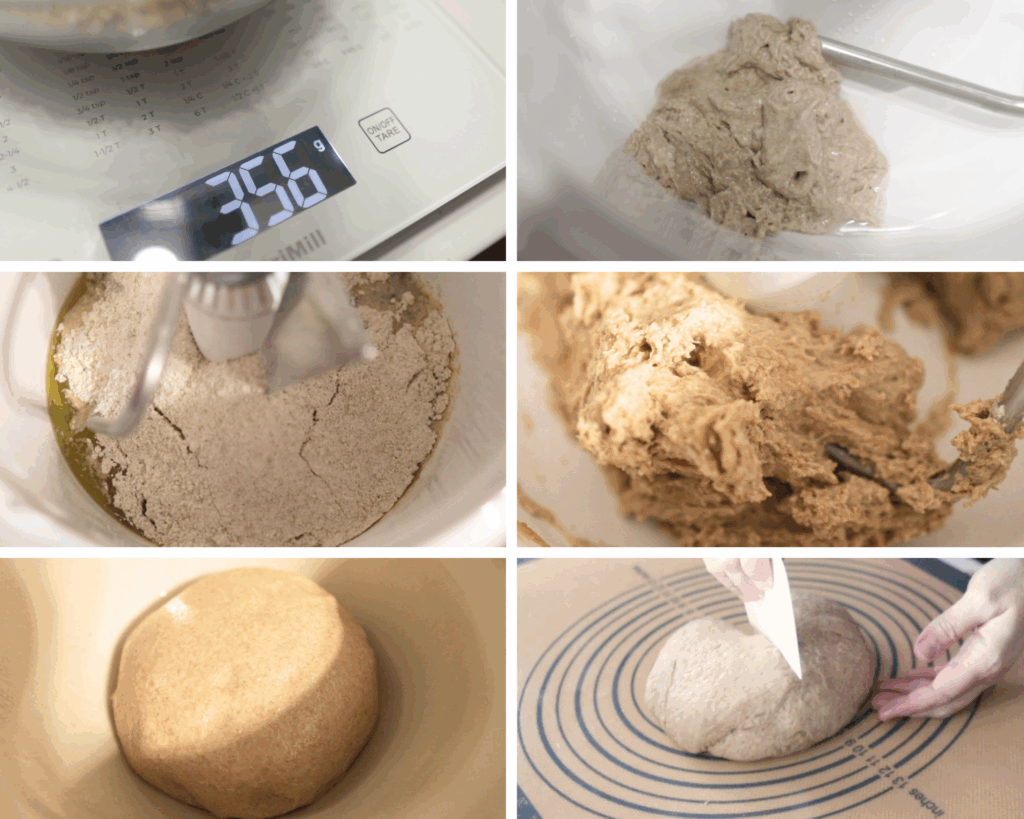
Step by Step Instructions for substituting Sourdough Starter for Yeast
1: Omit the Yeast
- When preparing for the recipe, omit the yeast entirely. Typically, the recipe will ask you to bloom or proof your yeast if using active dried yeast. Skip this step completely.
2: Replace yeast with sourdough starter
- Using the conversion above, replace the commercial yeast with active, bubbly sourdough starter. Add the starter when you would have added the yeast.
- Keep in mind, the water need not be warm. You can use room temperature water.
3: Adjust flour
- For every 1/2 cup sourdough starter used, reduce 1/4 cup flour.
- For every 100 grams of starter, reduce the flour by 50 grams.
4: Adjust liquid
- For every 1/2 cup sourdough starter used, reduce the liquid in the recipe by 1/4 cup.
- For every 100 grams of starter, reduce the liquid by 50 grams.
5: Adjust rise time (bulk fermentation time)
- While a recipe using commercial yeast you will typically let the dough rise for 1-3 hours, a recipe using only sourdough starter will generally rise in 8-24 hours at room temperature.
My favorite mixer for kneading my sourdough dough is the BOSCH UNIVERSAL MIXER

Example Recipe Conversion
This is only an example; however it shows how simple it can be to take your favorite yeast recipe and convert it to sourdough.
For this post, I converted my YEASTED FRESH MILLED DINNER ROLL RECIPE.
Original Yeast Recipe:
- 1 cup milk (238 grams)
- 1 packet or 2 1/4 tsp yeast
- 3 cups flour (406 grams)
- 1 tsp salt (5 grams)
- 1/4 cup olive oil (50 grams)
- 2 tbsp honey (40 grams)
Sourdough Version of the original recipe:
- 3/4 cup milk (188 grams)
- 1/2 cup active sourdough starter (100 grams)
- 2 3/4 cups flour (356 grams)
- 1 tsp salt (5 grams)
- 1/4 cup olive oil (50 grams)
- 2 tbsp honey (40 grams)
In the original recipe, you would bloom the yeast in the warmed water then add the flour and salt. You would then knead and move on to rise the dough for 1-2 hours before shaping and allowing to rise again for 30 minutes to an hour.
In the sourdough version, you would add all the ingredients and knead or perform 3 sets of stretch and folds.
You would let the bread rise for 8-12 hours then shape and let rise again for 1-3 hours before baking.
Sourdough baking is much more flexible as you don’t have to watch the rise as closely. The fermentation process can be left on the counter overnight in most cases!
The signs of fermentation with sourdough are visible bubbles on the surface and a pillowy feel to the dough that jiggles when the bowl is shaken
To mill my wheat berries, I use the NUTRIMILL GRAIN MILL
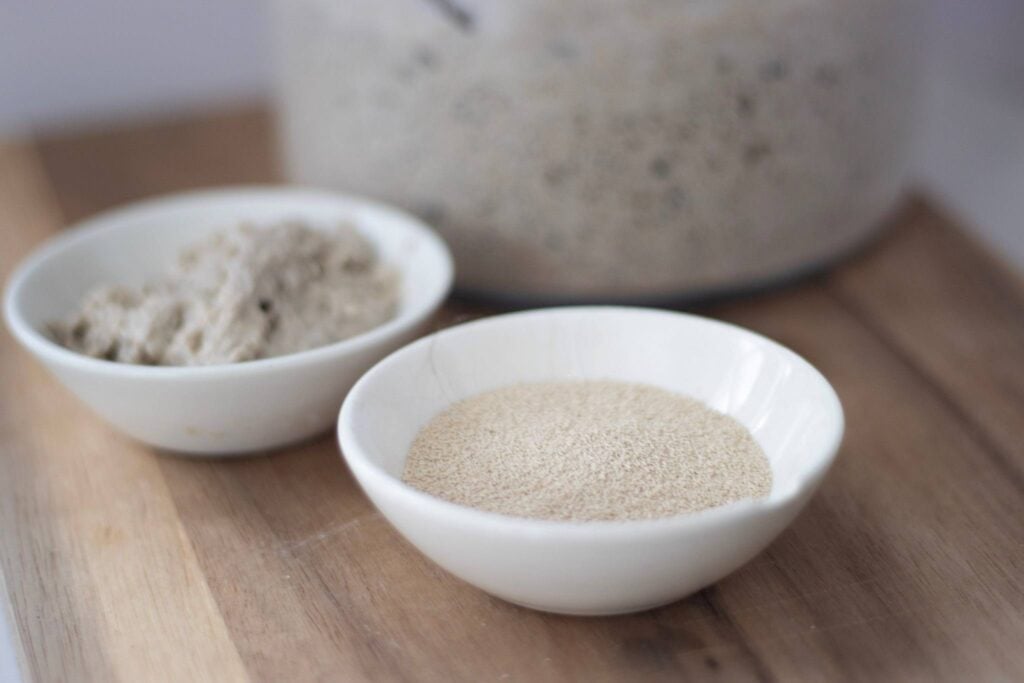
Tips for using Fresh Milled Flour in Sourdough
- Bulk Fermentation time – Sourdough products made with fresh whole wheat flour tends to ferment more quickly than those made with all purpose flour or bread flour. Watch more closely for signs of fermentation.
- Hydration adjustments – Fresh Milled flour may need a little more water as it takes longer to fully hydrate. It will be a sticky dough at first but will hydrate after 30 minutes or so and be much easier to work with. Keep in mind the amount of flour will also depend on the specific wheat berry you use.
- Takes longer to develop gluten – Since fresh milled flour has the bran and germ, kneading or gluten development takes a bit longer. You will either need to do 1-2 more sets of stretch and folds, or knead for 2-3 minutes longer than an all purpose recipe calls for.
For my top tips for using fresh milled flour in sourdough, CLICK HERE!
Interested in milling your own flour, but don’t know where to stop? CLICK HERE!
Common Mistakes to Avoid
- Using inactive starter or sourdough discard – If your starter is not active and bubbly, your rise will be sluggish and the bread may be more dense and have a less than desirable rise in the oven.
- Adding too much flour – Since sourdough starter is part flour and part water, if you don’t adjust the flour in the recipe, the dough will be dense and dry.
- Expecting the same rise time – A common misconception with new sourdough bakers is a rise time similar to commercial yeast with sourdough. The rise time for sourdough starter is much longer, so adjust your expectations accordingly.
- Overproofing – If using fresh milled flour, keep a closer eye on the dough for fermentation as it will rise more quickly.
Frequently Asked Questions
Yes! You can make same day recipes with sourdough. These recipes typically require only one rise and take from 6-10 hours rise time before baking.
Yes, sourdough risen bread is easier to digest than breads made with yeast since they are fermented longer.
No, you can bake your recipe to the original recipes instructions.
No, you can use room temperature water in sourdough recipes.
While there are several variables when switching a yeast recipe to sourdough, a few considerations may help. Remember, sourdough takes many hours to rise which can seem like the bread will not rise, however, given more time the dough eventually will rise. One other note, make sure your sourdough starter is mature, active, and bubbly before using in the recipe for best results.
In conclusion, the best way to convert your favorite yeast recipes to sourdough is using the simple conversion above and to not be afraid to experiment with hydration, rise times, and kneading times.
In the end, sourdough is wild yeast and rises bread dough just like commercial yeast, however it takes much longer and adds incredible flavor. Sourdough is also much more forgiving than active dry yeast.
Have fun experimenting with converting your favorite recipes to sourdough! Before long, you will have consistent results!




Thank you for this wonderful post!
I have one question. If the recipe calls for, let’s say, 1tbsp of yeast, after making adjustments with starter do we also adjust less flour and liquid, or does it still stay at a reduction of 1/4 C (or 50 g) for each? Thank you! 🙂
So, the formula would be for every 1/2 cup starter, reduce both flour and water by 1/4 cup. If you recipe uses 1 cup starter, reduce both flour and water by 1/2 cup. Hope that helps!
That makes sense. Thank you!
Will you come bake with me please? I get so frustrated that I can not master this…I just go blank when I see all these conversations, I don’t know why this is such a challenge for me!