Fresh Milled Sourdough Starter Troubleshooting Guide
This fresh milled sourdough starter troubleshooting guide will walk you through the common problems you may face with your starter and how to correct them!
This post contains affiliate links. I may make a small commission on sales at no extra cost to you. As an Amazon Associate, I make commissions on qualifying sales
Does your fresh milled starter smell funny, look weird, or won’t rise at all? These are common problems you might face, but are completely fixable!
Fresh milled flour sourdough starters often behave differently and with just a few tweaks, your starter will be thriving!
It is no secret the health benefits of fresh milled flour! These benefits also relate to a healthy starter. You don’t have to start a new sourdough starter just for fresh milled flour either, which is great!
This post is perfect for you if:
- You are a beginner to fresh milled sourdough
- You’re transitioning your starter from store-bought flour to fresh flour
- You are a fresh milled flour baker
Are you brand new to fresh milled flour and want to mill your own flour? START HERE!

Why do Fresh Milled Starters behave differently?
- Fresh flour has more nutrients – Sourdough starters rely on many different variables. The nutrient level of the flour you use makes a difference in the activity of the starter. Since fresh flour has a lot of vitamins and minerals, it stands to reason that a sourdough starter made with fresh milled flour will be more active.
- Faster fermentation – Because of this increased nutrient level, fresh milled sourdough starters will ferment more quickly than those fed with all purpose flour or white flour.
- Higher enzyme activity – Because unsifted fresh milled flour has beneficial enzymes, this can greatly increase the activity of your sourdough starter, as well.
- More wild yeast – There is natural yeast on flour, but the amount of this yeast in increased when using fresh flour over store bought flour.
- Fresh milled flour absorbs water differently – Water is absorbed a different rate when using fresh milled flour. Because of this, the consistency of your starter will be different when using the same measurements of whole grain flour to all purpose flour. You may find you need more water for the same thickness of starter.
Want information on how to maintain a fresh milled sourdough starter? CLICK HERE!
This is the GRAIN MILL I use.
Looking for a beginner recipe for fresh milled sourdough bread? TRY THIS ONE!

Common Problems and Solutions when using Fresh Milled Sourdough Starter
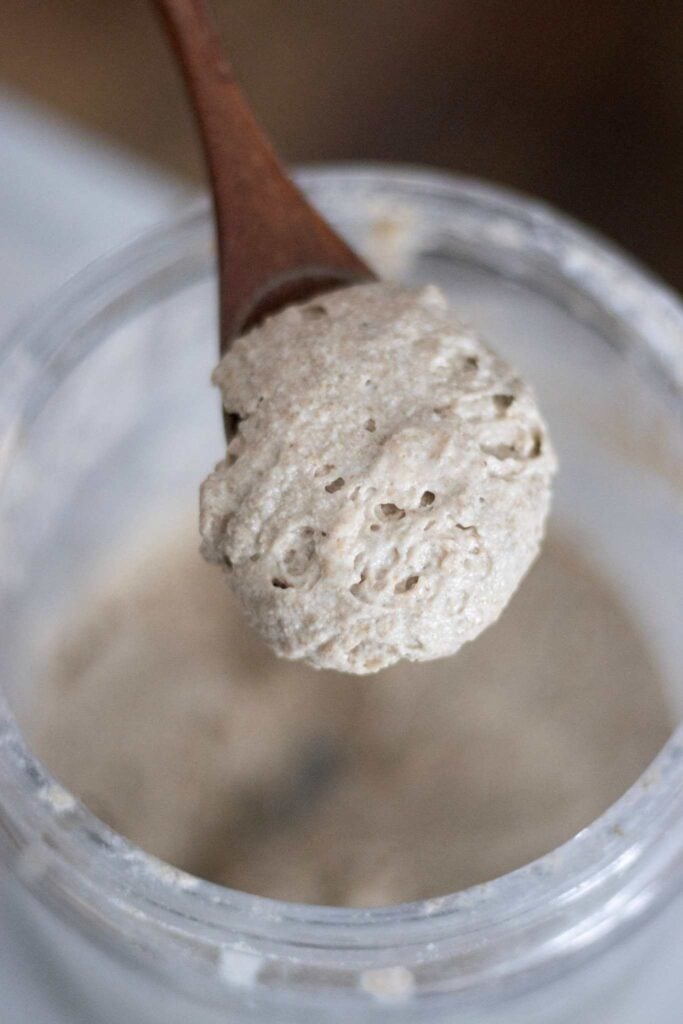
Starter isn’t bubbling at all
Causes:
- Fermenting at a temperature that is too cold
- Starter is too young
- Underfeeding
Solutions:
- Ferment in a warmer environment – Consider moving your sourdough starter to a warmer place. For instance, turning the light on in your oven will produce a warm area for your starter to rise. If you have a wood stove, fermenting your starter near the stove can be helpful. Look for those warm spots and put your starter there for more activity.
- Have patience – Keep in mind that it can take some time to build a mature and active sourdough starter. This involves regular use (perhaps in discard recipes) and feedings. Each time you use the starter and feed it, it will get stronger. Don’t give up! It will get there with a little time and patience!
- Feed the starter more – A common problem I find is that the starter is not being fed enough. What I mean is, if there is 1/2 cup starter in your jar and you only feed it 1/4 cup flour/water, the existing starter needs at least the same amount of flour (preferably more) to thrive. My advice is to use almost all of the starter before feeding and feed it at least a cup of flour/water for best results.
Starter has bubbles but doesn’t double in size
Causes:
- Bran in the fresh milled flour
- Timing of the feeding
- Low gluten flour
Solutions:
- Sifting the flour – You can sift a portion of the bran out before using to feed the sourdough starter. Bran can cut development of gluten and cause the starter to become active but not rise.
- Using ancient grain flour – Ancient wheat has a very weak gluten structure. This will result in a starter that may not rise, but it will be active and work for rising bread dough.
- Feeding at a different time – Perhaps your starter is doubling and falling while you are asleep or not available to look at the starter. In this case, I would suggest feeding the starter in the early morning hours so that you can keep a closer eye on the starter throughout the day.
Are you new to sourdough and want to make your own starter? START HERE!

Starter smells bad
There are several “odors” associated with a sourdough starter and are completely normal and just part of the fermentation process.
Problem:
- Acetone odor – Usually described as a nail polish like smell.
- Yeasty/Boozy odor – Often described as an alcohol like odor.
- Putrid odor – Described as off-putting smell.
Solutions:
- Feed more frequently – This acetone like odor is a natural occurrence after the starter has fermented and exhausted the feeding. This is the byproduct of the fermentation process. If you notice this happening often, you may want to feed the starter less flour more often. For instance, instead of feeding the starter 2 cups of flour/water, try feeding 1 cup at a time so that the starter can be used before it becomes less active.
- Normal odor – The yeasty odor is normal and is desired! This means the starter is active and ready to use in your bread recipes.
- New starter – Often in the first few days of making a sourdough starter, you will encounter a very off-putting putrid odor in the starter. This is normal and is an indication of the beginnings of the fermentation process. Continue with the feedings and the odor will dissipate within days.
Interested in my top tips for long term and short term storage of wheat berries? CLICK HERE!

Starter rises, but falls quickly
Causes:
- Fermenting at too high of temperature
- Under feeding the starter
Solutions:
- Move starter to a cooler location – If your starter is fermenting much too quickly, consider moving the starter to a cooler area of your home for a slower ferment that is more manageable.
- Feed the starter more flour – If you feed the starter too little flour, it will over ferment quickly. Consider adding more flour when you feed to the starter to slow this process down and to have more control of it.
My starter looks like it has mold on it!
Causes:
- Hooch – A natural byproduct of the fermentation process and a good sign! It is a dark gray/black liquid that sits on top of your starter and is completely normal and harmless. You can stir it in or pour it off. Keep in mind this liquid is packed with yeast and good bacteria, though.
- True mold – If there is a pink or green growth and it is thick or fuzzy, discard the starter and start over. This is true mold and your starter isn’t good.
Best Fresh Milled Flour to feed Sourdough Starters
- Hard White Wheat/Hard Red Wheat – The modern varieties of hard wheat have very strong gluten and low moisture for a great option to feed your starter. Your results will be most like when you use all purpose flour. Predictable and strong, your starter will be very active if fed with modern hard wheat.
- Ancient wheat – Sourdough starters love ancient grains! They are packed with nutrients and enzymes that will produce a strong starter. Keep in mind, the rise may not be as much because of the lower gluten content, but the starter will still be active enough to rise dough.
- Rye Flour – I prefer to use fresh milled rye flour to feed my starter often. Rye flour makes a very healthy sourdough starter.
Want all the info for using ancient grains? START HERE!

Feeding ratio for fresh milled flour starters
If weighing:
If using a KITCHEN SCALE, feed your starter 120 g flour and 120 g water. If you want to add more or less, feed equal parts (by weight) flour and water.
If using cup measurements, feed your starter 1 cup fresh milled flour and 3/4 cup filtered water.
Fridge or Counter?
Deciding whether to keep your sourdough starter on the counter or fridge, it’s important to consider how often you will use your starter.
This decision will also affect your feeding schedule.
If you will be using your starter every 1-2 days and want to keep it on the counter at room temperature, feed your starter at least every 2-3 days. This method helps you always have an active starter on hand ready to use.
If you only use your starter 1-2 times a week and want to keep the starter in the fridge, feed your starter every 1-2 weeks.
Frequently Asked Questions
Flour made from whole grains absorbs water differently. This means you may need a bit more water to get the same consistency as when you fed with all purpose flour.
Yes, you can use 1/2 and 1/2 with great results.
Either flour will feed your starter and can be used interchangeably at any time with no ill effects.

Mistakes to avoid
- Using chlorinated water – Tap water is almost always chlorinated. Unfortunately, this can have ill effects on your starter. If tap water is all you have available, run the water out in a cup and leave uncovered on the counter for 24 hours for the chlorine to dissipate or consider using filtered water.
- Giving up too quickly – In some respects, sourdough is a long game process. It does take time to build an active/robust starter. Don’t give up! It will happen and it will be worth the wait.
- Not feeding your starter enough flour – As stated above, keep in mind that you need to feed the starter with enough flour to be at least the amount of starter already in the jar for best results.
In conclusion, keeping your own sourdough starter with fresh milled flour is a great idea and will yield a very happy and healthy starter.
Be patient as your build your starter! It does take some time to get to that point.
Comment down below your tips/tricks or questions regarding keeping a healthy fresh milled sourdough starter!