
How to Maintain a Fresh Milled Sourdough Starter
Having a sourdough starter is such a rewarding experience, but maintaining a fresh milled sourdough starter is even better!
Fresh milled flour not only gives your starter more flavor, but it also imparts a tremendous amount of nutrition and stronger fermentation!
This post contains affiliate links. I may make a small commission on sales at no extra cost to you. As an Amazon Associate, I make commissions on qualifying purchases
In this post, I will walk you through why you would want to use fresh milled flour to feed your sourdough starter and what the differences are when switching from all purpose flour.
Do you want to start your own sourdough starter? START HERE!
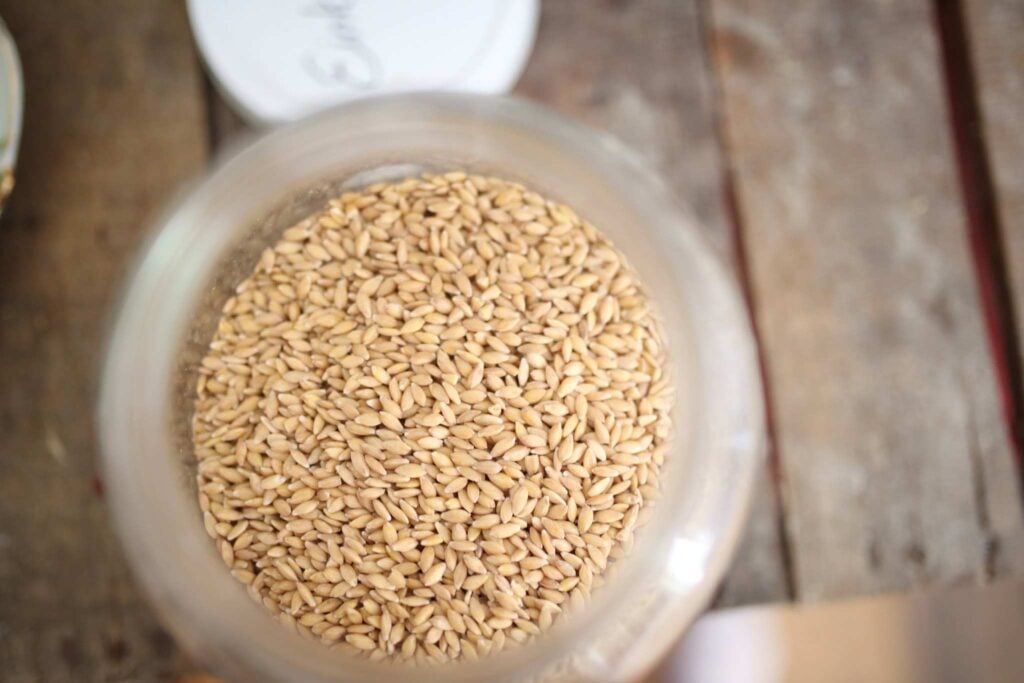
Why use fresh milled flour to feed your sourdough starter?
- Stronger Fermentation – Fresh flour has a huge amount of vitamins and minerals making it the perfect flour for a starter. Your sourdough starter will be much more vigorous.
- More Flavor – Feeding your sourdough starter with fresh whole grain flour will add so much more flavor. You will find your starter to have a yeastier and nuttier flavor.
- Elevated Nutrition – Fresh milled flour has 40/44 key nutrients and all of this added nutrition will make your starter much healthier as well.
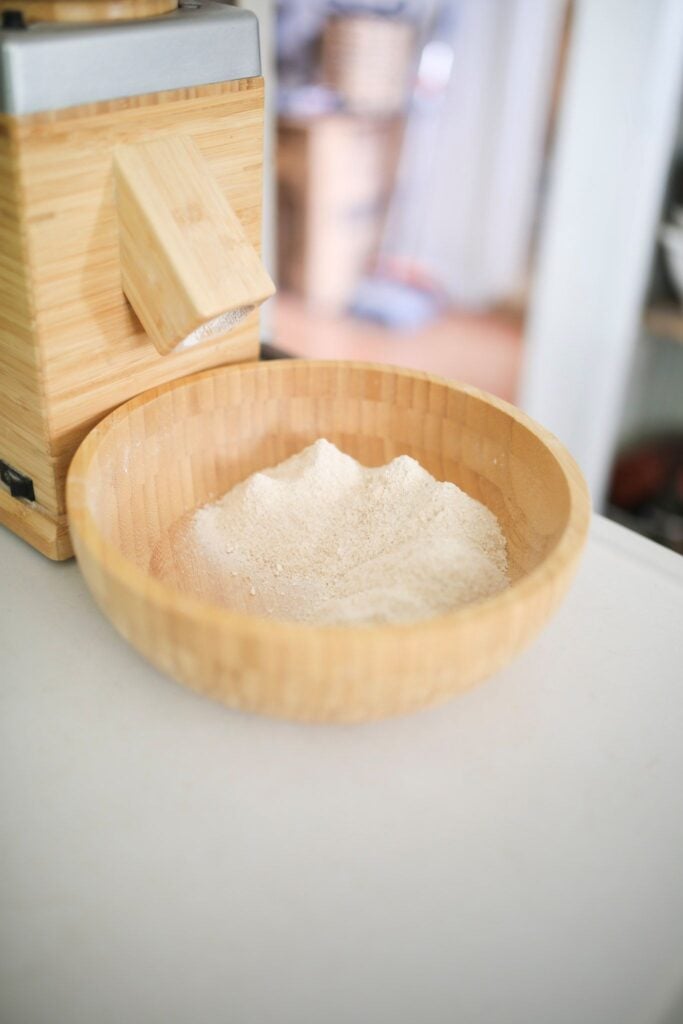
To mill my wheat berries, I use the NUTRIMILL GRAIN MILL
If you want to start milling your own flour, START HERE!
How to Feed a Sourdough Starter with Fresh Milled Flour
Choose the flour
The great thing about using fresh flour to feed your starter is the option to choose so many different varieties of flour.
From hard white wheat, hard red wheat, to ancient grains like Einkorn and Spelt, the options are many and each one will work wonderfully to feed your sourdough starter.
Pay attention to Hydration
Fresh milled flour absorbs water at a different rate than all-purpose flour. With this in mind, it’s important to add enough water to hydrate the flour.
When you first feed the starter, it may seem to be thin, but after 10 minutes or so, you will notice it is much thicker.
Ratios I use when feeding my starter with fresh flour
When feeding my sourdough starter with whole grain flour, I prefer to make a stiff starter. This means the starter has a dough like texture.
You can decide if you want a thinner starter or a thicker starter by the amount of water that you use.
For a stiffer starter, feed with 1 cup of fresh milled flour and 1/2 cup of water.
For a thinner starter, use 1 cup of fresh flour and 3/4-1 cup of water.
Mix the starter very well to ensure there are no dry bits of flour remaining, cover lightly and either place in the fridge or leave on the counter.
Maintenance schedule for both room temperature and fridge kept starter
Maintaining a starter kept on the counter
If you prefer to keep your starter on the counter because you use it almost daily, feed the starter at the recommended ratios above, cover lightly with a loose lid or a fermenting cap and the starter will be ready to use within 4-8 hours.
Maintaining a starter kept in the fridge
This is the method I use and it has worked remarkably well for me for over a decade.
Feed the starter, place a loose lid on top or fermenting cap, and place directly in the fridge after feeding.
There is no need to keep it on the counter to ferment prior to placing it in the fridge.
If you feed the starter the night before, it will be ready to use the next morning when using this method.
Want to make my favorite fresh milled sourdough bread recipe? CLICK HERE!

Signs your starter is fermented and ready to use
A sourdough starter will go through the fermentation process with visible cues you can use to determine if the starter is ready to use.
The main visible sign will be bubbles. If you keep your starter in a glass jar or bowl, you will be able to gauge the formation of the bubbles much easier.
Another sign is that the starter will rise up in the jar.
If you mark the jar with a rubber band, you should notice that the starter rises above the rubber band after several hours.
These 2 signs will help you know that your starter is ready to use in bread products as a natural leaven in place of conventional yeast.
NOTE: With a stiff starter, the top of your starter may not show bubbles or signs of fermentation. You will need to rely on the sides of the jar to see the signs.
How often should I change my jar?
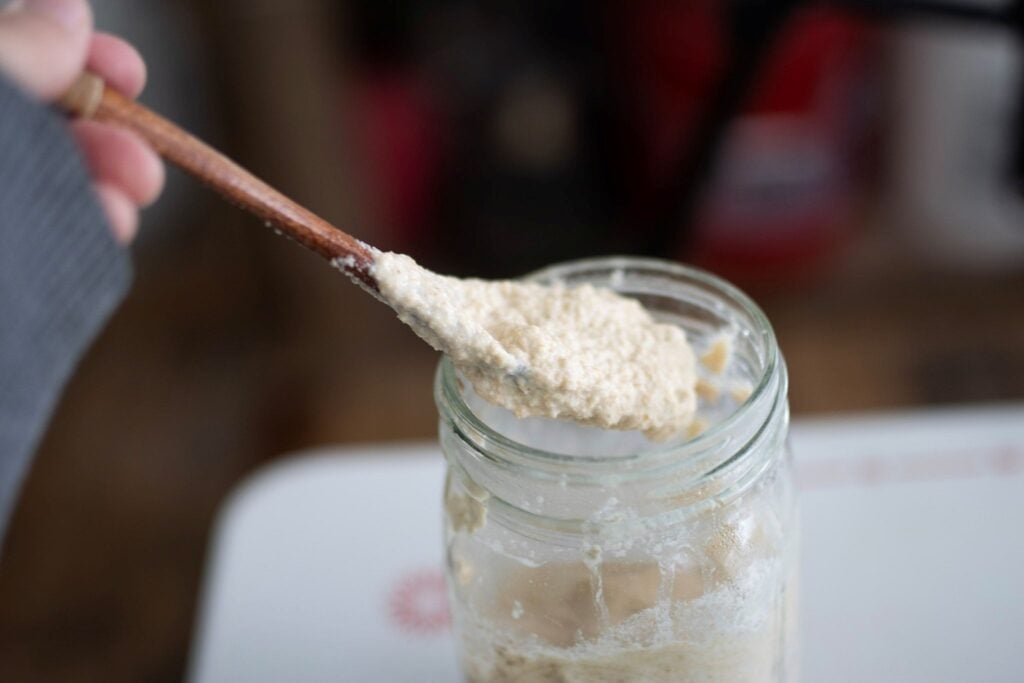
I suggest moving your starter to a new clean jar at least once a month.
Any longer than that may encourage mold to grow on the sides of the jar where inevitably starter will remain after dipping it out of the jar.
Absolutely! The great thing about a sourdough starter is that it is resilient. Any flour that has gluten will work in a starter.
I would suggest hard white wheat as a starter flour for feeding your sourdough starter as it behaves more closely to store bought flour.
Let me know in the comments if you have switched your sourdough starter to fresh milled flour and what changes you have noticed.


If I switch to a fmf to feed my starter, does the flour have to be freshly milled each time that I feed, or can I keep extra flour in the fridge to use for feeding?
I personally keep a bag in the freezer for this purpose. I use that same bag to add sponnfulls of flour to my pan when cooking ground meats or thickening a sauce