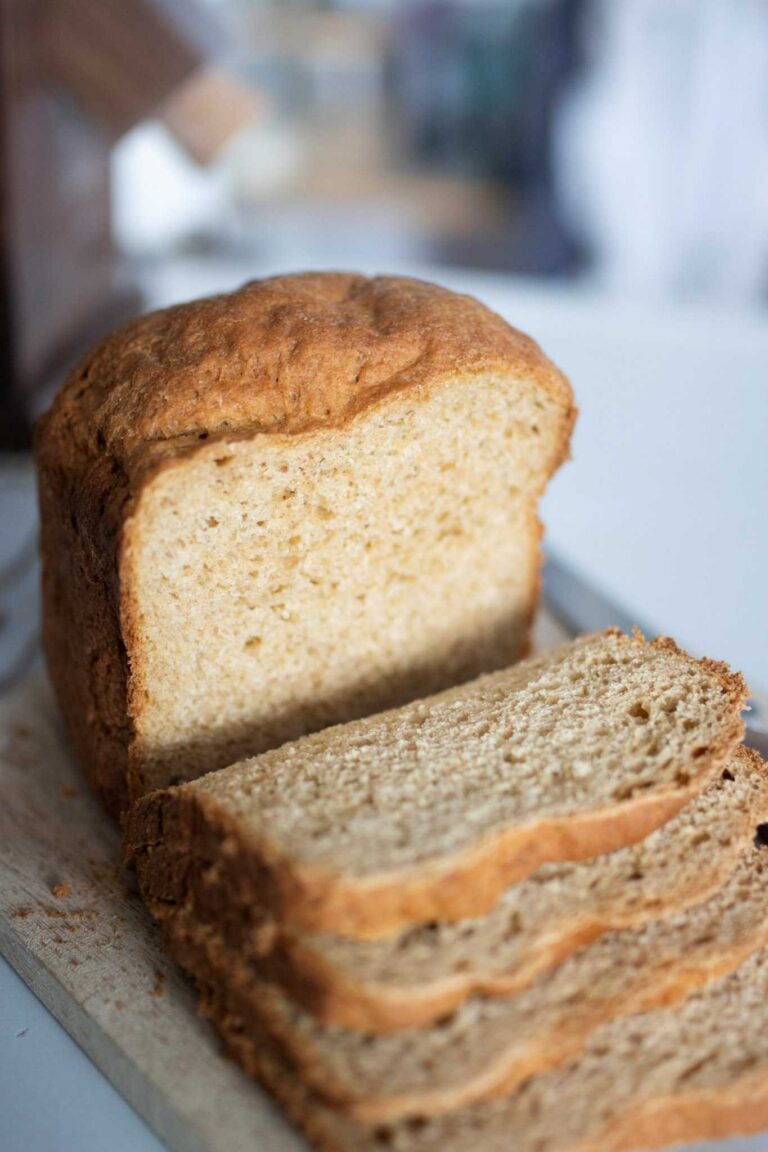
How Long Do You Need to Knead Fresh Milled Flour Dough?
Have you ever stood beside your mixer wondering if your fresh milled flour dough has been kneaded long enough? You’re not alone! Let’s talk about how long to knead fresh milled flour dough and, more importantly, how to recognize when it’s ready.
This post contains affiliate links. I may make a small commission on sales at no extra cost to you. As an Amazon Associate, I make commissions on qualifying purchases
How long should you knead fresh milled flour dough?
While kneading times vary depending on the recipe, wheat variety, hydration, resting periods, mixer, and kneading speed, I have found a kneading time that seems to work with most of my recipes.
A few things to consider:
- Stand mixer you are using – Stand mixers vary in power and kneading techniques. This is only a guideline for you to go by and adjust accordingly.
- If you are kneading by hand – It is totally possible to knead fresh milled dough by hand. I suggest kneading for 5 minutes at a time and resting for 2 minutes in between until the dough is properly kneaded.
With that being said, the kneading time that has been working perfectly for me is 20 minutes on speed 2.
Keep in mind that watching the dough and learning the visual queues to know when your dough is properly kneading is the best practice. Recipes kneading times are a guideline.
How to Tell When Fresh Milled Flour Dough Is Properly Kneaded
The Dough Becomes More Cohesive
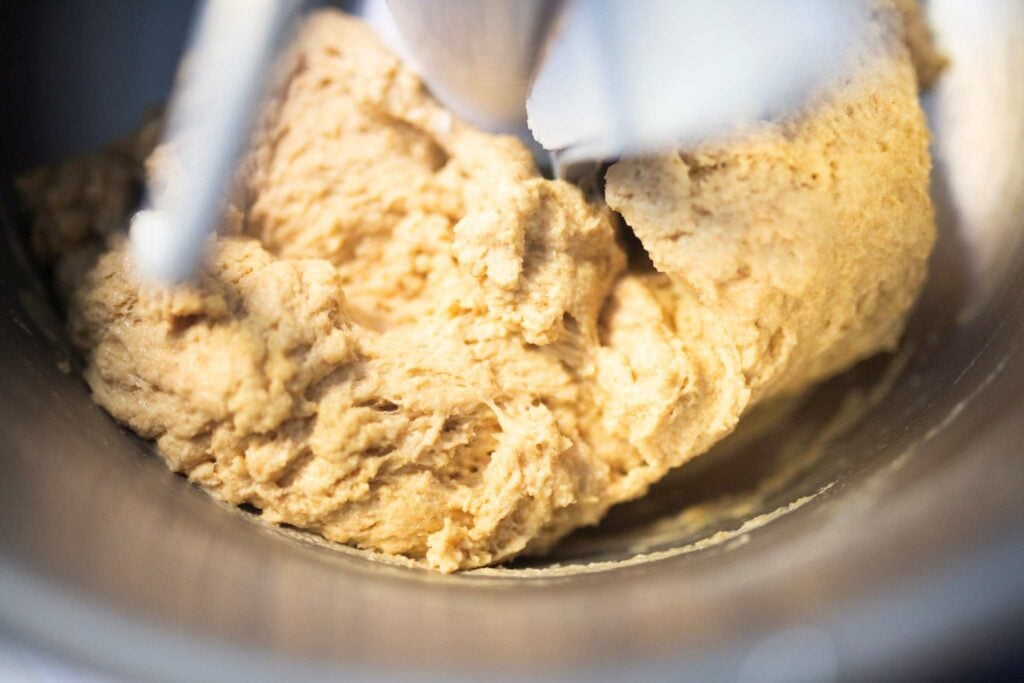
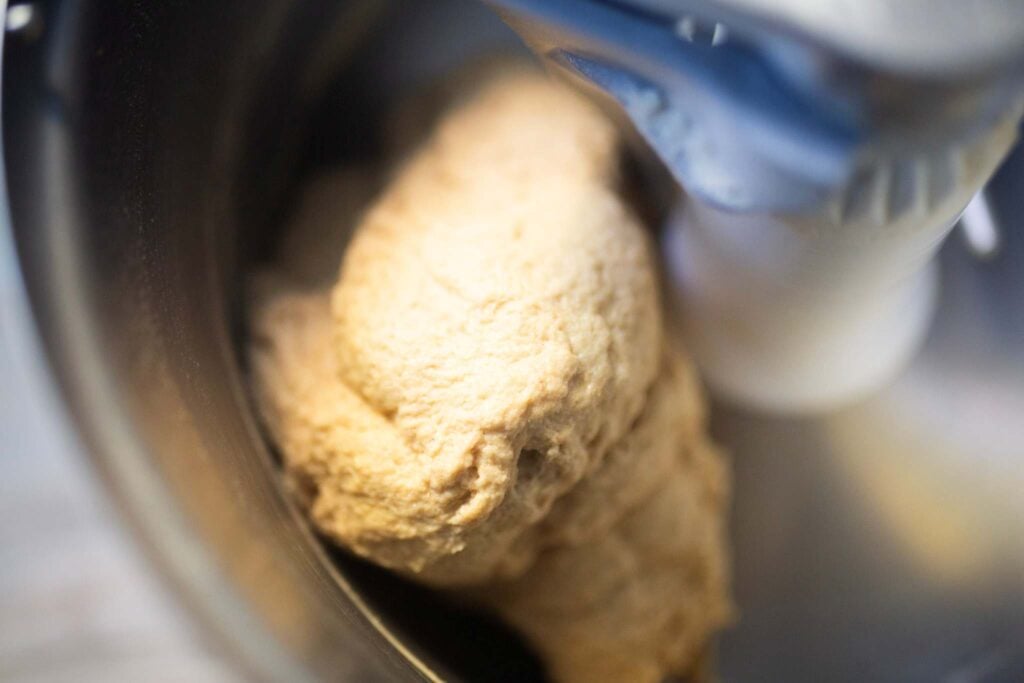
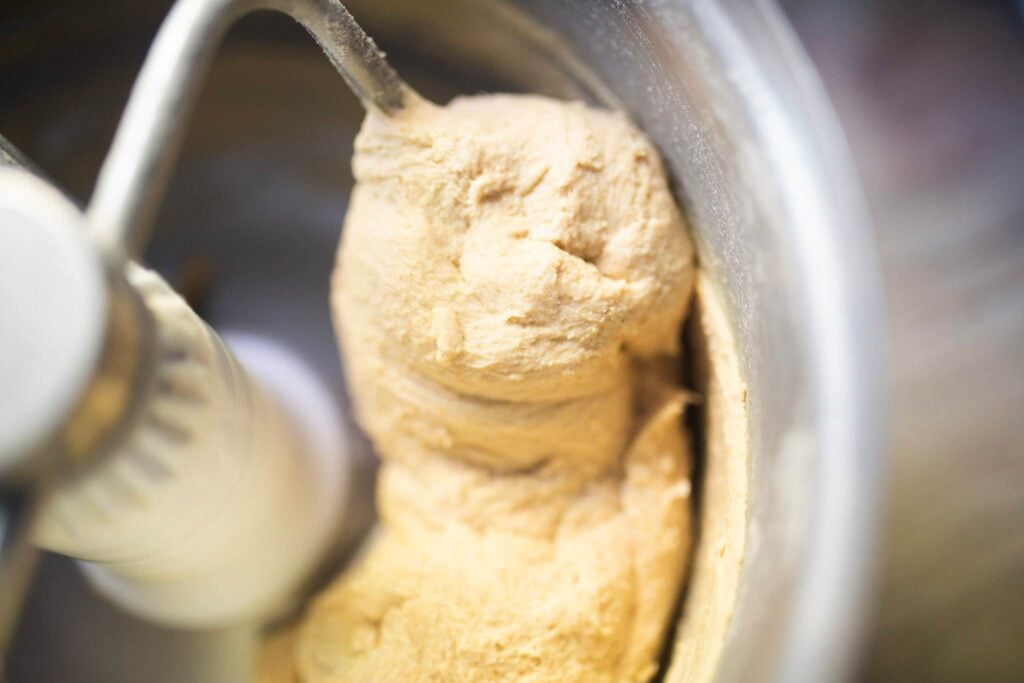
The first sign of proper kneading is that the dough becomes a cohesive ball that sticks together in the mixer or in the hand. It should stick more to itself than the mixer bowl or work surface. This is the beginning of gluten development in bread dough.
Doughs will start shaggy, somewhat loose and sticky. After about 4-5 minutes of kneading, you will notice that the dough starts forming into a ball. Once the dough forms into a ball gluten will start to develop.
Milling Fresh Flour: The Ultimate Beginners Guide
The Dough Becomes Stretch and Elasticity
Once gluten starts to develop, you will notice the dough shows signs of structure and becomes less sticky.
Dough strength is actually more important than the appearance (smooth, shiny). The gluten structure and development is what will give the dough rise and a tight crumb texture after baking.
The Dough Has the Right Feel
When properly kneaded, the dough will have a cohesive, smooth texture. It may be slightly tacky, but easily handled without feeling like you need to add more flour.
It will be much smoother and subtle than when it first started kneading.
Easy Soft Freshly Milled Sandwich Bread (100% Whole Wheat, Beginner Friendly)
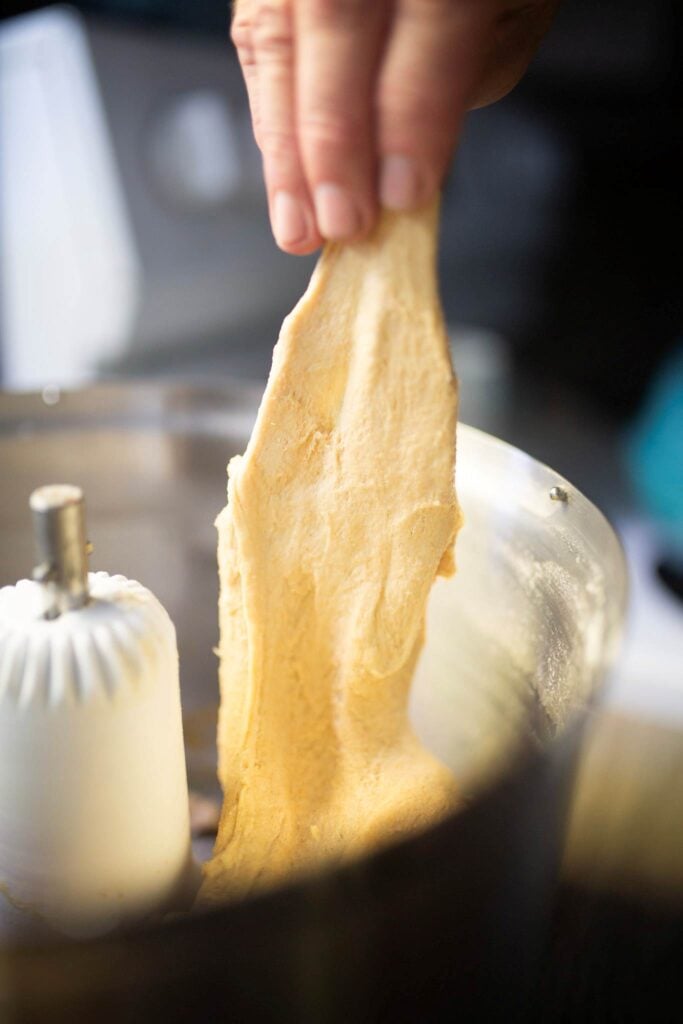
You will be able to stretch the dough between your fingers until it is almost see-through without tearing the dough (windowpane).
The Dough Holds Its Shape
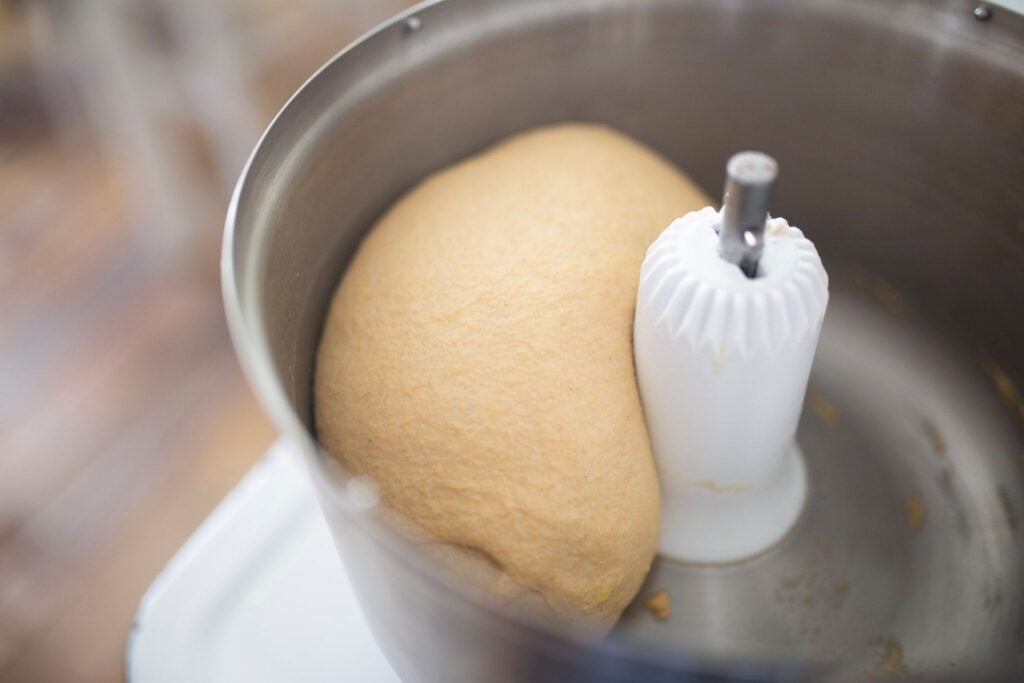
Once the dough is kneaded, it will hold its shape when you manipulate it into a ball or loaf shape. This is a sign of good gluten development.
Keep in mind that depending on the hydration of the dough, it may be a bit looser or stiffer. For instance, if you are making bagels, the dough will be very stiff. On the other hand, if you are making Focaccia, the dough will be more slack.
Sponge Method for Fresh Milled Flour Bread: Does It Really Help?
Should You Use the Windowpane Test With Fresh Milled Flour?
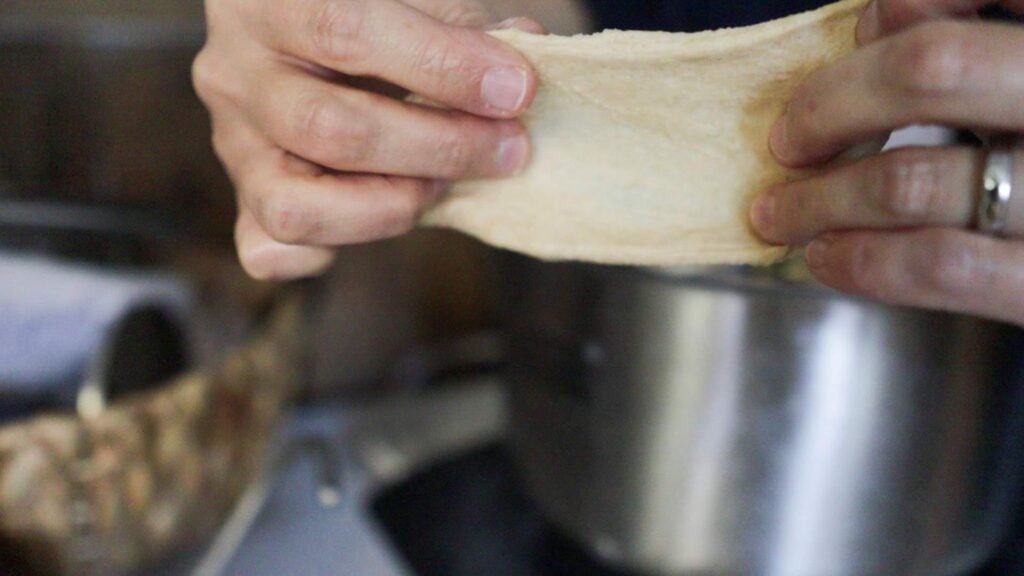
For the “windowpane test“:
- Pinch off a small piece of dough (moisten your fingers with water if needed)
- Gently stretch the dough between your fingers
- If you are able to stretch the dough fairly thin without it tearing, your dough is properly kneaded
- Pay attention to how the dough feels in the hand
Fresh milled flour has the bran and germ in it. These act like little shards in the dough cutting gluten as it develops. Therefore, it is important to either soak the dough before kneading or create a sponge (yeast breads) to soften the bran and germ.
If you take a few minutes to allow these to soften, you can achieve a nice windowpane with fresh milled flour!
What Affects Kneading Time for Fresh Milled Flour?
Type of WHEAT used
Each wheat variety has different characteristics when making dough.
- Hard White/Hard Red – Both of these are modern wheat varieties and have low moisture/high protein for optimum gluten development.
- Spelt – Spelt is an ancient grain with a moderately protein level and develops gluten very well if not kneaded too long. Spelt will not need to be kneaded for 20 minutes like modern wheat. 6-10 minutes will suffice.
- Kamut/Khorasan – Another ancient grain, Kamut also builds gluten quite well and can be kneaded for a decent amount of time (6-10 minutes), however doesn’t require the 20 minutes of kneading that Hard wheat does.
- Einkorn – Einkorn, unlike all of the above wheat varieties, does NOT like to be KNEADED! Einkorn dough will actually get more sticky with kneading. To build gluten in Einkorn dough, it is best to do gentle stretch and folds and slowly build the structure.
Hydration and Dough Consistency
Depending on the hydration of your specific dough recipe, the dough may feel more sticky after kneading. However, you should see the dough come together cohesively and be able to shape the dough with minimal flour on the work surface.
Resting, Soaking, and Sponge Methods
As mentioned above, soaking or resting the dough before kneading is imperative with fresh milled flour.
This step softens the bran and germ allowing for better gluten development and structure of the dough.
Your Stand Mixer or Hand-Kneading Technique
Your particular stand mixer and the speed at which is kneads can make a difference in kneading times.
For instance, the Zacme stand mixer on speed 2 is much slower than the Bosch on speed 2.
Also, if you are hand kneading, the kneading time may take longer. I suggest kneading for 5 minutes, resting for 1-2 minutes and repeat until the gluten is developed.
In short, pay more attention to the dough than the timer
Shop this Post
Smaller stand mixer I use (more affordable!) – NUTRIMILL ARTISTE
Larger mixer I use (a real workhorse!) – BOSCH UNIVERSAL
Stone grain mill I use – NUTRIMILL HARVEST
Impact style grain mill I use – NUTRIMILL CLASSIC
Can You Knead Fresh Milled Flour Dough Too Long?
Just as important as kneading long enough is important, kneading too long can cause the structure of the dough to collapse.
If the dough gets too warm during kneading or if the dough kneads well past proper gluten development, the dough will become slack and eventually soupy.
To avoid this, pay more attention to the dough than the clock. Knead UNTIL the dough is smooth, elastic, and very stretchy.
Avoid kneading past this stage for best results.
Fresh Milled Flour Dough Troubleshooting
My advice is to check for gluten develop by moistening the hands and pinching off a small piece of dough. Stretch it between your fingers. If it stretches (gently) without tearing until it is almost see-through, it is properly kneaded and ready to rise.
This is a sign you didn’t knead long enough. Give it 2-3 minutes at a time and recheck after each 2-3 minute cycle for gluten development.
Depending on the wheat variety you used, I would suggest leaning more into the gluten development. If the dough stretches without tearing and seems to hold it’s shape, I would go ahead and let the dough rise.
The most likely culprit is not letting the dough rise long enough. Consider letting the dough rise longer by 30 minutes-1 hour and see if that helps lighten the loaf.
Does Kneading Longer Make Fresh Milled Bread Softer?
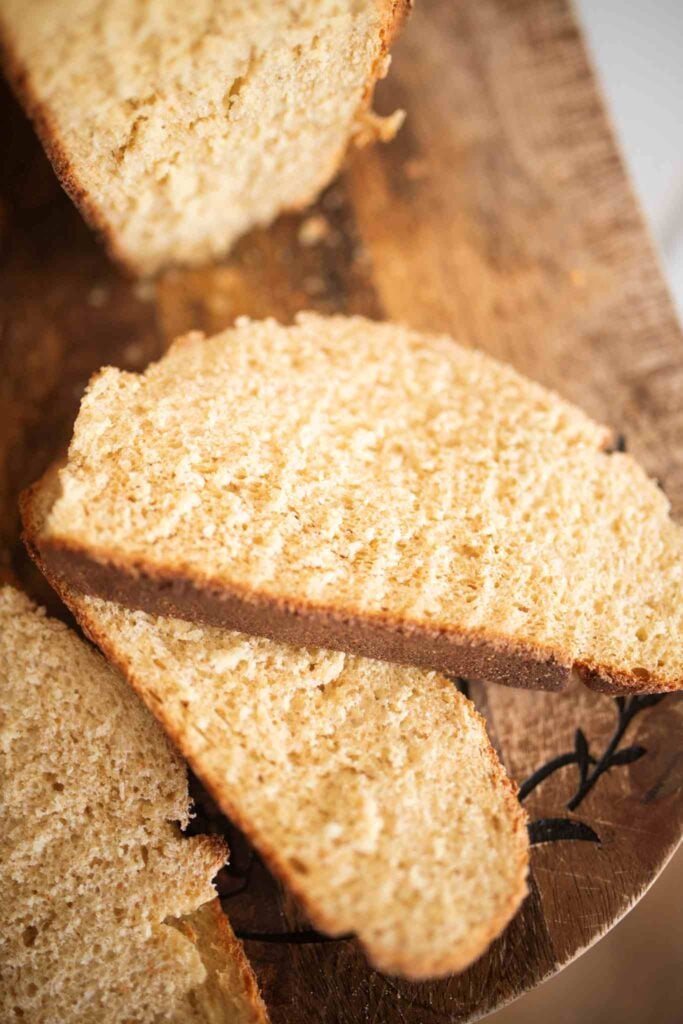
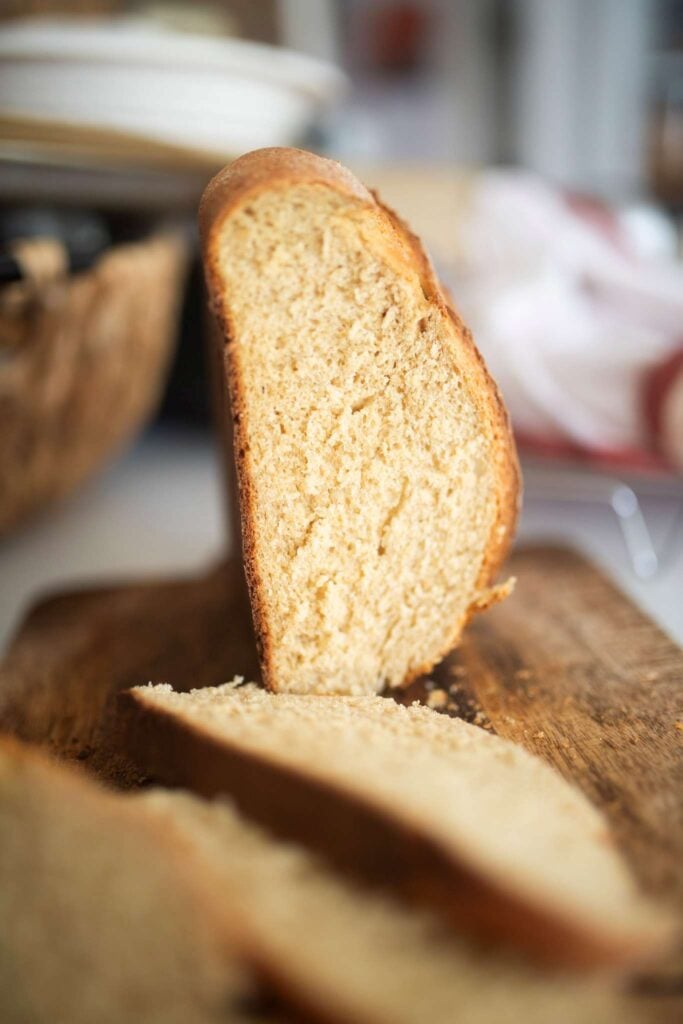
Properly kneaded dough will rise more in the oven leading to a softer, lighter crumb. However, you need to let the dough rise long enough on the first rise.
Let the bread dough rise for 1-1 1/2 hours or until the dough is doubled in size. Consider using a clear container for the rise. This will make it easier to see if the dough has doubled.
On the second rise, let it rise until it feels airy and pillowy. If making a sandwich loaf, let the dough rise until it tops over the edges of the bread pan by 1-2 inches.
My Best Tips for Kneading Fresh Milled Flour Dough
- Use recipe times as a starting point.
- Learn what properly developed dough looks and feels like.
- Don’t add flour simply because the dough feels tacky.
- Allow for resting periods when appropriate.
- Consider the recipe and wheat variety before assuming the dough needs more kneading.
- Remember that kneading is only one factor in achieving a soft, well-risen loaf.
Frequently Asked Questions
Yes. Store bought whole wheat flour has been sifted to a certain extent, therefore it will knead a bit more quickly.
Not necessarily. It really depends on the recipe used, hydration, and wheat variety. Generally speaking, it will be a bit tacky but easy to work with.
Absolutely! My advice is to knead for 5 minutes and then take a 1 minute break. Continue until the dough is smooth and elastic.
Yes. This will soften the bran and germ and allow the dough to knead properly.
The dough will start to lose its shape and become incredibly sticky.
In Conclusion
Keep in mind that kneading is one step, albeit a very important one, to well risen, light, fluffy bread products.
I highly suggest not relying on a clock when kneading fresh milled flour doughs. Watch the dough for changes as the minutes pass and start checking for gluten development after the dough starts looking smooth.
Explore more fresh milled flour recipes below!
Fresh Milled Jalapeño Cheddar Bread Recipe
Fresh Milled Submarine Sandwich Rolls (Soft & Fluffy!)
Fresh Milled Flour Breadsticks – Made with Purple Wheat!