
My Favorite Tools for Baking Fresh Milled Sourdough
Although you don’t need a lot of fancy equipment for baking, I do want to share with you my favorite tools for baking fresh milled sourdough bread.
This post contains affiliate links. I may make a small commission on sales at no extra cost to you. As an Amazon Associate, I make commissions on qualifying sales
When I first started adjusting my sourdough baking to 100% fresh milled flour, I realized there were a few tools that made the job a lot easier.
I will break these tools into 2 categories: Essential Tools and Optional Tools
Keep in mind there are varying degrees of what one may see as “essential” so we will keep that list as small as possible!
Are you new to sourdough and want to make your own sourdough starter? START HERE!
If you are new to using fresh milled flour, START HERE!

Favorite tools for making fresh milled sourdough bread
Essential Tools
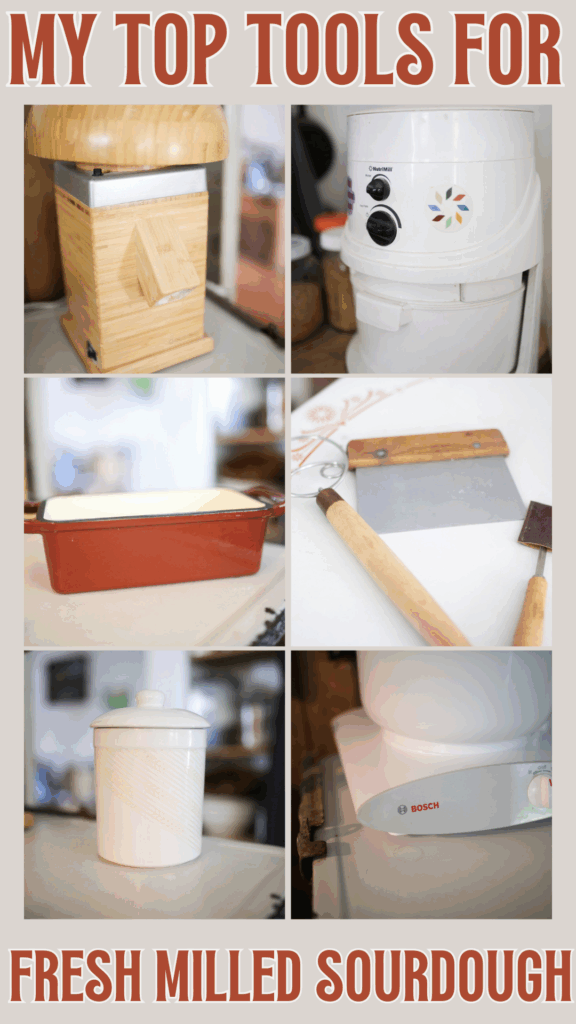
Fresh Milled Flour – To mill your own flour, you will need a GRAIN MILL. There are 2 main types of grain mills. For more information on choosing a grain mill, CLICK HERE!
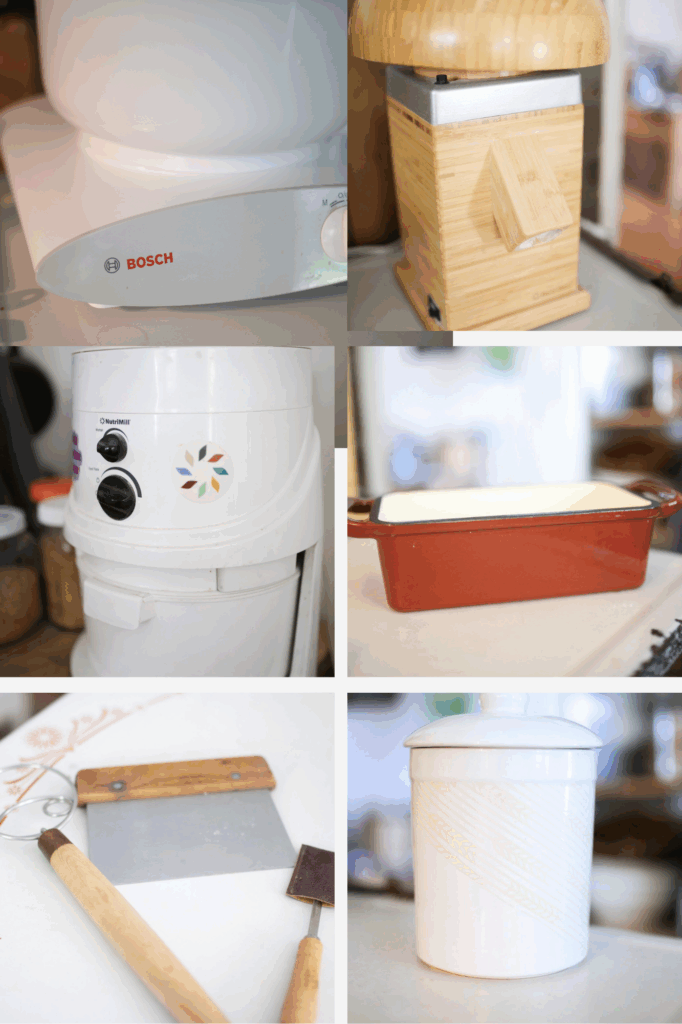
The 2 grain mills I have are the NUTRIMILL HARVEST (a stone mill) and the NUTRIMILL CLASSIC (an impact mill).
Wheat Berries – There are so many varieties of wheat berries. I always suggest starting with hard white wheat at first and slowly growing your berries for different applications. For more information on all the different types of wheat berries, READ THIS POST.
I get my whole grains from ANCIENT GRAINS. I buy large amounts of grains at a time, however they have smaller bags available as well.

Water Filter – When making sourdough, regardless of the flour you use, it’s important to use water that has been filtered of chlorine as it can slow down the growth of the good bacteria needed for a healthy sourdough starter.
Try my BEGINNER FRESH MILLED SOURDOUGH LOAF RECIPE!
The countertop water filter I use is the BOROUX FILTER.
Loaf Pan – Having a loaf pan is essential to making a loaf of sandwich bread. While there are many options available, I will share my 2 favorites with you (both are cast iron, by the way:)
If you love using raw cast iron, the LODGE CAST IRON LOAF PAN is one of the best options. It is pre-seasoned and easy to care for.
However, you do have to maintain the seasoning to keep it from rusting.
Another cast iron option is this NUTRIMILL ENAMELED CAST IRON LOAF PAN.
Enameled cast iron is much easier to care for and will not rust.
Both are heavy duty and will last a lifetime with proper care.

Optional Tools
Stand Mixer – Although hand kneading is effective, having a tool that will help you with that step of the bread baking process can be so helpful over time.
My 2 favorite options are the NUTRMILL ARTISTE and the BOSCH MIXER.
The main difference between these options are their capacity.
If you bake for a very large family or have a micro-bakery, the Bosch is the best choice.
If you bake just for your family, the Artiste is a solid stand mixer at a very much lower cost.

Proofing Box – In the winter, fermenting sourdough bread can take a very long time, especially the bulk fermentation. I find that have a PROOFING BOX makes a huge difference in cutting that time down.
You can also put your sourdough starter in the box to ferment if you are going to need to use it within a few hours.
Sourdough Crock – Although you can keep your starter in a mason jar, a dedicated SOURDOUGH CROCK is helpful for a couple of reasons. First, the crocks have a very wide mouth for dipping starter and secondly they are sized large enough for those times you need more starter than usual.
Dutch Oven – If you decide to make a FRESH MILLED SOURDOUGH ARTISAN BREAD you will need a DUTCH OVEN to bake the loaf.
The Dutch oven holds heat and steam which gives your artisan bread have its rise and crusty crust.
Read my top 5 questions to ask before you CHOOSE A GRAIN MILL.
Honorable Mentions
Proofing Basket/Banneton Basket – When making artisan bread, a BANNETON BASKET is helpful in keeping the shape of the loaf for the second rise.
Danish Dough Whisk – If you have never used one of these DOUGH WHISKS, you are going to be surprised how easy it is to mix bread dough with it.
Bench Scraper – A humble and simple tool, the BENCH SCRAPER is one of the most helpful and best tools for baking sourdough bread.
Digital Kitchen Scale – A KITCHEN SCALE is by no means essential to bread baking, however when it really comes in handy is for weighing wheat berries prior to milling to get the exact amount of flour you need for your recipe.
Bread Lame – For making a beautiful pattern on your artisan bread, you will need a LAME. It is a razor blade on the end of handle that makes scoring bread super easy.
Build your tools over time starting with the most essential all the way down to a bread lame.
Keep in mind, you don’t need a ton of equipment to make good bread, so don’t feel pressured to buy a bunch of stuff. Remember, the pioneers had very little in the way of tools and made daily bread that sustained a generation!
Comment down below with any tools I may have missed!

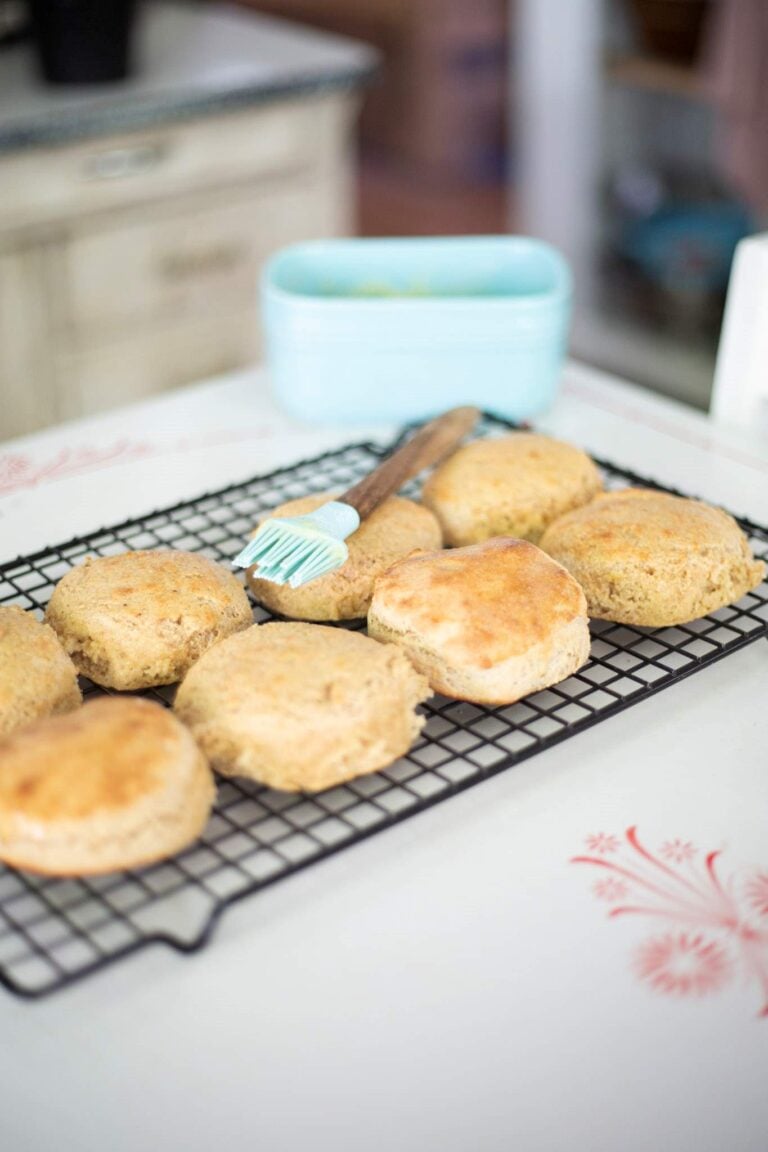
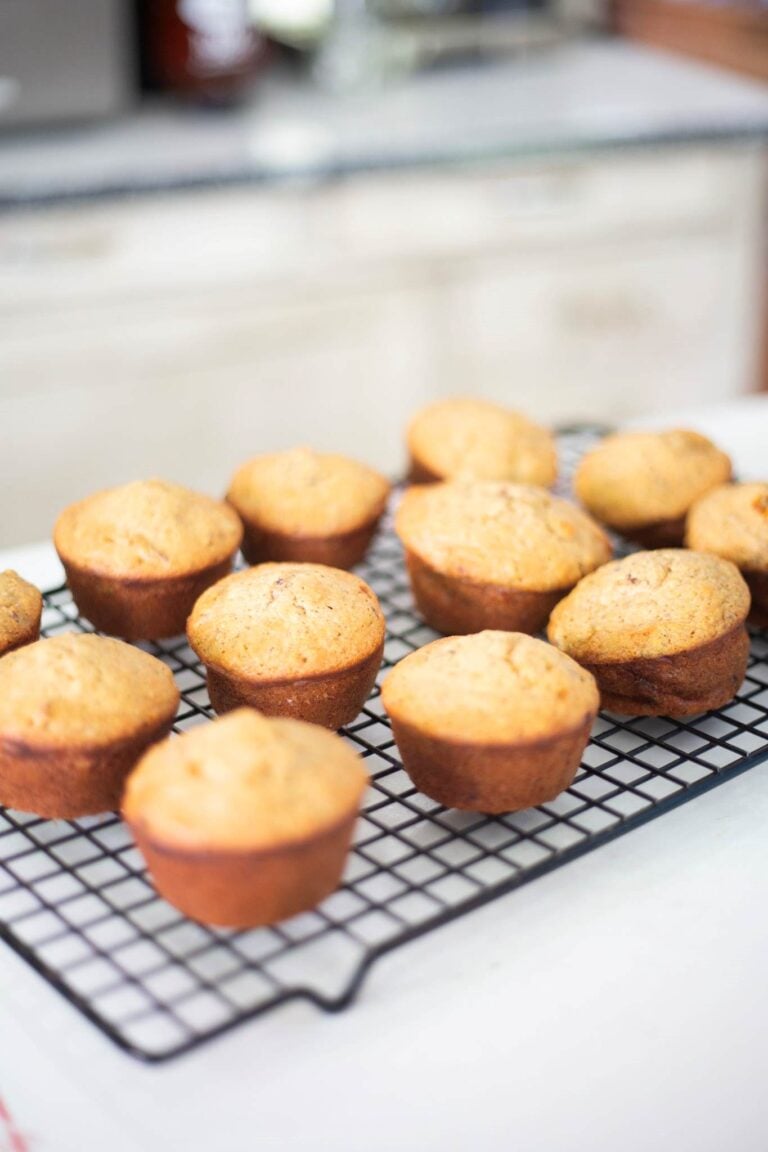


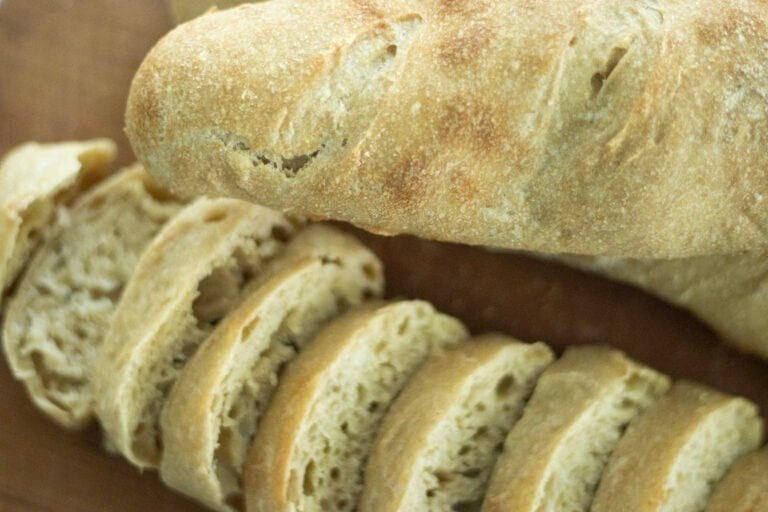

I really admire how sourdough connects old traditions with modern kitchens. The process has been around for thousands of years, yet it still feels relevant and meaningful today, especially when you taste the complexity that only natural fermentation can create.
Hi there!
I just ordered the grain mill you have and I’m very interested in the bowl that matches your grain mill. It’s beautiful! Can you share where you got it?
Thank you
Sure, here is my Amazon affiliate link: https://amzn.to/4oYO3ZX I just love having a dedicated bowl for the grain mill:)