
Sourdough Rye Bread (100% Fresh Milled Rye Flour)
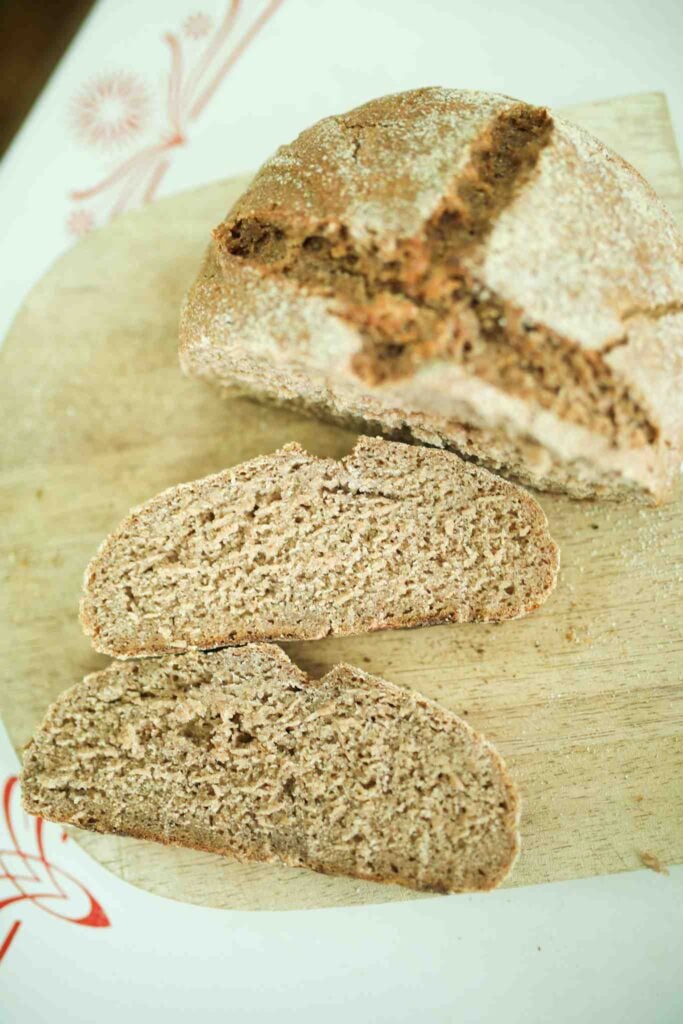
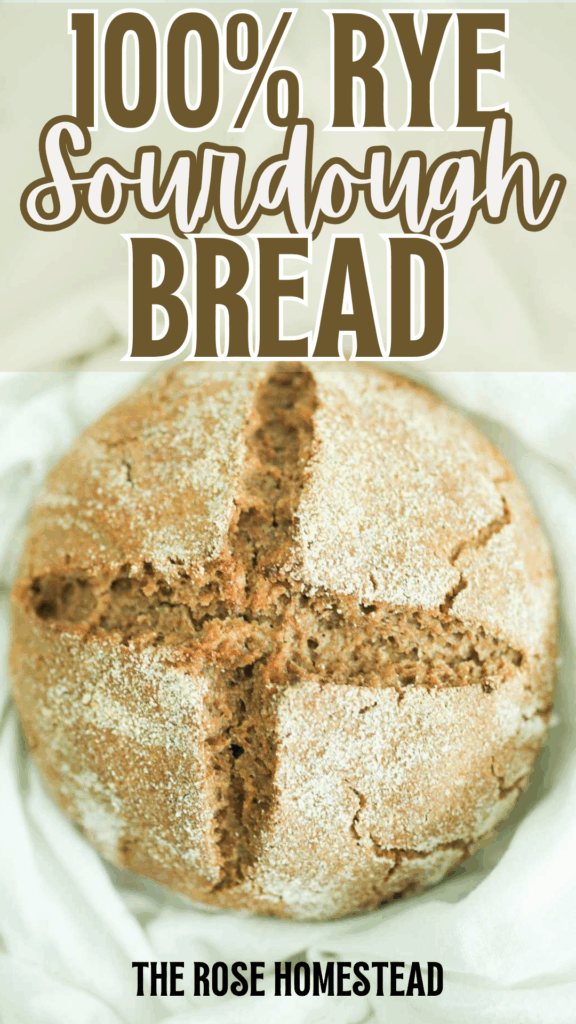
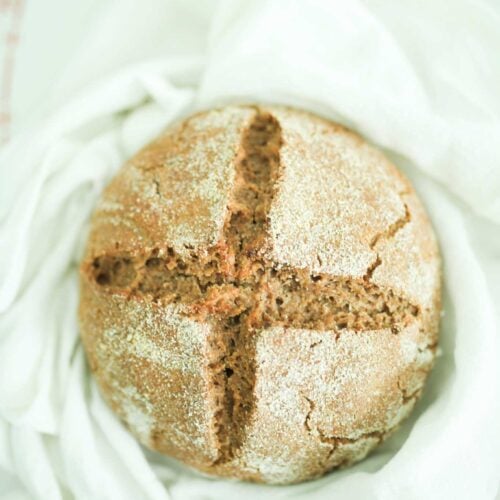
This sourdough rye bread is made with 100% fresh milled rye flour for a healthy, hearty, and delicious whole grain bread recipe!
This is the perfect recipe for those wanting to take their sourdough to the next level! Here on our homestead we only use fresh milled flour in our kitchen, and this recipe is one of our favorites!
This post contains affiliate links. I may make a small commission on sales at no extra cost to you. As an Amazon Associate, I make commissions on qualifying purchases.
Why you’ll love this recipe for 100% Sourdough Rye Bread
- 100% Whole Grains recipe – Made with all fresh milled flour, this recipe has optimum flavor and nutrition that can’t be replicated when using white flour.
- Naturally leavened – Since this loaf of bread is made with only sourdough starter and no commercial yeast, you get the benefits of long fermentation with this recipe.
- Deep flavor – Rye flour combined with sourdough starter makes for a complex flavor the whole family will love!
- Incredibly healthy – Packed with fiber, vitamins, and minerals, this hearty bread is great for the gut and satiation.
Want another sourdough bread made with ancient grain? Try my SOURDOUGH EINKORN ARTISAN BREAD
Tools for making this recipe
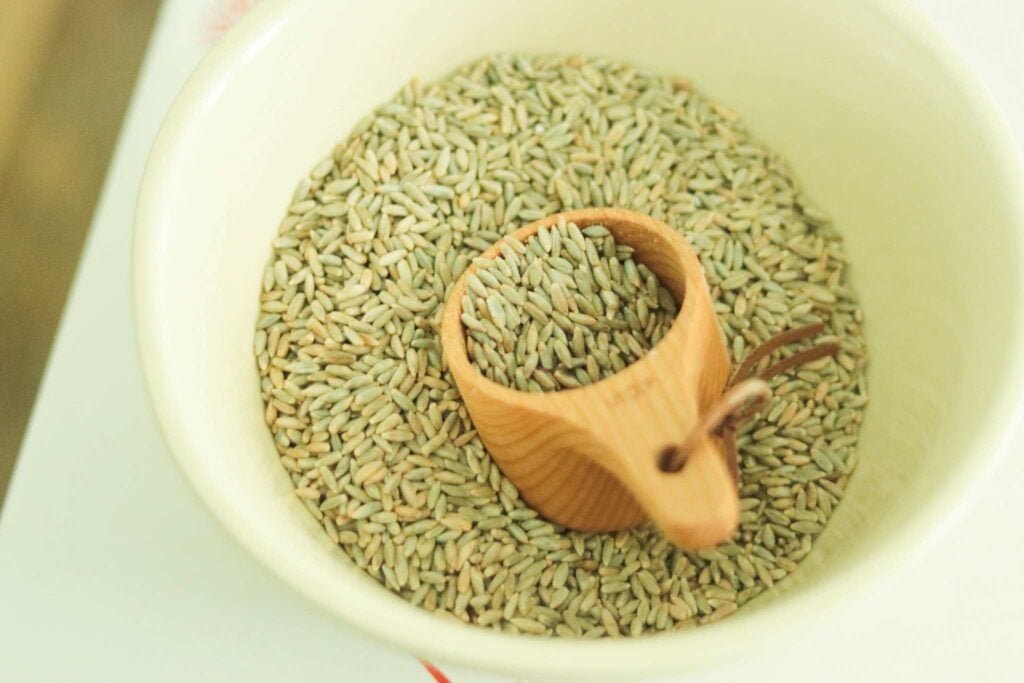
For milling my rye berries, I use the NUTRIMILL GRAIN MILL.
If you are new to milling your own flour, START HERE!
Use a KITCHEN SCALE for weighing the ingredients.
My favorite loaf pan is the LODGE CAST IRON LOAF PAN.
If making into an artisan style loaf, use a BANNETON BASKET for the second rise.
I use this MIXING BOWL to mix my dough.
Since this makes a stickier dough, I recommend using a BENCH SCRAPER when working with the dough on the counter.
Ingredients for making Sourdough Rye Bread
- Fresh Milled Rye Flour/Dark Rye Flour – Although you can use store bought rye flour, fresh milled rye flour will offer the most nutrition and flavor.
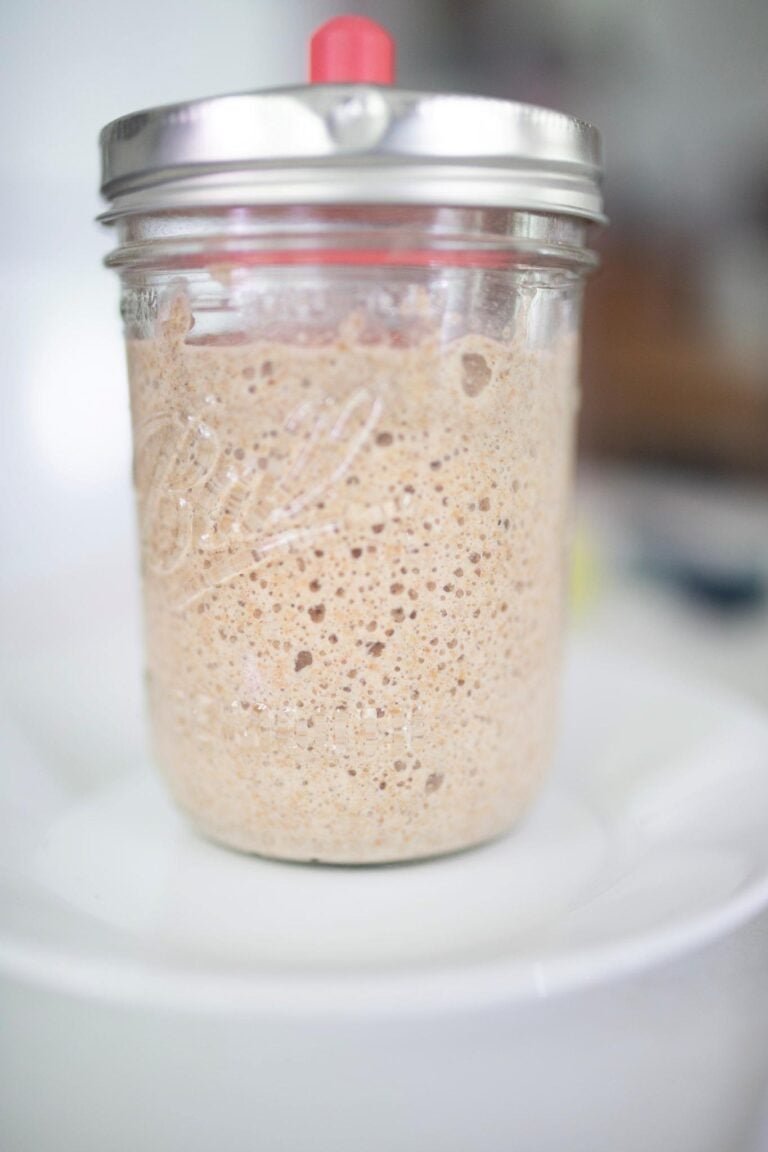
- Sourdough Starter – Use active sourdough starter for this recipe. Active starter is starter that has been fed recently, usually within the week and is bubbly.
- Water – For best results, use filtered water.
- Salt – I prefer using a fine ground sea salt.
- Optionally you can add Caraway Seeds to enhance the flavor. Use 1-2 teaspoons.
Full ingredient amounts can be found in the recipe card below
Looking for more sourdough recipes? CLICK HERE!
Want to try my favorite sandwich bread recipe? CLICK HERE!
Step by step instructions for making Sourdough Rye Bread
Mill your rye berries
Use the fine setting of your grain mill to grind the rye berries.
Mix the dough
In a large mixing bowl, add the water and sourdough starter. Mix until cloudy in appearance.
Add the flour and salt. Mix until combined and no dry bits of flour remain. This dough will appear stiff, but the more you work with it, the stickier it gets so just mix and let rise.
Rye dough is a sticky dough that requires much less hands on time than modern day wheat.

First Rise/Bulk Fermentation
In contrast to making sourdough bread with other wheat varieties, bread dough made with rye flour benefits best by just allowing it to rise in the bowl after mixing with no kneading or stretching and folding.
Letting the dough rest or autolyse is not necessary with this 100% rye dough.
Cover the bowl with plastic wrap or a damp tea towel and let the dough rise at room temperature for 8-12 hours in the bowl or until it has become puffy and feels full of air when poked with a finger.
This will take varying times depending on the temperature of your kitchen. Longer if the temperature is cooler, less time if your kitchen is warmer. I suggest checking the dough every few hours or mix it up right before bed and it will be ready this next morning.
Shape and final rise
Generously flour your work surface and turn the dough gently onto the floured area.
The dough will be quite sticky, so consider spritzing your hands with some water for easier handling.
Using a bench scraper, lift up one side of the dough and turn it onto the center of the dough.
Continue this all the way around the dough turning the dough a quarter turn each time.
Dust some of the flour away and turn the ball of dough over with the seam side on the table.
Cup the dough in your hands and turn and drag the dough against the counter to build surface tension a few times.
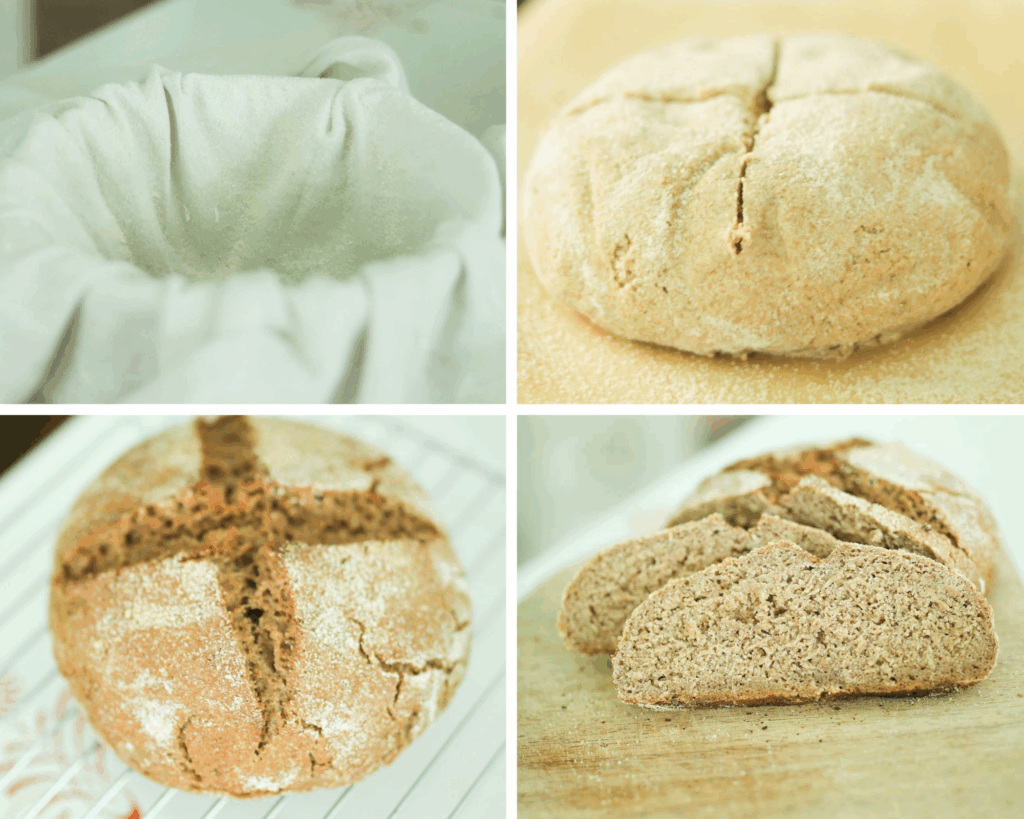
Prepare a banneton basket by lining with a linen cloth and generously flouring with rice flour or rye flour.
Alternatively, you can prepare a loaf pan by greasing it with butter or oil or lining with parchment paper.
Place the dough SEAM SIDE UP if using a banneton basket, or SEAM SIDE DOWN if using a loaf pan.
Cover and let rise an additional 1-2 hours.
Baking if using a dutch oven
Preheat a dutch oven with the lid in the oven to 450 degrees F.
Carefully turn the dough from the banneton basket over onto a piece of parchment paper.
Slash the top with a razor blade or sharp knife across the top of the dough.
Remove the dutch oven from the preheated oven and remove the lid.
Lift the piece of parchment paper over into the HOT dutch oven, carefully.
Return the lid and bake for 20 minutes.
Remove the lid and continue to bake for 15 minutes.
Cool completely before slicing.
Baking in a loaf pan
Preheat the oven to 350 degrees F.
Bake the loaf in the loaf pan for 35-40 minutes.
Internal temperature should be 195-205 degrees F using an instant read thermometer.
Allow to cool completely on a wire rack before slicing.
With this recipe, you are looking for the signs of fermentation. Bubbles visible on the surface and a slightly domed shape are signs it has fermented.
This 100% fresh milled rye loaf will not rise quite as much as loaves made with conventional wheat. It is, by nature, a more dense, hearty loaf. Mind you, you can get a nice rise, but not as loft as bread made with all purpose flour.
While you can definitely use store bought rye whole wheat flour, rye wheat bread made with fresh milled flour has the maximum amount of flavor and nutrition.
Sure, you can substitute up to 100 grams of the rye flour for bread flour or all purpose flour with no adjustments. Note: If you add bread flour, consider doing a few sets of stretch and folds after autolyzing for 30 minutes. Do them 15-30 minutes apart.
While it is not gluten free, rye flour has a weaker gluten structure which makes it digest in a sense like it has less gluten. If you have gluten sensitivities, you may want to speak to your doctor about giving rye a try! However, if you are CELIAC, you will NOT BE ABLE TO TOLERATE RYE FLOUR.
Storage
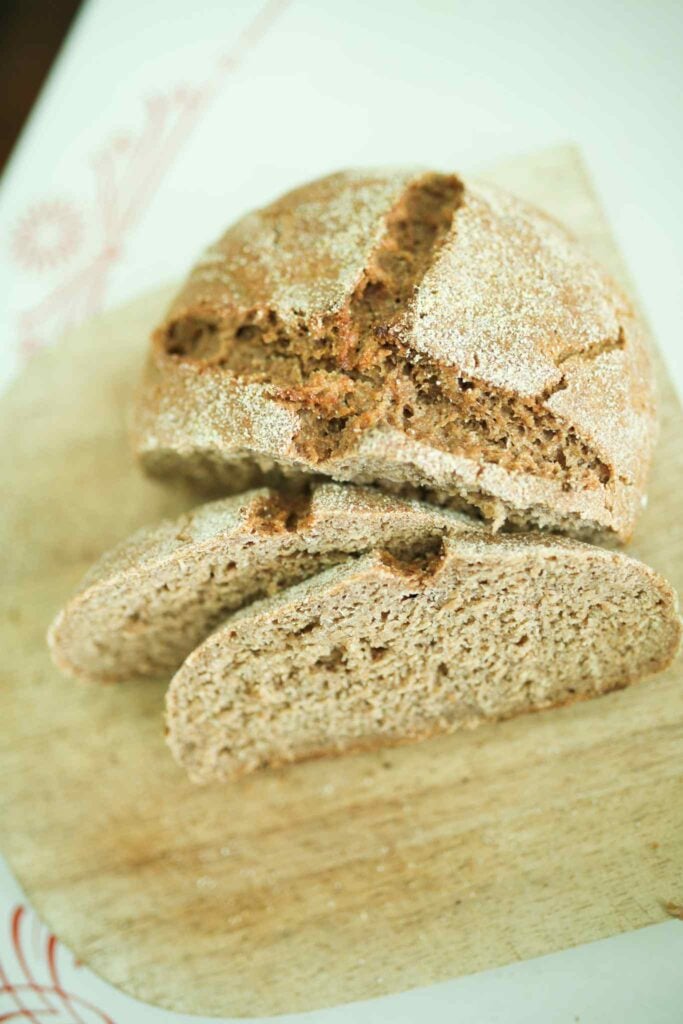
Store the cooled loaf in a plastic bag or airtight container on the counter for 2-3 days.
Freeze the sliced loaf in a freezer safe bag for up to 3 months.
Sourdough Rye Bread (100% Fresh Milled Rye Flour)

Ingredients
- 275 grams Water
- 50 grams Sourdough Starter
- 400 grams Dark Rye Flour Fresh Milled
- 11 grams Salt
Instructions
- In a large bowl combine the water and sourdough starter together. The mixture should be cloudy when mixed
- Add the fresh milled rye flour and salt.
- Mix until combined and no dry flour remains. This dough will appear stiff, but the more you work with it, the stickier it gets so just mix and let rise.
- The dough will be sticky to the touch but not very slack. This is normal.
- Cover and let rise for 8-12 hours or until it has become puffy and feels full of air when poked with a finger.
- The dough should have visible bubbles on the surface a be slightly domed in the bowl. This will take varying times depending on the temperature of your kitchen. Longer if the temperature is cooler, less time if your kitchen is warmer. I suggest checking the dough every few hours or mix it up right before bed and it will be ready this next morning.
- Generously flour your work surface and turn the dough onto the floured area.
- Using a bench scraper or a spatula, lift up on the corner of the dough and fold it back onto the center of the dough.
- Turn the dough a quarter turn and continue this all the way around the dough.
- Turn the dough over and drag it against the table while cupping the dough in your hands to build surface tension.
- Prepare a banneton basket by lining with a linen towel and generously flouring with rice flour or rye flour.
- Place the dough in the banneton basket, SEAM SIDE UP, pinch the seams closed, and cover with plastic wrap.
- Let rise for 1-2 hours.
- Alternatively, you can shape the dough into a loaf shape and do the second rise in a greased or parchment lined loaf pan.
Baking in a DUTCH OVEN
- Preheat a dutch oven with the lid on in the oven to 450 degrees F.
- Turn the dough onto a piece of parchment paper and slash the top with a razor blade or sharp knife.
- Carefully remove the hot dutch oven and remove the lid.
- Carefully lower the piece of parchment paper with the bread dough down into the hot dutch oven.
- Return the lid and put in the preheated oven.
- Bake for 20 minutes with the lid on.
- Remove the lid and continue to bake for 15 minutes.
Baking in a loaf pan
- Preheat the oven to 350 degrees F.
- Bake the loaf in the preheated oven for 35-40 minutes or until the internal temperature is 195-205 degrees F.
- Let the bread cool on a cooling rack completely before slicing.


Is this light rye flour or dark
I used fresh milled rye berries. It made a very light flour, so I would say light rye flour.
Light rye flour is refined, with most of the bran and germ removed, whereas dark rye flour is whole grain. So, your flour would be “dark rye flour”.
Thank you for this information!
I thought it would have caraway seeds ?
They are optional as we don’t like caraway seeds, ha ha. I find most people think they don’t like rye but it’s actually the caraway seeds. You can add them if you want.