
The Best Type of Flour to Feed Your Sourdough Starter
One of the biggest questions I get is, “what is the best type of flour to feed your sourdough starter“?
I want to outline the different flours available and the pros and cons to each. The choice of flour you feed your starter is actually quite important!

This post contains affiliate links. I may make a small commission on sales at no extra cost to you. As an Amazon Associate, I may make a small commission on sales through my links
Although you can feed your sourdough starter almost any flour, there are differences in how your sourdough starter will react to each flour choice. You will find the best flour for your personal preference by experimenting.
Is there a “perfect” flour for sourdough starter? Not quite, but there are more desirable varieties that I would choose over others as they can affect the fermentation, flavor, and nutritional value.
I’m going to break down all the flour choices and how your sourdough starter will react to them so you can make the best decision for you.
Are you brand new to sourdough and want to make your own sourdough starter? Start here!
Why does the type of flour you feed your sourdough starter matter?
- Nutrition – There are flours with much more nutritional value than others. If you are switching to sourdough for the health benefits, consider using a more nutritional flour.
- Fermentation time/Yeast Activity – Certain flours tend to ferment more vigorously than others. You will notice that with some flours, for instance Rye, your starter will become much more active after feeding with it.
- Flavor – Each flour has its own flavor profile, especially whole grain or fresh milled flours. This will, as you would guess, change the flavor of your sourdough bread, as well.
Check out this post about troubleshooting your sourdough starter.
Want a bunch of sourdough discard recipes? Click here!
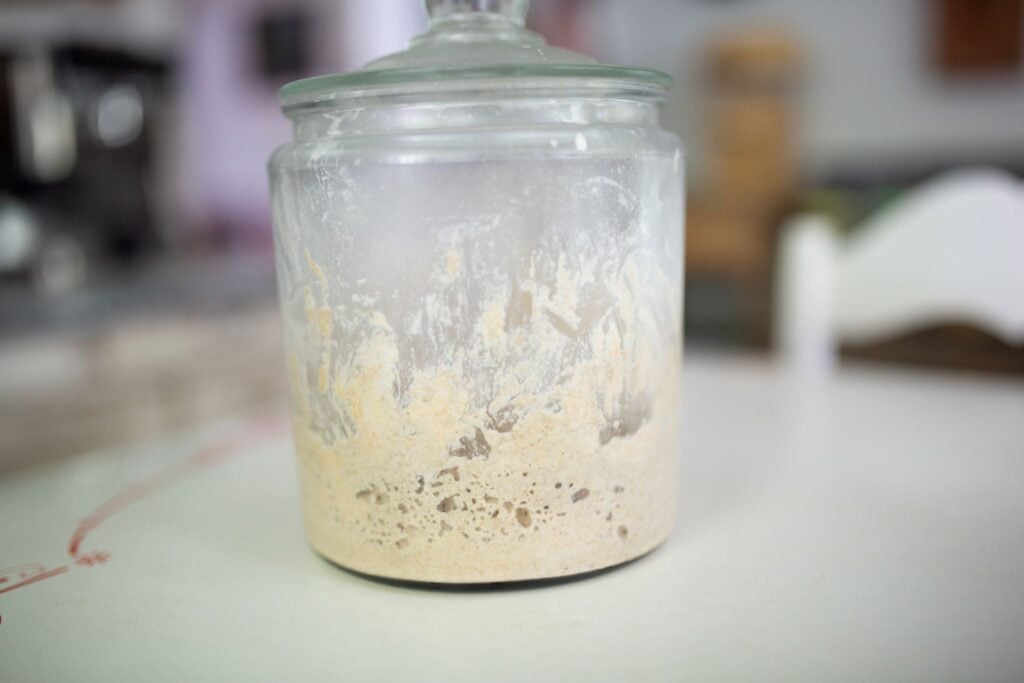
Best Types of Flour to Feed Your Sourdough Starter
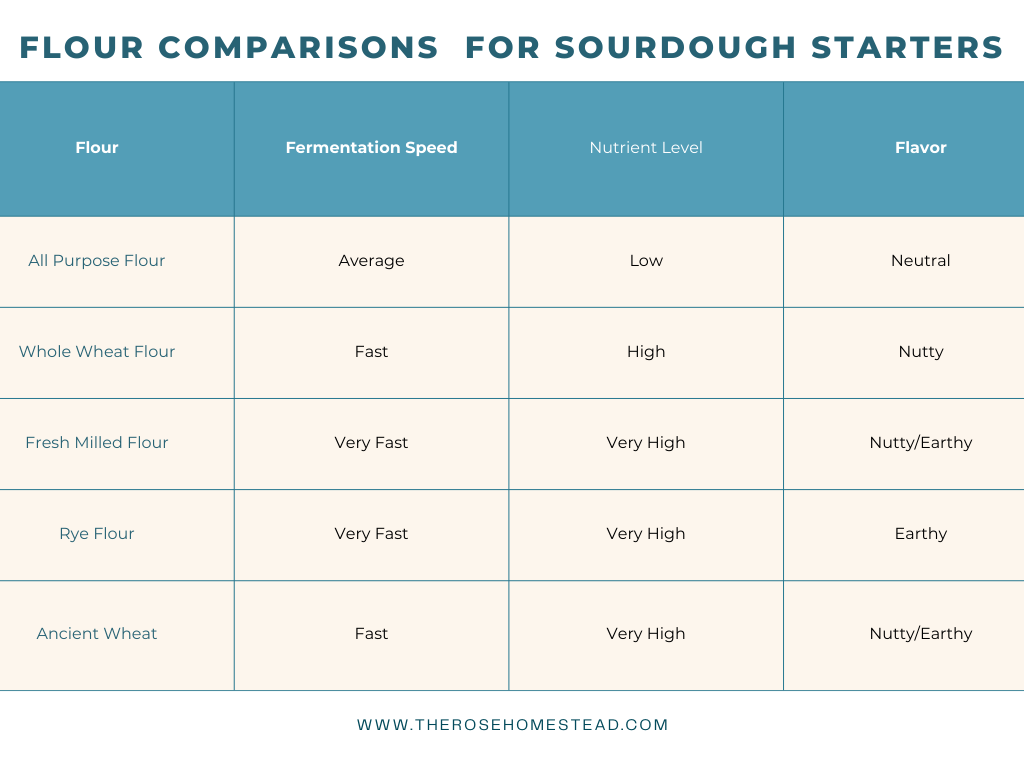
All Purpose Flour/White Flour
All purpose flour is widely available in grocery stores. This particular flour has no real nutritional value or strong flavor. It is a safe flour to start off with when making a sourdough starter, however, for increased flavor and nutritional value, I highly recommend branching out into different types of flour.
Sourdough starters fed with all purpose flour are generally very light in color and will be airy and pillowy.
Whole Wheat Flour
When shopping for flour in your local grocery store, you will notice “whole wheat flour”. This is a little deceiving, though. Store bought whole wheat flour has been sifted removing most of the nutrients so that it will be more shelf stable.
Any germ or bran added back into the flour will go rancid fairly quickly. This is why this type of flour usually has a bitter flavor and is generally not the best for the flavor of your bread.
Looking for more sourdough recipes? Click here!

Fresh Milled Flour/Whole Grain Flour
This is the only flour I feed my sourdough starter. There a many reasons, but I’ll break down the most important.
- Fresh Flour is higher in nutrition than store bought flours.
- Higher in wild yeast which your sourdough starter LOVES!
- Sourdough starters fed with fresh milled flour are typically more active.
I use the Nutrimill Grain Mill to mill my wheat berries for flour.
Looking for high quality grains for milling, shop Ancient Grains (This is where I get my wheat berries)
Want more information on using fresh milled flour in sourdough? Click here!
Rye Flour
Rye flour has long been touted for sourdough starters. It is a high fiber, nutrient rich flour that has a different protein make up than most other flour choices.
The increased nutrients seem to aid in it being one of the top choices for feeding your starter and achieving a much more active sourdough starter.
Rye flour generally results in more active bacteria growth and in a great choice if you have a sluggish or new starter to get the activity going.
Ancient Wheat
Ancient grains are wonderful for feeding a sourdough starter. They are very high in nutrients and fiber (especially fresh milled) which sourdough starters crave.
There a few different ancient wheat varieties that all work perfectly for your starter.
While ancient grains are great for feeding a starter, they can be a little tricky to work with when baking. I recommend starting with a portion of ancient wheat in your favorite bread recipes and increasing the amount a little at a time to familiarize yourself with how it behaves.
- Einkorn – Einkorn is thought to be possibly the oldest variety known. It has a very weak gluten structure and earthy flavor.
- Spelt – Spelt has a nutty flavor and high fiber and vitamins which works great for feeding the starter.
- Khorasan (Kamut) – Khorasan flour is a buttery flour that makes a flavorful sourdough starter.
- Emmer – This flour is very comparable to Einkorn in my experience and creates a very active starter.
A quick note on gluten-free flour
If your goal is to have a gluten free sourdough starter, you have a few choices of flour. Rice flour, Buckwheat flour, and Bob’s Red Mill all purpose gluten free flour can be used to make a starter.
I personally don’t have a lot of experience with this type of starter, but wanted to share with you a few flour choices for this option.
Which flour works best to actually start a sourdough starter?
In my experience fresh milled flour or rye flour works best to initially start the sourdough starter.
They both result in a more robust fermentation process and make a vigorous starter more quickly than using all purpose flour or bread flour.
Once your sourdough starter is active, you can use any of the above flour choices to feed your starter.
Can I change the flour I feed my starter?
Yes! You can interchange the flours you feed your sourdough starter any time. I have fed my starter almost every type of flour that is available and it ferments just fine with all of them.
You can also mix the flours before you feed that starter. For instance, half all purpose and half rye will make a stronger starter than just all purpose so play around with the combinations to find the one that best suits you.
Tips for changing flours when maintaining a sourdough starter
- Hydration – Keep in mind that each flour has a absorbs water differently and will require a slightly different feeding ratio. For instance, Einkorn flour will absorb water more than all purpose flour so adjust your water accordingly to achieve the consistency you desire.
- Changes in the starter – While your starter will be happy with almost any flour choice, keep in mind that your starter will also “change” with changes in flour. You may notice a different smell, fermentation time, etc…I suggest trying several different flours to find the one that gives you the flavor and fermentation level you are looking for.
Mistakes to avoid when feeding your starter
- Avoid bleached flour – Bleached flour is highly processed and may impede the fermentation process of your sourdough starter.
- Keep away from “self rising” flour – Self rising flours are generally bleached and have leaveners in them which will not react well with the wild yeast and bacteria in your starter.
- Continuing to feed a sluggish starter the same flour – Usually, if a starter becomes sluggish, a quick change in the flour will often pick it right back up! If you have only fed your starter all purpose flour and it becomes sluggish, start feeding it rye flour and watch it take off!
- Using tap water – For the best results, use filtered water. Tap water typically contains chlorine and other unwanted chemicals which can inhibit the growth of good bacteria in your starter.
While you can use a different flour each time you feed your sourdough starter, I recommend finding the flour that gives you the results you are looking for. If you feed your starter rye flour and it becomes super active and happy, I’d stick with that. However, if you want to switch it up for flavor, occasionally changing flours is just fine.
Generally a half and half mixture works really well. Try using half all purpose and half rye flour or half fresh milled flour and half bread flour, etc…
I definitely only use organic flours to feed my starter. Most conventional non-organic flours are sprayed with glyphosate. Inevitably, there will be a loss of nutrition when the soil absorbs chemicals such as pesticides or herbicides. Organic flour will be free of chemicals and have the highest nutrition available which are all important for the health of a sourdough starter.
Although this question isn’t particularly about flour, it is a common question. I recommend using room temperature water if you need the starter to ferment more quickly. However, using cold water will not hurt your starter, it will just become active a bit more slowly. In contrast, using warm water will cause the starter to ferment much more quickly.
If you have a young starter, I highly recommend investing in a kitchen scale and feeding your starter equal parts by weight of flour and water. For instance, if you feed your starter 50 g flour, you need to feed it 50 g water. The amount of flour and water you use will depend on how much starter you need. Feed more if you want a lot of starter and feed less for a smaller amount of starter.
Absolutely not! I keep my sourdough starter in the fridge and only feed it once a week normally.
Move your sourdough starter to a clean jar once a month for best results. To inhibit the growth of mold on the sides of the jar, scrape it down each time after you feed the starter.
No! Be sure to use either a loose fitting lid or a coffee filter with a rubber band around it to allow for air to come in and go out. When a sourdough starter is fermenting there is a build up of carbon dioxide and lactic acid bacteria. If your lid is on tight, the carbon dioxide will eventually pop the lid off to escape!
In conclusion
Remember your starter is alive and requires regular maintenance with a high quality flour and water.
And, while you can use numerous flours to feed your starter, aim to choose one that is high in nutrients and flavor for the most vigorous starter. In my kitchen, fresh milled flour is the best choice.



this was SO HELPFUL. thank you!